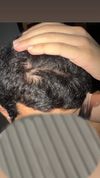
User fought hair loss with Derminator microneedling, topical and oral minoxidil, and a 2000 FUE hair transplant. Derminator was a game changer, preventing further loss.
The user is seeking a knowledgeable trichologist or dermatologist in Belgium for a thorough scalp examination due to diffuse thinning and a previous diagnosis of male pattern baldness. They are interested in procedures like a trichogram and scalp biopsy.
The conversation is about someone who initially had positive results with Minoxidil for hair loss, lost those gains due to a hospital stay, and is now not seeing the same results upon resuming treatment. They plan to add microneedling and/or tretinoin to their regimen and are seeking success stories from others who did not respond to Minoxidil alone.
Pyrilutamide, a nonsteroidal antiandrogen drug under development for the potential treatment of androgenic alopecia. The conversation discusses its binding affinity to the androgen receptor and the timeline for possible availability after trials are completed in the United States and China.
The conversation discusses positive initial trial results for GT20029, a topical compound for hair loss that degrades androgen receptors, potentially requiring only weekly application. Participants express hope for this treatment to be more effective and convenient than current options like Minoxidil, Finasteride, and RU58841.
The user "ajsr8" shared their story of hair loss despite being on treatments. They started using finasteride in 2019 and later tried topical minoxidil, but it didn't seem to work. They also experienced side effects from other treatments. They are considering cutting off their hair and stopping the medications if there is no improvement in three months. Other users suggested trying different treatments and getting a blood test to check for underlying conditions.
The user has been using finasteride and minoxidil, then switched to dutasteride and minoxidil for six months without significant results, noticing thinning after increasing creatine dosage. They plan to consult a dermatologist to explore potential causes beyond androgenetic alopecia.
A 38-year-old is considering using finasteride and minoxidil for hair loss, despite already having significantly reduced DHT levels. They are unsure whether to try finasteride, minoxidil, or topical finasteride to see if it affects their hair loss progression.
Hair loss discussion mentions treatments like Finasteride, Dutasteride, and Minoxidil. Users share experiences, side effects, and advice on using these treatments.
A 35-year-old man had a hair transplant in 2019 but experienced further hair loss due to not using finasteride or minoxidil. Many suggest shaving his head or considering a hair system, as his donor area is depleted and further transplants may not be viable.
A user is experiencing accelerated hair loss and is struggling to maintain their mohawk. They are seeking alternatives to Minoxidil and Finasteride, considering a hair transplant, and looking for a doctor in Berlin who can prescribe Finasteride.
A 22-year-old male is experiencing a significant hair shed and a receding hairline despite being on finasteride for 14 months and minoxidil for 7 months, applied inconsistently on the temples. He is considering adding dutasteride to his regimen once a week.
Hair follicles can be dormant and potentially revived with treatments like finasteride and minoxidil, but irreversible loss occurs if certain structures are destroyed. Early intervention is more effective, and additional methods like microneedling may help.
The conversation is about a user interested in participating in hair cloning clinical trials due to their fine hair and previous positive experience with clinical trials. They are seeking information on how to volunteer for such trials.
The conversation is about a user experiencing hair thinning potentially due to excessive microneedling while using finasteride and minoxidil. Many suggest reducing microneedling frequency and considering alternative treatments like dutasteride or a hair transplant.
A user is seeking hair loss treatments without using systemic DHT blockers like finasteride due to side effects. Suggestions include clascoterone (not FDA approved), pyrilutamide, RU58841, and low-dose topical finasteride, with a recommendation to consult a doctor.
The user has been treating hair loss for over 11 years with various methods including Minoxidil, Keto shampoos, vitamins, and microneedling, but has avoided Finasteride due to fertility concerns. They have recently added Zix and The Ordinary Serum to their routine and are questioning their high DHT levels despite their efforts.
The user experienced significant hair loss after stopping a treatment with vitamins, minoxidil (2.5mg), and dutasteride (0.5mg) for three months. They resumed the treatment 20 days ago and are hopeful for recovery, with no side effects reported.
A 28-year-old male is experiencing temple regrowth but crown thinning while using 5mg minoxidil and 0.5mg dutasteride. The shedding phase is seen as a positive sign of treatment effectiveness, with expectations of noticeable improvements around 6 to 12 months.
The user increased their steroid dosage and noticed hair shedding, so they adjusted their regimen by reducing steroid doses and adding oral dutasteride. They are also experimenting with combining RU-58841 and KX-826/pyrilutamide in minoxidil to address hair loss.
GT20029 and PP405 are discussed as potential alternatives or complements to finasteride for hair loss treatment. GT20029 is entering phase 3 trials, while PP405 is seen as promising for regrowing hair and possibly eliminating the need for other treatments.
A 25-year-old experiencing genetic hair loss used minoxidil, biotin, and cystine but stopped due to routine fatigue, leading to worsened hair loss and unwanted body hair growth. They are hesitant about finasteride due to potential side effects and are seeking advice on effective treatments.
Despite using 5% minoxidil, 0.1% finasteride, and other treatments like microneedling, MK-677, and Cialis, hair loss continues with high testosterone and DHT levels. Considering oral dutasteride but concerned about further increasing testosterone levels.
The conversation is about hair loss treatments, specifically the anticipation for the release of a new treatment, GT20029, by 2028. Users are discussing their experiences with current treatments like finasteride and dutasteride, and the potential of future treatments, including FAK inhibitors and verteporfin trials.
The user has been using a strong combination of hair loss treatments for 16 months, including Finasteride, Minoxidil, Dutasteride, and RU-58841, but their hair loss has worsened. They're questioning whether their high testosterone levels or residual scalp DHT are causing further hair loss, with a reply suggesting that even small amounts of DHT can cause hair loss if one is sensitive to it.
A 20-year-old male has been experiencing hair loss for three years due to a vitamin D deficiency and has seen no improvement after 3.5 months of taking supplements. Another person suggested that if the hair loss follows a pattern, it might be regular baldness rather than due to the deficiency.
A user experimenting with an extreme hair loss treatment stack of Dutasteride, RU58841, 15 mg oral minoxidil, and microneedling, which sparked a debate among other users about the safety of this approach.
The user experiences severe side effects from finasteride and dutasteride, including low libido and anxiety, and is currently using oral minoxidil despite shortness of breath. They are seeking alternative treatments for hair loss, having tried pyrilutamide, fluridil, and RU58841 with no success, and are considering future treatments or a hair transplant.
A group buy for hair loss treatments including Harmine 19a, TM5614, Abiraterone Acetate, and others. A compound, BMS-202, that can potentially reverse gray hair is also mentioned.