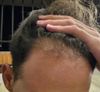
A 21-year-old male with a thyroid condition noticed his hair thinning uniformly without a receding hairline. He is considering using a 5ARI to prevent further baldness if he starts TRT.
The post discusses the confusion about the optimal microneedling depth and frequency for hair growth, and when to apply treatments like minoxidil. A reply suggests the best method is using a 1.25mm depth every 7 days with a specific device, holding it for 10 seconds to stimulate hair growth.
Many are unaware of effective male pattern baldness treatments like finasteride and minoxidil, often opting for ineffective remedies. Educating others on proven treatments and potential side effects is crucial.
The conversation discusses using USB microscopes for scalp photos and provides a link to an overview of trichoscopy. Treatments mentioned include Minoxidil, finasteride, and RU58841.
The user is pausing finasteride for blood donation and is concerned about its effect on DHT levels. They plan to supplement with saw palmetto and pumpkin seed oil during the pause.
People on testosterone replacement therapy (TRT) with aggressive androgenetic alopecia (AGA) discuss using Dutasteride or Finasteride, sometimes combined with topical treatments like RU58841 or CB-03-01 (Breezula), to prevent hair loss. Concerns about side effects and costs of certain treatments are mentioned, with one individual sharing their experience of slowed hair loss using Finasteride alone.
Dutasteride treatment may decrease sperm concentration, but levels remain above WHO recommendations and recover after discontinuation. The study has limitations, including small sample size and lack of pre-treatment sperm data, and does not assess other fertility factors.
The user has been on finasteride for 18 months and added dutasteride after the first 6 months, with no hair regrowth observed. Bloodwork shows normal levels of DHT despite the use of both medications.
The effects of Finasteride on hair loss and its side-effects, such as aching balls. The user has been taking it for two years with no changes to the symptom.
After jaw surgery caused intense hair shedding and scalp itch, using pyrilutamide significantly reduced these symptoms. It's suggested to test pyrilutamide for authenticity before use, despite positive personal experience with the product from MV Supplements.
The user underwent a hair transplant in Boston, initially dissatisfied with the results, but later achieved significant improvement in hair density and natural appearance after consulting a different surgeon. They used finasteride, minoxidil, and low-level laser therapy as part of their treatment.
An experiment to determine the effectiveness of Pyrilutamide in reducing hair loss, using a regimen of Minoxidil and Finasteride, with promising results. The conversation also suggests comparing this to RU58841 as an alternative.
The conversation discusses concerns about body dysmorphia related to hair loss, with some users expressing frustration over posts claiming treatments like finasteride and dutasteride are ineffective or harmful despite minimal hair loss. It emphasizes the importance of early treatment with medications like finasteride and minoxidil for those experiencing hair loss.
A 24-year-old male has been using oral Minoxidil (2.5mg daily) and daily Dutasteride for hair loss, noticing slight thickening but no major regrowth. Users suggest increasing Minoxidil dosage to 5mg and maintaining consistency, with some recommending additional treatments like topical Minoxidil or considering a hair transplant in the future.
A 28-year-old male reports progress in hair regrowth using 5mg Minoxidil and 0.5mg Dutasteride, noting improvement in the crown area. Another user shares similar positive results since starting treatment in January.
The user is considering switching to topical finasteride or pyrilutamide to stabilize hair loss before a hair transplant, currently using oral minoxidil and finasteride. Suggestions include sticking to the current regimen as it is already potent, and caution against using pyrilutamide from unreliable sources.
A 15-year-old experiencing severe diffuse thinning plans to use minoxidil, dermarolling, and possibly ketoconazole, with hopes to later incorporate finasteride. Concerns about starting finasteride too young and the need for a dermatologist consultation are discussed.
The conversation discusses the theory that scalp fibrosis contributes to male pattern baldness (MPB) by increasing DHT concentration, and mentions treatments like Minoxidil. The user seeks opinions on the theory and the effectiveness of scalp massages.
Microneedling, when combined with finasteride and topical minoxidil, can enhance hair regrowth for male pattern baldness, especially at the temples. Users report varying success with needle depths between 0.5mm and 1.5mm, with stamps preferred over rollers to minimize scalp damage.
A participant using Veradermics VDPHL01, an extended-release oral minoxidil, experienced significant hair regrowth from Norwood 6 to Norwood 3V without side effects. They plan to use dutasteride after the treatment to maintain results.
The user is seeking advice on improving their hairline, currently using dutasteride 0.5mg/day and oral minoxidil 5mg/day for 14 months. They want to avoid a hair transplant and are concerned about thin hair and receding temples.
The user experienced hair recovery using oral dutasteride 0.5 mg and oral minoxidil 5 mg daily, considering increasing dutasteride dosage but concerned about cost and effectiveness. They noted progress and discussed alternatives like hair transplants and other medications.
The user switched from finasteride and topical minoxidil to dutasteride and oral minoxidil due to lack of results. They are hopeful about dutasteride but are prepared to stop all medication if it doesn't work, as they have aggressive hair loss genetics.
In this conversation, 4990 discussed various treatments for hair loss, including oral minoxidil, PRP, transplan, Jak inhibitors, Dutasteride, Finasteride, Olumiant, Ketoconazole, RU58841, microneedling, baricitinib, and CCCA. They recommended scalp biopsies in unclear cases of DUPA, twice weekly to twice daily shampooing for topical minoxidil users, and two sessions spaced one month apart with follow up at month three to determine the effectiveness of PRP treatment.
Dutasteride is considered a stronger alternative to finasteride for hair loss, with mixed results; some users report improvement, while others experience worsening or side effects. Effectiveness varies, with genetics and individual responses influencing outcomes.
A user's 6 month hairline results from using dutasteride and microneedling, which resulted in successful regrowth of their thinning temples. Other users commented with similar experiences that were also achieved through the use of finasteride, dutasteride and minoxidil.
The conversation is about the effectiveness of Dutasteride (DUT) for hair loss. Some users have had positive results with DUT, while others have experienced negative effects. Different opinions and experiences are shared, including the mention of Ashton Kutcher using DUT for 20 years without problems.
GT20029 and CosmeRNA are both potential hair loss treatments; GT20029 breaks down the androgen receptor, while CosmeRNA prevents its production. Continuous use is needed, but less frequently than current treatments like Minoxidil and Finasteride.
A 19-year-old male is experiencing accelerated hair recession after two months on oral Dutasteride, despite no noticeable shedding, while also using topical Minoxidil and Finasteride. He is unsure if the treatment is effective and is unable to access RU58841.