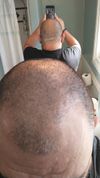
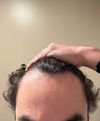
Users discuss finding reliable sources for RU58841, focusing on lab tests, batch consistency, and community reputation. Some mention using alternatives like pyrilutamide.
Some people saw improved hair growth when adding tretinoin to their topical minoxidil routine. They combined the two by applying tretinoin before minoxidil.
The conversation discusses the potential of a new hair loss treatment, GT20029, which targets androgen receptors in the scalp and is in phase 1 trials in China. Users express hope that this treatment will be more effective than current options like Minoxidil and Finasteride.
A 20-year-old male experienced early hair thinning due to male pattern baldness and successfully thickened his hair using oral finasteride and topical minoxidil. The conversation highlights the importance of early action and overcoming fear of medication side effects.
The conversation discusses enhancing Minoxidil absorption for hair loss treatment using Tretinoin and MSM (Methylsulfonylmethane). The user is seeking sources for Tretinoin and mentions MSM's potential to improve the absorption of topical agents.
The user has been using finasteride inconsistently for 2 years and minoxidil for 6 months without seeing hair growth. They are considering switching to dutasteride and restarting minoxidil to address thinning at the right temple, with advice suggesting consistent use for better results.
Excessive use of topical minoxidil led to unwanted facial changes and side effects. The user plans to switch to oral minoxidil with microneedling for hair regrowth.
The user reported noticeable hair improvement over four months using 1 mg of finasteride and weekly microneedling. Progress photos from October 2024 to January 2025 show positive changes.
Kintor Pharmaceutical's Phase 2 results with the drug Pyrilutamide, a potential alternative to 5-ARI drugs like Finasteride and Dutasteride but without the side effects. It could be used in combination with other topical treatments such as Minoxidil. The safety of the drug has been demonstrated in 6 months of use, however there are still questions about long term efficacy and systemic absorption.
The user has been using 5% minoxidil, finasteride, and dutasteride, along with microneedling and ketoconazole, to treat hair loss, showing significant progress over a year. Side effects mentioned include brain fog, watery semen, and facial dryness.
A 26-year-old man shared his positive results after 10 months of treating male pattern baldness using a regimen that includes Estradiol Enanthate, DHPA, Bicalutamide, Dutasteride, oral and topical Minoxidil, and a dermaroller. He experienced mild gynecomastia and reduced body hair as side effects but was satisfied with the outcome.
User shared 8-month hair loss treatment progress using topical fin/min, topical dut, mk677, RU, and microneedling. They experienced watery semen as a side effect but saw significant improvement in hair growth.
Treating androgenic alopecia with minoxidil, finasteride, and antiandrogens, alongside exercise, cryotherapy, and natural substances to stimulate cold receptors for better hair growth. The method focuses on enhancing treatment effectiveness by considering environmental and behavioral factors and the role of cold receptors and muscle stress.
Visible hair improvement after 10 weeks using minoxidil, estradiol enanthate, acetophenide algestone, and bicalutamide. The user is a 25-year-old male with reduced testosterone levels, expressing a preference for less masculinity.
A 21-year-old male shared his extensive hair loss treatment protocol, which includes Dutasteride, RU58841, Ketoconazole shampoo, oral Minoxidil, pyrilutamide, MK677, dermastamping, and castor oil, and reported improved hair regrowth and overall well-being. He has experienced no side effects and has also improved his diet and lifestyle.
A 20-year-old is experiencing hair thinning and is considering Clascoterone and Minoxidil as treatments, avoiding finasteride due to concerns about fertility and hormones. A suggestion was made to use Clascoterone for local DHT targeting and combine it with Minoxidil for maintenance and regrowth while avoiding systemic side effects.
A 19-year-old is experiencing aggressive hair thinning and has been on finasteride for six months with consistent shedding. They are considering switching to dutasteride and hoping minoxidil will work better afterwards, while others suggest patience with current treatment and adding dutasteride, RU58841, a good diet, and dermarolling for potential improvement.
GHK-Cu is a potent inhibitor of the type 1 5-alpha reductase enzyme in hair follicles, which may reduce hair loss without the side effects associated with type 2 5-alpha reductase inhibitors. The user previously experienced side effects with 5-alpha reductase inhibitors and is considering GHK-Cu as an alternative.
A 27-year-old has seen hair regrowth over 5 months using 2ml of 5% minoxidil daily, 50mg of RU58841 daily, and occasional microneedling. Commenters think the results are good and ask about microneedling frequency, needle size, and if ketoconazole shampoo is used.
User started balding at 16 and began treatment at 18, using RU58841, minoxidil, derma rolling, and peptides. After 6 months, they experienced significant hair regrowth and are happy with the results.
The conversation is about whether the phase 2 results for pyrilutamide, a potential hair loss treatment, were presented at a dermatology convention and inquiries about the completion of phase 3 trials. Specific treatments mentioned include pyrilutamide.
User Kylo313 used dutasteride for 20 years and had two daughters, questioning if dutasteride affects the likelihood of having male vs female children. Replies mostly request hairline photos and discuss anecdotal experiences, with some suggesting correlation doesn't imply causation and that gender determination isn't affected by dutasteride.
SCUBE3 and GT20029 are potential treatments for hair loss, with SCUBE3 stimulating hair growth and GT20029 protecting against DHT. A combined approach using SCUBE3, finasteride or dutasteride, and later GT20029 could provide a comprehensive treatment for androgenetic alopecia.
A 27-year-old using minoxidil and dutasteride for hair loss has seen significant improvement but is considering a hair transplant for a more defined hairline. Most responses suggest the hair looks good, advise against a transplant, and recommend patience or trying microneedling or tretinoin.
The user has been using oral dutasteride and minoxidil for over a year without regrowth or stability, and hair loss continues. Suggestions include checking for inflammation, considering a scalp biopsy, and trying microneedling, topical anti-androgens, or a hair transplant.
The progress of one user's hair loss treatment regimen involving Dutasteride, microneedling and minoxidil, with positive results seen after 40 days. Replies offered encouragement and advice for continued progress over the next year.
A 38-year-old man using minoxidil, tretinoin, and microneedling for hair loss is considering adding finasteride to his regimen. He is concerned about potential effects on beard growth but seeks advice on whether to add finasteride now or wait.
A 17-year-old is experiencing genetic hair loss and is considering treatments like Minoxidil, Rosemary oil, or Finasteride. They have a vitamin D deficiency but believe it is not the cause of their hair loss.
The conversation discusses the potential benefits and risks of participating in the PP405 hair loss trials, emphasizing that those using Minoxidil or finasteride are less likely to be accepted. Participants are interested in the trial as it offers hope for effective treatment without the side effects associated with current medications.
Triple Hair's TH-16, a product claimed to be more effective than Minoxidil 5%, has been released; it contains melatonin and resveratrol. One user reported success with topical melatonin and dermarolling.