The conversation discusses the anticipation for updates on GT20029, a potential hair loss treatment. Users also mention using Minoxidil, finasteride, and RU58841.
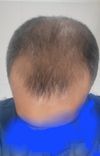
Visible hair improvement after 10 weeks using minoxidil, estradiol enanthate, acetophenide algestone, and bicalutamide. The user is a 25-year-old male with reduced testosterone levels, expressing a preference for less masculinity.
The GT20029 tincture, a topical androgen receptor degrader, showed significant hair growth and good safety in a China Phase II trial for male androgenetic alopecia (AGA), with the 1% dose twice weekly identified as optimal. The company plans to initiate Phase III trials in China and Phase II in the U.S., and the treatment also shows promise for acne.
The conversation discusses confusion over the dosage calculation of a topical solution containing 0.25% finasteride, 5% minoxidil, and 0.001% tretinoin. The user considers switching to a 0.025% finasteride solution to enhance the effects of tretinoin and minoxidil.
Various treatments for male pattern baldness including Minoxidil, Finasteride/Dutasteride, hair systems, and oral anti-androgens such as Spironolactone and Flutamide. It also mentions dermarolling as a possible treatment in conjunction with minoxidil.
A 30-year-old is experiencing positive hair growth results using finasteride daily, minoxidil twice daily, and dermastamping/dermarolling biweekly from July 2025 to January 2026. Friends and family have noticed significant improvement.
A 22-year-old has been using finasteride and minoxidil for 5 years to combat aggressive male pattern baldness, but is considering switching to dutasteride due to worsening hair loss. Dutasteride is suggested as it may be more effective in reducing DHT levels for aggressive cases.
The user is considering switching to topical finasteride or pyrilutamide to stabilize hair loss before a hair transplant, currently using oral minoxidil and finasteride. Suggestions include sticking to the current regimen as it is already potent, and caution against using pyrilutamide from unreliable sources.
The conversation is about a user's hair loss treatment regimen, which includes Dutasteride, oral Minoxidil, topical Dutasteride, Minoxidil sulfate, antioxidants, and various supplements. The user is also using a derma stamp and has paused Tretinoin due to a TCA peel recovery.
A 31-year-old experiencing rapid hair loss is considering whether to shave their head or use treatments. They were prescribed B12, topical finasteride 0.1%, and minoxidil 10% but are unsure about the correct dosage and potential side effects.
A 29-year-old male experiencing hair loss due to TRT is using minoxidil and dermarolling but is hesitant to use finasteride or dutasteride due to potential side effects. He is considering low level laser therapy (LLLT), PRP, ketoconazole shampoo, and oral minoxidil as additional treatments. A reply suggests that without a DHT blocker like finasteride or dutasteride, other treatments may not be effective long-term.
User is using minoxidil with tretinoin 0.025% and experiencing peeling and burning on the scalp. They are unsure if it's effective or if they are using it too frequently.
Minoxidil, dutasteride, and copper peptides are used in a tattooing method for hair regrowth, with some users noting better results compared to oral treatments. Copper peptides are considered to have minimal impact, but the method may reduce side effects.
The conversation discusses a hair loss treatment regimen that includes a topical spray with finasteride and minoxidil, tretinoin, and using a Derminator (microneedling device) at 1.25mm depth every 5-6 days. The user reports positive results after 90 days and plans to continue the treatment, with others commenting on the process and potential outcomes.
The user is seeking a replacement for topical minoxidil during a six-day vacation, considering options like intense massage or oral minoxidil. They are looking for advice on managing hair loss without topical solutions.
Magnesium L-Threonate may help treat balding by reducing DKK-1 expression without affecting DHT. Users discuss its potential effectiveness and application methods, with some considering trying it topically.
A user shared progress pictures after 50 days of using a compound with 10% minoxidil, 0.1% finasteride, and biotin, expressing satisfaction with the results. Another user commented positively on the progress.
A user shared a six-month update on hair improvement using Pyrilutamide and Minoxidil, noting significant hair regrowth and strength. Some participants questioned the legitimacy of the results and the source of Pyrilutamide.
Kintor Pharma finished enrolling and dosing participants in a Phase I trial for a hair loss treatment called AR-PROTAC (GT20029). The effectiveness of another drug, pyrilutamide (KX-826), for hair loss will be clearer after a Phase 2 trial expected to complete in January 2023.
The routine involves using minoxidil, dermapen, and tretinoin for hair loss, with minoxidil applied daily and tretinoin used on alternate days. It is suggested to avoid using tretinoin and dermapen on the same day to prevent irritation.
The conversation discusses the use of TRT, dutasteride, minoxidil, and potentially RU58841 for hair loss. Concerns about the risk of developing Cutis verticis gyrata with minoxidil and TRT are raised.
The user is using a solution of Finasteride, Minoxidil, and Tretinoin, which increases Minoxidil's effectiveness. They are seeking a reliable source of Tretinoin to add to over-the-counter Minoxidil solutions.
The conversation discusses hair loss treatments, specifically using Minoxidil, microneedling, and finasteride. The user is concerned about worsening hair loss and is advised to consider finasteride.
The conversation is about the legitimacy and affordability of ordering a Minoxidil response test from TrichoGene, an India-based company, as an alternative to Daniel Alain. The user is seeking feedback on whether TrichoGene is a reliable option.
After over a year of treatment with daily oral dutasteride and minoxidil, plus injected dutasteride every 6 months, the user is happy with the increased thickness of their hair and improved self-esteem, although scalp visibility remains. They encourage others to follow similar treatments for long-term hair maintenance.
A user's experience using topical finasteride and melatonin to regrow hair, as well as their use of dermaroller versus dr. Pen for microneedling. People discussed the benefits of oral minoxidil and questioned if melatonin could help with hair regrowth.
A 22-year-old is using a hair loss treatment protocol including dutasteride, microneedling, 10% minoxidil, 0.1% finasteride topical, a healthy diet, and a hair multivitamin. Users discuss the effectiveness of microneedling and the intensity of the treatment.
The user is using a hair loss treatment with finasteride 0.1%, minoxidil 5%, and tretinoin 0.01%, applied once daily at 1ml. They are questioning if a 60ml bottle used twice daily implies a higher recommended dose despite the same 5% minoxidil concentration.