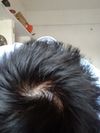
The conversation discusses hair cloning progress and mentions treatments like Minoxidil, finasteride, and RU58841. Users also talk about hair transplants and their effectiveness.
The user is using finasteride for hair loss and is frustrated with shedding but plans to add oral minoxidil for convenience and safety. There are concerns about using topical minoxidil around pets.
Switching from oral to topical minoxidil due to increased heart rate. The user seeks advice on maintaining their hair treatment while managing heart rate concerns.
The post and conversation discuss whether Minoxidil causes facial aging, with some users reporting no side effects and attributing negative effects to possible allergic reactions. The original poster suggests more research is needed to confirm any connection between Minoxidil and facial aging.
A 32-year-old man started oral minoxidil at 0.625mg daily, alongside topical minoxidil, to address hair thinning after experiencing side effects from other treatments. He plans to monitor his health closely and adjust the dosage after two months.
The conversation is about a person's 3.5-month hair regrowth progress using a combination of 8% topical minoxidil with 0.1% finasteride and 0.01% tretinoin, 5 mg oral minoxidil, and weekly use of a 1.5mm dermapen.
Tretinoin may enhance minoxidil absorption, potentially improving hair regrowth when combined with microneedling. Users discuss various treatments like minoxidil, finasteride, dutasteride, and microneedling, with mixed results and concerns about side effects and scarring.
A user is considering a hair transplant in a "mohawk" pattern with scalp micropigmentation (SMP) on the sides and back, questioning its feasibility and appearance. Others discuss donor region quality, potential scarring, and alternative treatments like dutasteride and RU58841.
The conversation discusses the use of topical minoxidil and finasteride for hair loss, with some users combining them with oral treatments. Users share their experiences and opinions on effectiveness, cost, and convenience, with mixed views on whether topical or oral applications are superior.
The user stopped using finasteride and RU58841 and is considering CB-03-01 for androgenic alopecia but is concerned about the cost and effectiveness, especially at a lower dose than in clinical trials. They are also using minoxidil, micro-needling, and nizoral shampoo but are unsure about the correct application method for CB-03-01.
Liposomal carriers for topical finasteride offer better targeting, reduced side effects, and less irritation compared to alcohol-based solutions, but availability and cost may limit their use. Minoxidil can dissolve in liposomal carriers, enhancing delivery and stability.
The conversation discusses using Musely's classic formula for hair loss, which includes minoxidil, dutasteride, tretinoin, ketoconazole, and hydrocortisone. Concerns are raised about hydrocortisone and the high concentration of dutasteride, with a preference for using research-backed concentrations without hydrocortisone.
The user discusses experiencing side effects from topical finasteride but not from oral finasteride, seeking advice on this issue. They mention a gradual increase in oral finasteride dosage with no side effects.
RU58841 stopped scalp itching for the user, providing relief from persistent itchiness associated with hair loss. Some users reported side effects like chest pain, while others found relief with different treatments like mometasone.
The user experienced significant hair regrowth using a topical treatment of Minoxidil and Finasteride, despite some brain fog as a side effect. They recommend starting treatment early and suggest topical options to minimize side effects compared to oral treatments.
The conversation is about the application timeline for tretinoin and minoxidil. It discusses whether to wait 30 minutes to an hour after applying tretinoin before using minoxidil or to apply tretinoin at night and minoxidil in the morning.
The conversation is about using tretinoin cream on the scalp for hair loss, including questions about the duration of use, daily amount applied, any issues faced, and its effect on hair fall and oily scalp. Specific treatments discussed are not mentioned in the provided text.
A 30-year-old is considering switching from a topical Minoxidil/Finasteride treatment to oral Minoxidil due to cost and insurance coverage. They seek advice on potential effects and experiences from others who have made a similar switch.
A user shared progress pictures showing significant hair regrowth after using a topical solution containing 5% Minoxidil, Finasteride, Redensyl, and Procapyl. The user reported no side effects and applies the solution twice daily.
A 22.5-year-old male is frustrated with doctors for not taking his diffuse thinning seriously. He has been using finasteride for 2.5 years, avoids topical minoxidil due to dandruff, and is hesitant about oral minoxidil due to weight and injury concerns.
Mixing minoxidil and alfatradiol in one bottle may affect their effectiveness due to potential stability issues. It's recommended to apply them separately for full benefits.
The conversation discusses combining topical cetirizine with minoxidil for hair loss treatment and inquires about the safety and absorption through the skin, as well as the possibility of adding melatonin.
The user shared progress on hair loss treatment using oral minoxidil, dutasteride, and castor oil, noting no side effects and considering adjusting minoxidil dosage. They also discussed the potential benefits of microneedling for hair growth.
The user is using Minoxidil, RU58841, CB-03-01, WAY-316606, Ketoconazole, MK-677, and derma stamping to treat hair loss and has noticed new hair growth, especially around the temples and hairline. They apply different treatments at various times of the day and have seen improvements in skin condition and body hair texture.
The user stopped using topical finasteride and minoxidil, leading to hair thinning and shedding, and has since restarted the treatment. They are experiencing significant shedding and are seeking advice on whether this is normal and when improvement might occur, while using a regimen that includes Nutrafol, microneedling, Nioxin, and Nizoral.
The post discusses using oral Minoxidil and Dutasteride for hair loss. Minoxidil improved hair growth with mild hypertrichosis, while Dutasteride caused severe acne, cognitive issues, and mild anxiety, leading the user to prefer Finasteride.
The user has been using minoxidil without results and recently started finasteride 1 mg due to visible scalp issues. They are seeking suggestions for further treatment.
Topical minoxidil being a difficult product to apply, with users considering finasteride, RU58841, and oral minoxidil as alternative treatments for diffuse thinning hair. Other advice includes shaving the head in the first 3 months of using minoxidil and finding ways to apply it without saturating the hair.
A user is experiencing continued hair loss despite using 0.5mg dutasteride and 2.5mg minoxidil, and is seeking advice on why the treatments aren't working and how to address potential androgen receptor sensitivity. Replies suggest getting tested and considering scalp micropigmentation (SMP).
The conversation discusses hair regrowth using topical RU58841 and Minoxidil. Users suggest adding finasteride or dutasteride for better long-term results.