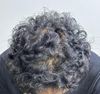
An individual's journey to treat their severe hair loss condition using the medications Pyrilutamide and RU58841. They will provide regular updates on their progress.
The post discusses a user's 6-month progress using topical finasteride (0.08%) and minoxidil (5%) once a day, combined with scalp micropigmentation (SMP). The user hopes for improved hair growth as they let their hair grow out.
Analyzing data on pyrilutamide, a potential hair loss treatment, as well as the effectiveness of other treatments such as Minoxidil, Finasteride, and RU58841.
The conversation discusses various hair loss treatments, including Breezula, KX826, and PP405, with mixed opinions on their effectiveness compared to finasteride and minoxidil. Some users express skepticism about the new treatments, while others remain hopeful about future developments.
A phase 3 trial for Breezula (clascoterone solution) to treat male pattern hair loss has been listed, with 726 participants and a completion date of January 2025. Other treatments mentioned include Aneira Pharma's combination of minoxidil and latanoprost, Triple Hair's combination of minoxidil, latanoprost, and finasteride, and a new microneedling and LLLT device called StimuSIL.
The conversation discusses using pyrilutamide with finasteride and minoxidil for hair loss treatment. The user is concerned about potential side effects and mentions using 1 mg finasteride on alternate days and daily minoxidil.
A 51-year-old woman switched from Minoxidil to Maneup, a copper peptide treatment, experiencing initial hair loss but later regrowth with different hair texture. Users debated Maneup's effectiveness, with some considering it alongside finasteride.
High prolactin levels may contribute to hair loss, and some users suggest supplements like mucuna pruriens, vitamin B6, vitamin E, L-Tyrosine, L-Theanine, DIM, and Zinc to lower prolactin. Lifestyle changes to increase dopamine, such as reducing screen time and stress, are also recommended.
PP405 cannot restore extracted hair follicles after a transplant as they are removed, not dormant. Combining verteporphin with wounding and PP405 is suggested but not confirmed effective.
The conversation discusses alternatives to 5AR inhibitors for hair loss treatment, suggesting options like minoxidil, KX-826, pyrilutimide, microneedling, and topical bicalutamide. Concerns about side effects and the effectiveness of these treatments are also highlighted.
User experienced gynecomastia from finasteride and found a solution using liposomal topical finasteride. This method minimizes side effects and is effective for hair loss treatment.
A Spanish dermatologist suggests sulforaphane for androgenetic alopecia (AGA) due to its potential to remove DHT metabolites, though high dosages are needed. A topical formulation might be possible.
Minoxidil without propylene glycol is sought to avoid dermatitis, with Rogaine foam and Tecflox suggested as alternatives. Users discuss using foam to prevent irritation and suggest heating it for easier application.
The conversation discusses using RU58841 for hair loss, with OP experiencing thinning in the front area and steady hair loss. OP plans to try microneedling while avoiding finasteride and dutasteride.
The user experienced significant hair regrowth over four months using oral finasteride, oral minoxidil, micro-needling, and rosemary oil. They reported no side effects and emphasized the importance of continuing the treatment to maintain results.
The user has been using oral finasteride for over a year and recently added GHK-CU for two months, seeing progress but seeking further improvement, especially on the hairline. They discuss sourcing GHK-CU, its effects, and the importance of third-party testing, while considering additional treatments like dutasteride and hair transplants for better results.
Low-dose daily aspirin reduces the effectiveness of topical minoxidil in treating androgenetic alopecia. Aspirin inhibits sulfotransferase enzymes, which are necessary for minoxidil to work.
A user's progress with hair loss treatment using finasteride and minoxidil, with additional advice from other users about the use of dutasteride, LLLT (irestore hat), and Dr pen microneedling.
A user shared their 6-month progress using oral dutasteride (0.5mg daily), topical minoxidil (5% once daily), and ketoconazole shampoo (2% weekly) for hair loss, reporting increased libido and no side effects. They chose dutasteride over finasteride due to availability and convenience.
PP405 shows promise for hair follicle reactivation with minimal side effects. Users recommend continuing Minoxidil and Finasteride until more results are confirmed.
A 19-year-old male is considering switching from topical to oral Minoxidil and finasteride due to unsatisfactory results but is concerned about potential side effects. It is suggested to start with low doses of oral versions to test tolerance, as they may be more effective but carry higher risks.
The conversation discusses using a mixture of 4% peppermint oil in jojoba oil to reduce flaking and dandruff caused by 5% Minoxidil lotion. The user reports significant improvement after one application of the oil mixture.
Automatic-Law-3612's progress with hair loss treatments, including topical finasteride, topical dutasteride, minoxidil and pyrilutamide. They have been using these products for two weeks and noticed baby hairs in their temples getting longer.
The user's progress with their hair loss treatment of topical minoxidil and finasteride solution, as well as scalp massage; other users commenting on the results being impressive for someone of Asian background.