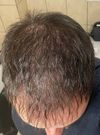
The post discusses using ImageJ software to objectively track hair regrowth progress. The user is treating Androgen alopecia with dutasteride and minoxidil.
The conversation is about using oral finasteride and minoxidil for hair loss, with consideration of adding topical GHK-Cu for skin and hair benefits. The user seeks opinions on this combination.
The conversation discusses why some men with hair transplants choose certain hairstyles that may reveal their surgery, while others, like Machine Gun Kelly (MGK), opt for styles that conceal it. Specific treatments mentioned include hair transplants, minoxidil, and finasteride.
Combining PRP with topical minoxidil 5% and finasteride 0.25% for hair loss treatment. One user reported success using minoxidil and finasteride with micro-needling, but not PRP.
Male pattern baldness (MPB) may be an early warning sign for type 2 diabetes due to its association with insulin resistance. Treatments discussed include testosterone therapy and finasteride, which affects hormone levels related to hair loss and insulin sensitivity.
The conversation is about a user's 3-month hair regrowth progress using finasteride, minoxidil, and a 0.5mm dermaroller, with recent addition of caffeine shampoo. Users are responding positively and inquiring about application methods.
The user is considering using tretinoin with topical finasteride due to poor absorption and side effects from oral finasteride. They are also contemplating switching to topical dutasteride, while others suggest trying oral minoxidil or lower oral doses.
Ethosomes are suggested as an effective delivery method for topical finasteride solutions, requiring the addition of a phospholipid like soya lecithins. The user questions why do-it-yourself solutions don't commonly use ethosomes despite their potential benefits.
A user named "bmbshell" who was dealing with hair loss and initially tried to fix it with a hair system before deciding to try finasteride, dutasteride, minoxidil, microneedling, and biotin supplements. They documented their progress over the past 1 year and 3 months, showing how effective these treatments were in regrowing their hair.
A user's experience of using Fin, Min and Microneedle treatments to help thicken their hair before undergoing a Hair Transplant (HT) procedure. The conversation also includes discussion about the results post-HT, including pictures.
The user is concerned about hair loss and is hesitant to use treatments like finasteride and minoxidil due to potential side effects. Another user suggests gradually introducing finasteride to minimize side effects and maximize results.
Hair loss treatments like Minoxidil, finasteride, and potential mRNA therapies are discussed. There is skepticism about targeting specific genes due to the complex genetic nature of hair loss.
The conversation discusses two methods for making topical finasteride: using ethanol and propylene glycol or mixing it with topical minoxidil. The focus is on solubility and absorption, with a suggestion to crush pills finely and possibly mix with minoxidil at a slightly elevated temperature.
User suggests rotating scalp 180 degrees to address hair loss. Others discuss sanity, ethics, and similar procedures like scalp reduction and hair transplants.
The user is using a topical solution with finasteride, minoxidil, and other ingredients, along with a red light laser cap and dermapen, to address hair thinning. They are considering a hair transplant but are advised to try dutasteride and oral minoxidil for 12 to 18 months before deciding.
A user is considering using verteporfin with microneedling, oral/topical minoxidil, and RU58841 to treat hair loss. They seek advice on dosage and application methods.
A user on finasteride for hair loss is considering topical dutasteride to further reduce scalp DHT and is using various other topicals as substitutes for minoxidil due to concerns about the safety of their cats and potential heart side effects from oral minoxidil. They are exploring whether a once-weekly application of topical dutasteride would be effective.
A user is treating their advanced hair loss with a regimen including topical finasteride, minoxidil, hydrocortisone, stem cell serum, peptide serum, multivitamins, he shou wu tea, derma pen, argan oil, and a derma roller. Replies suggest it's too early to judge progress and recommend staying consistent, with one suggesting oral minoxidil as an additional option.
The conversation is about a user inquiring about a hair loss treatment product that contains minoxidil, azelaic acid, retinol, and caffeine, and whether it is more effective than Regaine foam. No specific treatments or outcomes are discussed.
The conversation humorously discusses various methods of applying minoxidil for hair loss, with some users suggesting oral minoxidil as a more convenient option despite potential side effects. The original poster jokes about using a red light helmet with mesotherapy needles for continuous minoxidil application.
The conversation discusses the effectiveness of combining tretinoin with minoxidil for hair loss. The user notes better results from microneedling rather than the tretinoin and minoxidil combo.
Dutasteride mesotherapy is discussed as a potentially effective hair loss treatment with no sexual side effects, requiring less frequent application than daily pills. However, it is not widely popular due to limited availability, high cost, and skepticism about its effectiveness.
The user is considering switching from finasteride to daily dutasteride and adding oral minoxidil to their current regimen of topical minoxidil, tretinoin, and microneedling due to a lack of progress in hair regrowth. They are seeking advice on whether this change could make a difference.
The user is using minoxidil, finasteride, and recently added tretinoin to address hair loss, specifically around a receding hairline. They are seeking advice on application methods and mention experiencing mild skin rashes potentially from tretinoin.
A user's journey with hair loss and their use of topical finasteride, minoxidil and pyri/minoxidil ratio treatments to attempt hair regrowth. Replies focused on offering support and advice while sharing personal experiences with different treatments.
Various hair growth treatments were discussed, including microneedling, bimatoprost, setipiprant, stemoxydine, PGE2, CB-03-01, WNT Beta-Catenin upregulators, KY19382, topical estrogen, IGF-1, GH, MK-677, oral castor oil, fisetin, resveratrol, cetrizine, and lactic acid. Users shared experiences and sources for these treatments, with some expressing interest in topical solutions and others noting the lack of FDA approval or scientific evidence for certain options.
The conversation is about a 23-year-old man's 5-month progress using minoxidil, finasteride, and dermarolling to treat hair loss, with before and after photos taken in the same location and lighting. One commenter notes difficulty in assessing the improvement due to the way the hair is combed over the bald spots.
A user who is trying alternative treatments, such as mucuna pruriens dissolved in water/alcohol and a blend of jojoba oil, rosemary oil, and peppermint oil, for hair loss. Other users have shared anecdotal evidence, discussed the potential effectiveness of certain treatments, and questioned the time sensitivity of experimenting with new treatments.
Recruitment for a verteporfin trial and a separate hair cloning trial using verteporfin and other methods is underway, with locations in Jordan, NYC, Beverly Hills, and Memphis. Dr. Bloxham is conducting the hair cloning trial, and interested participants are encouraged to contact him directly.
A new topical treatment, TH07, combining finasteride, latanoprost, and minoxidil, is entering phase III trials with promising early results. Some users express skepticism, noting the treatment uses existing products.