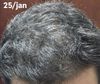
The conversation is about seeking user experiences with Traya for hair loss treatment, focusing on the effectiveness and convenience of its doctor, diet, and product approach. The user is conducting research and requests feedback on what worked or didn't work.
Microneedling combined with minoxidil is more effective for hair growth than microneedling alone. Optimal results are seen with weekly microneedling using 0.5 - 1mm needles and regular minoxidil application, avoiding minoxidil on the needled area for 24 hours.
A user with seborrheic dermatitis uses Ketoconazole 2% and Betamethasone and is considering starting Minoxidil for thinning hair. They are concerned about using Minoxidil and Betamethasone simultaneously.
The post discusses the confusion about the optimal microneedling depth and frequency for hair growth, and when to apply treatments like minoxidil. A reply suggests the best method is using a 1.25mm depth every 7 days with a specific device, holding it for 10 seconds to stimulate hair growth.
The conversation discusses the use of AlphaInfuse, a micro-infusion system with Panax ginseng and Eclipta prostrata extracts, for hair growth and its comparison to Minoxidil. The original poster seeks personal experiences and evidence of its effectiveness.
The conversation discusses whether using topical minoxidil in addition to oral minoxidil 5 mg daily will enhance hair growth. The user also applies a Biotinyl tripeptide cream/lotion and is concerned about the efficacy and side effects of oral versus topical minoxidil.
Some users believe John Harper's hair regrowth claims using dermarolling, coffee, and oils are misleading, while others defend his methods. The conversation highlights skepticism about alternative treatments and emphasizes finasteride, dutasteride, and minoxidil as proven solutions for hair loss.
Dr. Oscar Muñoz's hair loss treatment tier list suggests oral minoxidil and finasteride are highly effective, while topical treatments like RU58841 and microneedling are less effective. Users discuss the effectiveness of various treatments, with some favoring oral options for their practicality and higher response rates.
Using tretinoin, minoxidil, and The Ordinary Multi-Peptide Serum together for hair loss is discussed, with suggestions to skip the serum as it is ineffective for regrowth. Tretinoin is recommended for temple regrowth, and combining it with derma stamping is advised.
The conversation is about someone's three-year experience with irregular derma rolling, Minoxidil, and Redensyl for hair loss, hoping to thicken areas with fine hair.
DUPA is considered more treatable than FAPD, as FAPD involves scarring that prevents hair regrowth. The user has started treatment with oral dutasteride and minoxidil, hoping for better results than previous treatments.
A user's progress using minoxidil and dutasteride mesotherapy to treat hair loss, with advice from other users on whether or not to continue the treatment. Suggestions included trying oral treatments such as finasteride and RU58841, and considering a hair transplant for more significant results.
Minoxidil and finasteride are effective for hair loss, especially when used together. Microneedling may enhance minoxidil's effects, but its standalone effectiveness is uncertain.
Using a routine of 5% minoxidil, microneedling, and tretinoin for hair loss. The user seeks advice on the ideal weekly schedule for applying these treatments.
Trioxidil's effectiveness is questioned, with users suggesting it might be a marketing gimmick. Alternatives like Lipogaine and MSM are discussed, with some users sharing positive experiences with combining treatments like minoxidil and nanoxidil.
Minoxidil 5% combined with 0.01% tretinoin may be as effective as using minoxidil twice daily. Users discuss switching to oral minoxidil for consistency, with concerns about side effects.
A 23-year-old male has been using oral finasteride and topical minoxidil for 14 months, along with derma stamping and vitamins, but is considering switching to dutasteride due to dissatisfaction with progress. Users suggest cutting hair shorter to better track progress, and some recommend adding dutasteride and possibly a hair transplant in the future.
The user has been using topical minoxidil for 4 months and finasteride for 3 months, along with supplements and micro-needling, and is considering red light therapy for hair growth. They are seeking advice and support, discussing the potential switch to oral minoxidil due to convenience and concerns about side effects.
A user is seeking advice on mixing GHK-cu/AHK-cu with minoxidil for hair loss treatment. They are asking for recommendations on the correct mixing ratios and any experiences with copper peptides.
Monthly microneedling combined with low-dose topical dutasteride shows promising results for hair density and thickness with minimal side effects, especially in the frontal area. Despite its effectiveness, it is not widely discussed or used due to availability and cost concerns.
The user experienced worsening hair loss after switching treatments and is now using generic minoxidil and finasteride. They are considering continuing finasteride, trying dutasteride, or combining treatments like mesotherapy for better results.
The conversation is about concerns over using a combination spray containing finasteride, minoxidil, and ketoconazole for hair loss. The user is worried about potential scalp irritation and considers using separate products to better manage sensitivity.
12 companies having drugs or therapies in clinical trials during 2023, with various molecules and phases of trial; the probability that some may fail; and progress being made in the field.
User's hair loss journey includes Minoxidil 5%, HIM's topical finasteride and minoxidil, derma rolling, and rosemary oil. Experiences some side effects, still considering hair transplant for better hairline.
The conversation discusses using microneedling combined with castor, peppermint, rosemary oils, and caffeine as a treatment for mild hair loss, aiming to stop or slow down hair loss and potentially regrow hair. The effectiveness of this treatment without side effects is uncertain, and it may slow hair loss but results vary.
Amplifica has not provided updates on SCUBE3 and AMP-303, raising concerns about their trial outcomes. Users also mention other treatments like Minoxidil, finasteride, RU58841, PP405, and ET-03.
The user is using dutasteride, finasteride, and RU58841 for hair loss but is allergic to minoxidil. Suggestions include dropping finasteride, increasing dutasteride dosage, and considering alternatives like microneedling, laser treatments, scalp massage, and supplements.
The user takes 1 mg finasteride three times a week, topical minoxidil daily, and Saw Palmetto both topically and orally on non-finasteride days. They recently added 1 g of pumpkin seed oil daily to improve hair thickness and are seeking advice on dosing and cycling Saw Palmetto.