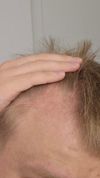
Hair loss treatments discussed include promising Pyr available online and Verteporfin dosing after FUE for follicle regeneration, but no updates on SCUBE3.
.
This user experienced positive results from using a combination of minoxidil and finasteride, with no reported side effects after two months. Others have also shared their experiences with both short-term and long-term use of finasteride.
Pyrilutamide, a potential topical treatment for male pattern baldness, and the user's anticipation of its Phase 2 trial results. Several users discussed their experiences with Finasteride and RU58841, while others voiced skepticism about the efficacy of Pyrilutamide.
Hair loss treatments discussed include Minoxidil, Finasteride, and RU58841. Pyrilutamide Phase 2 results are expected in June 2022, with hopes for a better alternative to current treatments.
A user experienced severe side effects, including symptoms of congestive heart failure, after using excessive doses of minoxidil for beard growth. They stopped using it due to financial reasons, but still suffer from lingering symptoms and are advised to seek medical attention.
The user experienced increased sex drive and financial cost after 2.5 months on Dutasteride and 5% topical Minoxidil. They advise starting treatment early to prevent hair loss and mention that side effects are minimal, with Dutasteride having a longer-lasting presence in the system compared to Finasteride.
Finasteride can increase body and facial hair growth due to increased testosterone, despite its intended use to reduce hair loss on the scalp. Some users consider trying topical finasteride for less systemic impact, while others report mixed results and side effects.
Topical finasteride concentrations are likely much higher than necessary for effective follicular DHT suppression, with current standards being 100-1000 times above the theoretical minimum. Lower concentrations (0.001-0.0025%) might still work locally while minimizing systemic exposure.
A 19-20-year-old has been using 0.5 mg of dutasteride daily for a year to combat hair loss, avoiding minoxidil due to side effects. They plan to continue this regimen and consider a future hair transplant, experiencing no significant side effects from dutasteride.
New hair loss treatments like GT20029 and PP405 could potentially replace minoxidil and finasteride, offering better results with fewer side effects. However, current treatments like finasteride and minoxidil are still effective for many, despite concerns about side effects.
Topical Clascoterone showed a 539% improvement in hair count compared to placebo, but its effectiveness and safety are debated. Users compared it to minoxidil and finasteride, with mixed opinions on its potential release in 2026 or 2027.
A user shared their experience with hair loss, initially using oral finasteride and minoxidil but experiencing side effects like low libido and ED. They switched to a topical finasteride and minoxidil combination, which improved their hair thickness with fewer side effects.
The user is experiencing a receding hairline and is considering treatments. They are seeking advice on whether to use finasteride, minoxidil, or both for hair preservation and potential regrowth.
The user is experiencing diffuse thinning and inflammation despite using 2.5mg dutasteride daily, ciclopirox, and ketoconazole shampoos. They are considering treatments like hydroxychloroquine and JAK inhibitors due to suspected scarring alopecia and have faced challenges in obtaining a scalp biopsy.
Some individuals experience side effects from 5AR inhibitors like finasteride and are considering hair transplants without these medications, with some opting for surgeons like Dr. Zarev. Others are exploring alternative treatments and waiting for new medications in development, while some discuss managing side effects through lifestyle changes or additional medications.
Veradermics' phase 2 trial of slow-release oral minoxidil shows promising hair regrowth with minimized side effects, gaining significant attention and funding. PP405 is also noted for its potential as a side-effect-free alternative.
Oral minoxidil significantly increases hair growth, including facial hair, in a short period. Some users suggest combining it with finasteride for better long-term results, despite potential side effects.
Dutasteride reduces DHT more effectively in hair follicles than finasteride, but some individuals still experience hair loss despite treatment. Combining oral and topical finasteride may improve results, and some users experiment with topical dutasteride despite uncertainties about its absorption.
The user has seen significant hair regrowth after three years of using Minoxidil inconsistently and Hims topical Minoxidil/Finasteride for a year. They are considering switching to oral Finasteride and increasing topical Minoxidil use, with suggestions from others to try Dutasteride and microneedling for further improvement.
PP405 is a potential hair loss treatment showing promising early results, with hopes for market release by 2028, but skepticism remains due to inconclusive data and past disappointments with similar products. Current treatments like Minoxidil and Finasteride have side effects, leading some to anticipate PP405 as a safer alternative, though its effectiveness compared to placebo is debated.
Pelage Pharmaceuticals is developing PP405, a topical treatment for hair growth, currently in Phase 2a trials. There is skepticism about the company's claims, and no fast-tracking approval timeline has been detailed.
Creatine is unlikely to worsen hair loss for those on finasteride, with no strong scientific evidence linking it to increased hair loss. Many users report no negative effects on hair while using creatine.
Minoxidil requires at least 6 months to show results and may not work for everyone. Combining it with Finasteride can improve outcomes, but stopping Minoxidil can result in losing any regrowth.
GT-20029 is discussed as a potential hair loss treatment, with concerns about its safety and systemic absorption compared to finasteride. Users express skepticism about its effectiveness and safety, noting that it may not surpass existing treatments like finasteride and minoxidil.
Pyrilutamide is discussed as an effective hair loss treatment by some users, despite skepticism due to limited data and underwhelming trial results. Users compare it to finasteride, minoxidil, and RU58841, with some expressing interest in its potential as an adjunct treatment.
Training scalp muscles to absorb more DHT is suggested as a hair loss solution, but users debate its effectiveness compared to medications like dutasteride and finasteride. Concerns about side effects of DHT blockers, such as reduced libido, are discussed, with some advocating for natural remedies like scalp massages and healthy living.
Dutasteride may cause chronic infertility by reducing semen volume and motility, with concerns about irreversible prostate fibrosis. Users consider switching to finasteride or using treatments like minoxidil and microneedling, weighing hair preservation against fertility.
Oral minoxidil is seen as more effective and convenient than topical minoxidil for hair regrowth, but it may cause heart-related risks. Users often combine it with finasteride or dutasteride, though some prefer topical treatments due to safety concerns.
Switching from finasteride to dutasteride can cause hair shedding, with mixed results; some see improvement, others see worsening. Using both treatments together initially may help reduce shedding.