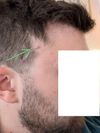
Minoxidil alone gave one user only short fuzzy hair after a year. They're now trying a 0.5 microneedling roller and seeking opinions on its effectiveness after using minoxidil.
Bhringraj oil showed better hair regrowth results than minoxidil in mice, but its effectiveness in humans is uncertain. Users discussed using bhringraj oil, coconut oil, and microneedling for hair regrowth, with some reporting slow but noticeable improvements.
The user shared progress pictures after 3 months of using topical finasteride, minoxidil, and microneedling for hair loss. They plan a hair transplant at 6 months, and others inquired about microneedling frequency and depth.
A user who initially had positive results with oral finasteride, topical minoxidil, and microneedling for hair loss, but experienced side effects like fog and depression. After stopping and losing progress, they restarted with topical treatments and microneedling, reporting good results and no side effects.
Significant hair regrowth was achieved using 1mg finasteride daily, 5% minoxidil nightly, and weekly 1.5mm microneedling, with no side effects. Topical minoxidil and microneedling are recommended for similar results.
A user experienced skin irritation and acne while using Minoxidil foam, but after stopping both the foam and a sea salt spray, their skin improved. They plan to try oral Minoxidil, suspecting the sea salt spray, not Minoxidil, was the main cause of their skin issues.
The user has been using Finasteride and Minoxidil for 7 months and started microneedling a month ago, but is experiencing increased hair shedding and is concerned about its effectiveness. They have vitamin D3 and B12 deficiencies and are seeking advice and encouragement due to a family history of baldness.
A 26-year-old uses topical minoxidil, oral finasteride, and Nizoral shampoo for hair thinning and is considering microneedling but is unsure about the best approach. Users suggest using a 1.0mm dermaroller once a week, cautioning against overuse due to potential scarring, and some recommend combining microneedling with minoxidil for better absorption.
OP injured their temple using derma rolling and tretinoin, causing peeling and potential hair follicle damage. Users suggest the injury might be permanent, possibly resulting in scar tissue where hair won't grow.
A user shared their 2-month progress using Minoxidil, Finasteride, Keto shampoo, and microneedling for hair growth, reporting positive results. They plan to continue and update the community.
The conversation discusses whether a longtime NW7 scalp has vellus hairs under a microscope or is completely smooth. Treatments mentioned include Minoxidil, finasteride, and RU58841.
The user shared progress pictures showing improvement in hair growth after one year of using finasteride and minoxidil. They are considering microneedling to further improve their hairline and have chosen to use a derma stamp.
The conversation discusses experimenting with microneedling for hair loss, specifically addressing non-responsiveness and the use of topical treatments like dutasteride, minoxidil, and tretinoin. The user seeks advice on effective frequency and depth combinations for better results.
The user is experiencing hair loss despite using finasteride, minoxidil, and needling since March. They suspect needling too deeply might be an issue and have adjusted the depth recently.
Microneedling is more effective when combined with minoxidil, especially for temple regrowth, but is considered near-useless on its own. Users suggest combining microneedling with oral minoxidil and dutasteride for better results, while some caution against potential scalp damage.
The user is starting a hair loss treatment using a mix of coconut oil and rosemary oil, combined with microneedling. They plan to post results in 6 months.
A user reports significantly reduced hair shedding by using a topical mixture containing 10% Minoxidil, 0.1% Melatonin, 5% Azelaic Acid, 5% Rosemary Oil, and 5% Peppermint Oil, and attributes the success mainly to Melatonin. They also use a copper peptide serum (AHK-Cu) for hair growth and Ketoconazole shampoo for scalp cleaning, but have stopped using other treatments like Finasteride and RU58841.
User has been using minoxidil 6%, finasteride 0.3%, tretinoin 0.025%, and microneedling twice a week for 2.5 months. They are considering switching to oral treatments.
User made progress with topical Finasteride/Minoxidil and topical Dutasteride for hair loss. Microneedling at 1.5mm daily was also mentioned as part of the treatment.
A 36-year-old male has been using finasteride, 5% minoxidil foam, and microneedling with a 0.75mm dermastamp or Dr. pen for three months. He notices thicker hair and reduced hair loss, with high testosterone and normal DHT levels, while managing prolactin levels with vitamin B6.
The user has been using finasteride, minoxidil, and microneedling consistently for one month to improve hair regrowth. They also use collagen peptides, pumpkin seed oil, vitamin D, biotin, nizoral shampoo, adenosine shampoo, caffeine topical, and rosemary oil as part of their routine.
User shared progress pictures after 2 months of using 5% topical minoxidil, microneedling, and recently adding 0.01% topical finasteride. The minoxidil solution also contains caffeine, azelaic acid, retinol, adenosine, biotin, and niacinamide.
User is using a homemade topical treatment with .015% finasteride, 5% minoxidil, and microneedling at .75mm depth. They also use 2% ketoconazole shampoo, various oils, and are considering increasing finasteride concentration due to mixed results.
This conversation was about a user's progress pictures from using minoxidil and microneedling to treat hair loss. Other users suggested finasteride as an additional treatment, while cautioning that the drug could have permanent side effects.
User discusses potential hair loss treatment SCUBE3 and shares mixed opinions on its effectiveness. One user reports positive results after applying SCUBE3 following microneedling.
The user plans to use a 1.5 mm dermapen for microneedling every 10 days and is considering applying aloe vera afterward. They also inquire about the timing for washing their hair before and after the treatment.
Microneedling and tretinoin may enhance minoxidil absorption for hair loss, but evidence on their effectiveness is limited. Iron supplements and broccoli sprouts are suggested for enzyme activation, but their impact on hair is unclear.
Microneedling's effectiveness for hair growth is debated, with some users reporting positive results when combined with Minoxidil, while others express concerns about potential skin damage and infections. Tretinoin is suggested as an alternative to enhance Minoxidil absorption.
Switching from 2% liquid minoxidil to 5% foam minoxidil reduced scalp irritation but increased eyebrow flakiness and thinning. The user speculates that propylene glycol in the liquid formulation might have been protecting against seborrheic dermatitis while causing contact dermatitis.
A 29-year-old man experienced significant hair thickening at the front and top after using finasteride and microneedling for two months, as noticed by his hairdresser. He used 0.5 mg/day of finasteride orally, switched to a topical solution, and performed microneedling with a Derminator2 every 6-7 days.