The user shared progress photos of hair regrowth using copper peptides and NAD+ over five months. Another user commented on the lighting, and another praised the progress.
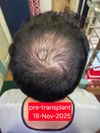
A 28-year-old male shares his 7-month progress after a crown hair transplant, using topical minoxidil foam, finasteride, and microneedling. He seeks feedback on whether his crown's progress is typical and if further thickening is expected between months 7 and 12.
Dr. Muñoz's discovery suggests that targeting potassium channels in fibroblasts could reactivate hair growth, offering new treatment possibilities for alopecia. Potential strategies include using minoxidil, diazoxide, and other potassium channel openers, as well as bioelectric devices and direct growth factor applications.
A user is 6.5 months into using topical 5% minoxidil and 0.25% finasteride daily, with added Nizoral 2% and microneedling. They report hair thickening and regrowth on the hairline but seek advice on crown improvement, noting results can take up to a year.
The user shared progress pictures of their crown after using 5% minoxidil, finasteride, ketoconazole shampoo, microneedling, and PRP treatments. They have been using minoxidil, ketoconazole shampoo, and microneedling for 4.5 months, and finasteride for 2 months.
MCL-1 protein may help maintain hair follicles in the growth phase and prevent miniaturization. There is interest in experimental treatments like exosomes, peptides, or stem cell serums to upregulate MCL-1 for hair loss, especially for those not using minoxidil or finasteride.
The user switched from topical to oral finasteride and minoxidil, noticing thicker and longer baby hairs, suggesting potential regrowth at the temples. Other users agree it looks like a sign of success.
A user shared an 18-month update on their crown hair transplant, performed by Jason Sorgi at Boston Hair Restoration, expressing satisfaction with the results. They continue to use oral minoxidil and finasteride to maintain hair health.
A user shared their success with 1mg daily finasteride, regrowing their crown hair significantly over 15 months without side effects. The user attributes their results to being a hyper responder and did not use minoxidil or other treatments.
The conversation is about experiencing hyper-trichosis from taking oral Castor Oil. The user reports increased hair growth on the stomach and legs but is not concerned as it is harmless and will stop when the treatment stops.
The conversation discusses the use of AlphaInfuse, a micro-infusion system with Panax ginseng and Eclipta prostrata extracts, for hair growth and its comparison to Minoxidil. The original poster seeks personal experiences and evidence of its effectiveness.
Broccoli or sulforaphane supplements are unlikely to improve Minoxidil results due to the need for an unrealistically large dose. Tretinoin, micro-needling, and low-dose oral Minoxidil may be more effective for those lacking the necessary enzyme in the scalp.
A user shares their experience with an FUE hair transplant performed by Dr. Mario Marzola, detailing the procedure, costs, and post-operation care. They report feeling slightly nauseous but satisfied with the results and plan to provide daily updates.
User has been using 1.25 mg finasteride and 2.5 mg minoxidil daily for 5 months, along with 5000 mcg biotin for 1.5 months. They noticed peach fuzz growth around month 4 and are seeking confirmation if this indicates hair regrowth.
2-deoxy-D-ribose, a sugar molecule, is found to be 80%-90% as effective as Minoxidil in promoting hair growth, showing potential for alopecia treatment. Concerns include high cost, lack of human studies, and possible side effects like diarrhea and nausea.
The user has mostly recovered hair density using finasteride, alternating oral and topical minoxidil, and occasional dermarolling, but the crown area is still struggling. Advice includes continuing treatment for up to 24 months and possibly consulting a doctor if issues persist.
The user is asking if they are experiencing hair regrowth while using a treatment regimen that includes hair regrowth gel with castor oil, minoxidil 5% with latanoprost, dermastamping once a week, ketoconazole shampoo, and nizoral cream. They have shared photos after applying these treatments.
The user is using finasteride, topical minoxidil, derma rolling, ketoconazole shampoo, and multivitamins for hair regrowth. They also drink topical minoxidil due to the unavailability of oral minoxidil, despite concerns from others about safety.
The conversation discusses hair regrowth using RU58841 and Minoxidil in the morning, and Minoxidil with needle massage in the evening. The user is inquiring if there are signs of hair regrowth by comparing photos from September 3 to recent ones.
The user started using Minoxidil, Finasteride, and vitamins, including freeze-dried organ capsules, for hair regrowth. They report satisfying results with some improvement, though opinions on progress vary.
RT1640, a combination of cyclosporin A, minoxidil, and RT175, is discussed as a potential treatment for hair regrowth and repigmentation. The unique formulation aims to enhance hair follicle growth and restore hair pigment without the negative side effects of immunosuppressants.
A user reports significant hair density increase and new growth at the temples after two months of using finasteride, minoxidil, ketoconazole, dermarolling, MK-677, zinc, and vitamin D3, with shedding stopping a week ago. They recently added MK-677 to their regimen.
The user is using dutasteride, estradiol cypionate, microneedling, oral minoxidil, and plans to add ketoconazole for hair regrowth. They are questioning if the improvement is due to actual regrowth or just better photo angles.
A naturally occurring sugar, 2-deoxy-D-ribose, may promote hair growth by forming new blood vessels. There is skepticism about its effectiveness and concerns about potential side effects, with some users comparing it to existing treatments like Minoxidil and finasteride.
The user is seeing positive results in hair growth using a combination of topical minoxidil, finasteride, microneedling, and keto shampoo. They also use a red light panel for collagen rebuilding and are happy with the progress.
A user is participating in a phase 3 trial for Clascoterone, a topical acne medication that may stimulate hair growth, and will share results after 6 months. They will have a section of their hair shaved and marked with a tattoo for the study.
A user shared their 5-month hair regrowth progress using 5% topical minoxidil daily, microneedling weekly, and ketoconazole shampoo twice a week. Some suggest adding finasteride to maintain results, while others commend the current regimen's effectiveness.
The user completed a Clascoterone study with no observable changes in hair loss and plans to try microneedling and Minoxidil next. They will microneedle weekly and apply Minoxidil twice daily, except on the night of microneedling, and compare results after six months.