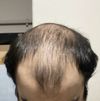
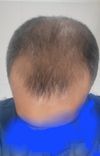
Starting with 5 mg of oral minoxidil for faster initial results, then reducing to 2.5 mg to maintain progress. The user seeks opinions on this approach.
A user's successful 6-month journey with Minoxidil, Finasteride and 0.05 Derma Rolling to regain their hairline, eyebrows, facial hair and overall youthful look. They also discussed the use of topical minoxidil for eyebrow thickening, as well as other skincare routines and healthy lifestyle habits.
The conversation discusses HMI-115, a potential cure for hair loss. Users share mixed opinions, with some expressing skepticism and others sharing anecdotal evidence of its effectiveness, including photos of significant hair regrowth from a trial participant.
The conversation is about creating a topical hair loss treatment with B6, zinc, and azelaic acid, which is claimed to inhibit 90% of scalp DHT. One user is skeptical about the effectiveness of this treatment and its comparison to other treatments without side effects.
Breezula's phase 3 results are expected soon, but its release is likely delayed until 2027 or 2028. The discussion highlights the need for more hair growth stimulants like AMP-303 and PP-405, as current treatments like Dutasteride effectively stop hair loss but don't regrow hair.
Breezula's phase 3 results are expected soon, with discussions on the effectiveness of androgen receptor antagonists like spironolactone and the potential of GT20029. Users express skepticism about new treatments and discuss the complexities of male pattern baldness, often relying on finasteride despite its side effects.
Magnesium L-Threonate may help treat balding by reducing DKK-1 expression without affecting DHT. Users discuss its potential effectiveness and application methods, with some considering trying it topically.
Cosmo Pharmaceuticals has enrolled about 850 out of 1400 patients for their phase 3 clinical trials of clascoterone (Breezula) and claims to be on schedule. The conversation is about hair loss treatments.
A 19-year-old male experienced significant hair loss, initially thought to be male pattern baldness (MPB), and used minoxidil and briefly finasteride. After realizing the issue was telogen effluvium (TE), he improved his diet and supplemented with vitamins, which led to substantial hair regrowth.
Finasteride and minoxidil can be obtained cheaply through Mark Cuban's Cost Plus Drugs and Costco's Kirkland brand, respectively, costing about $7.53/month combined. Amazon's RXPass and virtual visits at Dr. B. offer additional savings.
KX-826 Pyrilutamide 1% is launching soon, and users are discussing its potential benefits and drawbacks compared to other treatments like Minoxidil and finasteride. Some users are skeptical about its effectiveness, while others are hopeful it will be a safer alternative.
Breezula, a hair loss treatment, is expected to cost around $100 a month and is anticipated to be released in 2026. The effectiveness of Breezula is debated, with some suggesting it loses effectiveness over time and others arguing it maintains hair compared to baseline.
Melatonin is being explored as a hair loss treatment, with one user mixing it into minoxidil but not seeing results. The conversation discusses experimenting with melatonin concentrations.
The conversation discusses the high prices of hair loss treatments, specifically cb-03-01 and KY19382. It also mentions the use of Minoxidil, finasteride, and RU58841.
The user stopped oral treatments due to side effects and switched to a regimen of topical minoxidil, tretinoin, azelaic acid, and dermaneedling, with recent addition of topical finasteride. They are questioning the long-term effectiveness of non-hormonal methods and considering hair transplantation.
Aminexil is similar to Minoxidil but less effective and not widely used, with some users reporting minor regrowth. It is not FDA-approved and has been removed from some products, though some people still use it, often in combination with Minoxidil.
PTD-DBM is being explored for hair regrowth by targeting CXXC5, with clinical trials expected after pre-clinical studies. Users express anticipation and skepticism about its effectiveness.
Men with early male pattern baldness (MPB) may have hormonal abnormalities similar to those in women with PCOS. Specific treatments mentioned include Minoxidil, Finasteride, and RU58841.
A 25-year-old shared their 3-month progress using a combination of 1mg finasteride and 5% minoxidil for hair loss. The images show noticeable improvement in hair density.
Low-Level Laser Therapy (LLLT) is seen as a safe and effective method for maintaining hair and promoting regrowth in androgenetic alopecia (AGA) and male pattern baldness (MPB), with devices like the HairMax LaserComb® and iRestore helmet being popular. Some users and professionals are skeptical about its long-term effectiveness and cost.
Male pattern baldness (MPB) may be an early warning sign for type 2 diabetes due to its association with insulin resistance. Treatments discussed include testosterone therapy and finasteride, which affects hormone levels related to hair loss and insulin sensitivity.
A user is seeking a 15% Minoxidil solution without finasteride or azelaic acid, as they can no longer find it. Another user is curious about the results of using the 15% Minoxidil.
A 31-year-old experiencing rapid hair loss is considering whether to shave their head or use treatments. They were prescribed B12, topical finasteride 0.1%, and minoxidil 10% but are unsure about the correct dosage and potential side effects.
A 28-year-old male reported significant hair regrowth using 5mg minoxidil and 0.5mg dutasteride over five months, with occasional ketoconazole use. Users discussed side effects like stuffy nose and low libido, and shared experiences with different hair loss treatments.
The user experienced negative side effects from oral minoxidil, including cardiac issues and excessive sweating, and decided to switch to topical minoxidil while using other treatments like RU58841, Setipiprant, Azelaic acid, and latanoprost. Another user suggested splitting the oral minoxidil dose to reduce side effects.
The conversation discusses hair regrowth progress using 1mg oral finasteride and 5mg oral minoxidil daily over three years. Concerns about potential heart risks from minoxidil dosage are raised, with suggestions to consult a doctor and consider reducing the dose.
The conversation discusses various hair loss treatments, including Breezula, KX826, and PP405, with mixed opinions on their effectiveness compared to finasteride and minoxidil. Some users express skepticism about the new treatments, while others remain hopeful about future developments.
The user has been using oral minoxidil at 10 mg daily, split between morning and night, alongside finasteride for 7 years, and reports new hair growth at the temples. Many users express concern over the high minoxidil dosage, citing potential health risks, while others question the effectiveness and necessity of such a dose.