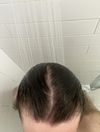
The conversation is about a female experiencing hair loss and seeking advice on why it's difficult to regrow hair. Specific treatments like Minoxidil, finasteride, or RU58841 are not mentioned.
User seeks KX-826 anti-androgen product and asks for purchase suggestions and experiences. Dave-8D recommends buying powder from the same website and making a topical solution, mentioning possible high dosage from Minoxidil max causing side effects.
The conversation is about trying Keratin Microsphere products for hair loss, specifically SAF 100 Pro, but no noticeable results were observed. The user also mentioned using a Hairclub wand.
The conversation discusses alternatives to RU58841 for hair loss treatment, with suggestions including topical spironolactone, peppermint and rosemary oils, and saw palmetto. The user also considers ordering RU58841 from China but finds it too expensive.
The conversation discusses a video about GT20029, a treatment for hair loss, and its comparison to KX826. Users express interest in the video's effectiveness and potential, and praise its informative content.
The user is seeking a new source for RU58841 in the EU after their previous supplier stopped selling it. They mention considering Anagen, Actifolic, Minoxidilmax, and rudirect, and ask for advice on shipping within the EU and product quality, while also mentioning their current hair loss treatment involves mixing RU with Stemoxydine and Alfatradiol.
New company Amplifica receives $11.8 million for hair loss product development, co-founded by Dr. Maksim Plikus and William Rassman. Users discuss undisclosed product candidates and application methods.
An individual's journey to treat their severe hair loss condition using the medications Pyrilutamide and RU58841. They will provide regular updates on their progress.
Researching whether pyri and enza, which are stereoisomers of each other, share the same features related to CNS penetration/GABA Inhibition; safety and efficacy when used topically at 0.5-1%; and cost comparison between the two treatments.
The conversation is about a user offering an unopened bottle of KX-826 (0.5%) for hair loss treatment, stating it works well for them. They are selling it at cost without seeking profit.
The conversation discusses the delay in the release of GT20029 for hair loss treatment and skepticism about its effectiveness. Participants mention other treatments like verteporfin and advancements in transplant procedures as more realistic options.
Pyrilutamide (KX-826) is discussed as an anti-androgen treatment for hair loss, with mixed user experiences. Some users report no results, while others find it mildly effective.
Hair loss treatment using 1mg Fin daily and Nizoral shampoo twice a week for 10 months showed improvement after 6-10 months. No significant side effects experienced, except slightly watery semen.
AMP-303 and AMP-601 are new hair loss treatments targeting dermal papilla cells, with AMP-303 showing early efficacy in transitioning vellus hairs to terminal hairs after one injection. Further clinical trials are planned, and these treatments are seen as promising due to their biologic approach and less frequent application compared to daily treatments.
PP405 is considered a promising potential cure for hair loss, with phase 2 trial results expected in February 2025. Hair cloning is also discussed as a potential ultimate solution, despite significant scientific challenges.
The conversation is about finding a legitimate online source for 17α-estradiol (Alfatradiol) powder to make a 0.1% solution for hair loss treatment. A user suggests Anagenica as a source.
User shares progress after 2 months using finasteride, nizoral shampoo, and microneedling for hair loss. Comments discuss early treatment, results, and differing opinions on starting treatments.
A humorous discussion about a newborn's hair loss, jokingly suggesting treatments like Minoxidil, finasteride, and various other hair loss remedies. Participants humorously debate extreme measures, including shaving or using a "nuclear stack" of treatments.
User got a hair system after hair transplant and finasteride didn't meet their needs. Hair system cost $200, initial install $150, and user is satisfied with the results.
User shows hair loss progress from NW4 to NW2.5 in 2.5 months using RU 8.5-9% daily and topical Dut .1% + RU 5% weekly. Discussion includes managing tension in African American hair and representation of different hair types.
A user is comparing the effectiveness and ingredients of name-brand hair fibers (Nanogen) versus cheaper generic options found on eBay. They are concerned about the presence of sodium chloride in the generic product and seek opinions on whether there is a significant difference in quality.
A user is seeking a new source for RU58841 in the EU after their previous supplier stopped selling it. They mention considering Anagen, Actifolic, Minoxidilmax, and rudirect, and are using a treatment mixing RU58841 with Stemoxydine and Alfatradiol.
The conversation discusses using higher doses of minoxidil and finasteride, considering dutasteride, and exploring other treatments like RU58841 for hair preservation. The user reports no side effects after six months and is interested in advanced treatment combinations.
The person is using 1mg of finasteride daily, 2mg of minoxidil, and weekly dermarolling with a 1mm needle. They sometimes use topical minoxidil as well.
Salicylic acid in Nioxin shampoo may reduce minoxidil effectiveness by inhibiting sulfotransferase activity, potentially causing hair loss. Users suggest stopping salicylic acid use or trying alternative treatments like high-concentration tretinoin or medicated minoxidil/finasteride shampoos.
A user is considering exosome therapy from Springs Rejuvenation for hair loss after unsuccessful attempts with PRP, adipose injections, and a laser cap. They are intrigued by the therapy's potential and the clinic's guarantee of 30% improved coverage, despite concerns about FDA approval and high-pressure sales tactics.