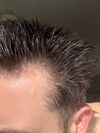
Clascoterone in Winlevi, a topical AR antagonist, is being re-examined due to concerns about HPA axis suppression in adolescents, but it's unlikely to be banned for adult use in androgenetic alopecia (AGA). The European Medicines Agency recommended refusing Winlevi for acne vulgaris, but this may not affect Breezula's approval for AGA.
A user is experiencing scalp flaking from a finasteride/minoxidil topical solution and considers using salicylic acid shampoo to remove propylene glycol residue. Another user suggests trying a leave-in conditioner to address dryness and flaking.
The conversation discusses a hair loss treatment called "nanoxidil," which is similar to minoxidil but with better absorption. Users are curious about its effectiveness for hair regrowth.
Whey protein may slightly increase hair loss in men with androgenetic alopecia (AGA) due to elevated IGF-1 and testosterone levels, but the effect is minimal compared to treatments like finasteride and dutasteride. Many users argue that whey protein's impact on hair loss is negligible and that maintaining a healthy lifestyle is more important.
The efficacy of degrading the androgen receptor through dermal application in DP cells, a delivery system for topical drugs that involves dissolving microneedles, and rosemary oil as an alternative anti-androgen.
The user is using finasteride, HGH, GHK-CU, BPC-157, KPV, biotin/collagen/keratin vitamins, ketoconazole shampoo, and low-dose naltrexone to address hair loss, avoiding minoxidil due to past shedding experiences. Adenosine is discussed as a potential alternative to minoxidil, though it is noted to be expensive and hard to find.
Topical Dutasteride is more effective than topical Finasteride for treating AGA in men, with fewer side effects. Mesotherapy with Dutasteride, administered every 3 months, shows promising results for hair regrowth and maintenance without daily routines or significant side effects.
GT20029 and CosmeRNA are both potential hair loss treatments; GT20029 breaks down the androgen receptor, while CosmeRNA prevents its production. Continuous use is needed, but less frequently than current treatments like Minoxidil and Finasteride.
Aminexil/Kopexil may help reduce hair loss by addressing perifollicular fibrosis in androgenetic alopecia, but it lacks the extensive clinical backing of finasteride and minoxidil. Some users find it effective, but availability and cost are issues, especially in the US where it's not FDA-approved.
Corticosterone inhibits GAS6, affecting hair follicle stem-cell activity, with potential implications for stress-related hair loss. Ashwagandha and Vitamin K are suggested for reducing cortisol, but their effectiveness is debated.
The user is experiencing severe hair loss due to gut malabsorption and is seeking advice on nutrient testing and supplementation. They have low Vitamin D and Ferritin levels and are asking for recommendations on additional nutrients and blood tests to consider.
Researching whether pyri and enza, which are stereoisomers of each other, share the same features related to CNS penetration/GABA Inhibition; safety and efficacy when used topically at 0.5-1%; and cost comparison between the two treatments.
Topical sodium valproate may promote hair growth by inhibiting GSK3β, allowing beta-catenin to proliferate, but it has potential side effects and requires more research. The conversation also mentions skepticism about a product called Vdphlo1, which includes sodium valproate and other ingredients.
Microneedling aftercare involves using saline water instead of sea water, and avoiding hyaluronic acid due to its potential pro-inflammatory effects. Users suggest using jojoba oil as a carrier for essential oils like rosemary and lavender, and combining microneedling with minoxidil for better hair regrowth results.
Woman with AGA uses microneedling, minoxidil, spiro, and laser for hair loss. Experiences redness and tenderness for three days after microneedling with Dermapen M8, asks if it's normal and the correct speed setting.
OP noticed fuller and thicker hair after almost 4 months of using GHK-Cu, a copper-binding peptide, through subcutaneous injections. Some users were skeptical, questioning the authenticity and potential commercial intent behind the post.
A 22-year-old male uses dutasteride, a serum with 10% minoxidil and 0.5% finasteride, and microneedling for diffuse androgenetic alopecia. Progress pictures show changes from July 2025 to February 2026.
Pelage Pharmaceuticals announced positive Phase 2a trial results for PP405 in hair loss therapy. The conversation discusses the delay in publishing full results and the need for further trials and approvals.
A 32-year-old male with diffuse thinning and seborrheic dermatitis has been using finasteride for 8 months without improvement. He is considering COQ10 + PQQ supplements for scalp inflammation and hair loss.
The user shared a 6-month update on using microneedling and a homemade shampoo made of aloe vera and rosemary water for hair loss. They posted progress pictures showing their results.
Hair loss discussion includes treatments Minoxidil, Finasteride, and RU58841. Prolactin's role in immune system's antitumor activity raises safety concerns for HMI-115.
Various peptides are discussed for treating male pattern baldness, with some available for topical use like GHK-Cu and Ac-KGHK, while others remain in research stages. Users are interested in experiences and sourcing these treatments.
The user suspects scarring alopecia and is exploring NSAIDs and turmeric/pepper for inflammation-related hair loss, having experienced burning and thinning with finasteride and testosterone reduction. They are seeking feedback while unable to afford a dermatologist.
Mixing Nizoral and T-Gel in a 1:1 ratio and using it three times a week provided relief from persistent seborrheic dermatitis. This treatment is recommended for those with stubborn SD.
The conversation discusses a new model for understanding androgenetic alopecia (AGA), linking it to dietary and lifestyle factors similar to PCOS, and highlighting the role of DHT, vascular damage, and inflammation. Treatments mentioned include Minoxidil, finasteride, and RU58841.
A user is interested in creating a hair growth serum using oleic acid, palmitoleic acid, and anhydrous ethanol, and seeks advice on sourcing these ingredients. Another user plans to mix these with minoxidil, which already contains ethanol, and mentions using RU58841.