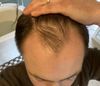
The user shared an 11-month hair loss treatment update, maintaining the same regimen but adding vitamins and increasing minoxidil application to 1ml during the day. It's unclear if the vitamins contributed to any changes.
Choosing between two hair loss treatments, with a preference for a higher concentration of RU58841 and 5% minoxidil, avoiding oils like castor and argan that may hinder absorption.
A user's progress with hair regrowth after 3 months of using 1 mg finasteride and 5 mg minoxidil orally, despite some skepticism from other users. The user reports having low blood pressure and feeling fatigued as side effects, but others suggest switching to topical minoxidil for better results with less risk.
This conversation is about a user's progress pictures after 10 months of using the hair loss treatments finasteride and minoxidil. Other users responded with compliments and questions about the dosage used.
The conversation discusses using oral Minoxidil, a vasodilator, for both Raynaud's Syndrome and hair loss. It also inquires about other hair loss treatments that improve blood flow.
A 20-year-old male experienced mental fog after resuming topical minoxidil for hair loss, questioning if it's due to interactions with antidepressants. Suggestions included trying a lower concentration of minoxidil or alternatives like copper peptides.
The user reported positive hair regrowth after 5 months using Minoxidil, red light therapy, and lifestyle changes, including dietary improvements and stress reduction. They chose natural supplements like saw palmetto and beta-sitosterol over pharmaceutical DHT inhibitors like finasteride.
The user tried Redensyl but stopped using topical finasteride and continued with 5% minoxidil. They are experiencing hair loss and considering accepting baldness.
The conversation discusses the use of vasodilators like Minoxidil, L-arginine, and Niacin for hair regrowth, with Minoxidil causing intolerable side effects for the original poster. It also highlights that certain medications, including Lisinopril, antidepressants, and statins, can cause hair loss.
The user is experiencing diffuse hair thinning despite using dutasteride and minoxidil for over five years and is considering adding oral minoxidil, microneedling, and nizoral to their regimen. They are concerned about the effectiveness and side effects of these treatments, especially with an upcoming event.
The user reports progress in hair regrowth using topical finasteride/minoxidil, microneedling, topical dutasteride, latanoprost, and MSM supplements. They express frustration over the lack of interaction on progress posts compared to trivial topics.
Oral minoxidil was ineffective for OP, causing hair loss and unwanted body hair, while topical minoxidil showed significant regrowth. OP is switching to topical minoxidil with glycerin due to scalp issues with propylene glycol.
Lighting can significantly affect the perception of hair progress in photos. The user has been using dutasteride and oral minoxidil for hair loss, noting improvements after switching from finasteride.
The user experienced severe side effects from finasteride and switched to using minoxidil and a derma stamp, seeing positive hair regrowth after initial shedding. They are considering topical finasteride to avoid side effects while maintaining hair health.
Redensyl, a hair loss treatment that has been claimed to be 80% more effective than minoxidil, but users have not experienced any results from using it.
A 19-year-old male has been using topical finasteride and minoxidil for 8 months with no progress and is considering seeking a second opinion due to potential misdiagnosis. The discussion revolves around whether the hair loss is due to male pattern baldness, alopecia areata, or a vitamin deficiency.
The conversation discusses severe hair shedding and thinning, with the original poster using finasteride, oral minoxidil, and other supplements without improvement. The discussion highlights the possibility of telogen effluvium and the importance of addressing potential underlying health issues, such as stress and gut health, rather than assuming diffuse unpatterned alopecia (DUPA).
A 39-year-old user experienced hair regrowth using oral dutasteride, oral minoxidil, dermastamping, and Nizoral shampoo after switching from finasteride and topical minoxidil. They are hopeful for significant improvement in their receding hairline.
Hair loss treatment includes Minoxidil, Derma Rolling, PRP, Saw Palmetto, Vitamin D, and Pyri. After one month, Pyri caused penis numbness, tiredness, and reduced hair fall, but user stopped due to side effects.
The conversation discusses a study comparing microneedling combined with minoxidil versus biotin/panthenol for hair loss. Results suggest biotin/panthenol may be superior to minoxidil, though the sample size was small.
The conversation is about finding the best topical caffeine and melatonin products to use with minoxidil, and possibly adding essential oils. The user seeks recommendations for effective combinations to enhance hair growth.
Pumpkin seed oil is not a substitute for minoxidil; it acts more like finasteride as a DHT blocker. Minoxidil is necessary for hair growth, and combining it with treatments like PRP or saw palmetto may be beneficial.
The user experienced a receding hairline and tried minoxidil, which may have slowed the process but caused puffy eyes. They are hesitant to use finasteride and suspect oily dandruff might be an aggravator.
This user has had positive results from taking a 1 mg dose of finasteride and increasing their daily dosage of minoxidil from 2.5 to 5 mg over the course of 9 months.
Enhancing minoxidil effects can involve using penetration enhancers like DMSO, urea, or retinol, and methods like dermarolling and adding substances like biotin and L-carnitine tartrate. Some users suggest trying higher concentrations of minoxidil if lower percentages are ineffective.
The user shared progress after 4 months of using topical minoxidil daily, along with dermastamping and Nizoral shampoo. They are seeking suggestions for better results.
Parabens in Minoxidil are a concern for some users due to potential health risks. The conversation discusses the presence of methylparaben and propylparaben in a specific Minoxidil brand, Ylox.