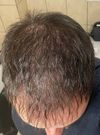
Ketoconazole, once popular for hair health, is now less mentioned, with mixed reviews on its benefits for scalp health. Microneedling is discussed as a potential alternative to traditional treatments like finasteride and minoxidil, with varied opinions on its effectiveness.
A 19-year-old is concerned about long-term microneedling for hair loss and is unsure if it will remain effective as they age. They experienced side effects from topical finasteride and are considering whether to try it again in the future, while also dealing with body dysmorphia and stress.
The conversation discusses experiences with NMN supplementation for hair growth, with some users reporting increased hair growth activity and others seeing no significant changes. OP has been using dutasteride and oral minoxidil, and recently added NMN, noticing increased shedding, which they hope indicates new hair growth.
The conversation discusses Peptonix microneedling, a copper peptide serum, as a potential hair loss treatment. Users compare it to finasteride and minoxidil, noting side effects and personal experiences with these treatments.
A user is seeking recommendations for dermatologists or hair clinics in the Greater Sacramento or Bay Area for exosome treatments, comparing topical application plus microneedling versus direct scalp injections. They are also asking for personal experiences and before-and-after photos.
The user has been using finasteride for 2 years, nizoral for 1.5 years, topical minoxidil for 1 year, and microneedling for 3 months to treat hair loss but hasn't seen improvement or regrowth, even experiencing shedding with new treatments. They are concerned about continued thinning despite the treatments.
Exosomes are being considered for hair regrowth, with some users reporting initial improvement. One user moved on to using dutasteride and oral minoxidil with positive results.
Microneedling may not significantly enhance hair growth when combined with dutasteride and oral minoxidil, as its primary benefit is improving topical absorption. Some users suggest using a 1.5mm depth for potential follicle stimulation, but results and effectiveness vary.
Using a 1mm derma roller every day with nanoxidil is not recommended; it should be used once a week. The user had no initial instructions and used it nightly for two months.
An 18-year-old is using a high-dose hair loss treatment regimen including finasteride, minoxidil, dutasteride, and plans to add RU58841 and bimatoprost, despite warnings from others about the risks. The user is determined to reverse hair loss but acknowledges the potential dangers and does not recommend others follow their approach.
The user discussed their experience with hair loss treatments, including finasteride, RU58841, Nizoral, supplements, dermarolling, and minoxidil, which caused significant edema. They also experimented with dutasteride, which led to increased hair loss, and found that Armodafinil reduced minoxidil-related water retention and hair shedding.
The user experienced hairline improvement using microneedling once a month with a 12-pin set at 1.5-2.0mm and taking Tru Niagen, alongside a heavily modified diet. They attribute the slow hairline improvement to environmental factors, particularly diet, rather than solely genetic factors.
The conversation jokes about hair loss treatments, mentioning finasteride, minoxidil, dutasteride, microneedling, ketoconazole shampoo, and rosemary oil as if they were players in a game. Some users also discuss the use of finasteride for prostate issues and the possibility of splitting the dose.
User DeadRay9 reports good progress on finasteride and ketoconazole, with irregular microneedling. They take 1.25mg finasteride, experienced increased libido, and saw improvements at 3-5 months.
Microneedling before a hair transplant may harden the scalp and affect blood circulation, potentially impacting graft growth. Some users report successful transplants after microneedling, while others advise caution and consulting with a surgeon.
The conversation discusses the sale of a premixed KY19382 solution for research purposes, highlighting previous unsuccessful group buys and the formulation process. Prices and purchasing options for KY19382 solutions and powder are provided.
The user is experiencing hair regrowth using daily 5% minoxidil and weekly microneedling, and plans to add finasteride soon. They are considering the effectiveness of once-daily minoxidil and adjusting microneedling needle size.
Enhancing minoxidil effects can involve using penetration enhancers like DMSO, urea, or retinol, and methods like dermarolling and adding substances like biotin and L-carnitine tartrate. Some users suggest trying higher concentrations of minoxidil if lower percentages are ineffective.
User discusses a promising topical Procyanidin B2 treatment for hair loss. Users share mixed experiences and mention effective treatments like finasteride, minoxidil, and LLLT.
The user has been using finasteride for 16 months, minoxidil for 11 months, and started microneedling 2 months ago, experiencing shedding phases. They are questioning whether they are experiencing miniaturization or regrowth.
Applying lavender essential oil before microneedling is discouraged due to potential skin irritation. Microneedling followed by oil application, like black castor oil, is more common and may benefit hair and scalp health.
A user has been using oral finasteride and minoxidil without significant hair regrowth and is questioning the effectiveness of adding microneedling to their routine. Another user suggests microneedling can help with topical treatments but doesn't see it as a major factor in improving hair loss.
Slow, steady progress on hair loss treatments such as finasteride, minoxidil, microneedling and Nizoral; the need for patience when using these treatments over a period of months or years; and how to deal with discouragement due to slow progress.
The post is about using different solutions for RU58841, a treatment for hair loss. The user is asking for opinions on the effectiveness of different vehicles and dosages.
A user is documenting their natural approach to treating a receding hairline using a dermastamp, essential oils (rosemary oil at 3% dilution with pumpkin seed oil), a multivitamin with vitamin D, and daily collagen shakes. They acknowledge the common recommendations of minoxidil and finasteride but prefer to test natural methods and share their results.
Rhamnose may promote hair growth and pigmentation, suggesting it as a potential hair loss treatment. The conversation discusses its potential alongside known treatments like Minoxidil, finasteride, and RU58841.
GT20029 is a topical treatment that degrades androgen receptors to prevent hair thinning and loss, potentially offering fewer side effects than systemic treatments like finasteride. Concerns include its impact on hair texture and potential systemic effects, with market availability speculated in 3 to 5 years.
The conversation discusses the high prices of hair loss treatments, specifically cb-03-01 and KY19382. It also mentions the use of Minoxidil, finasteride, and RU58841.