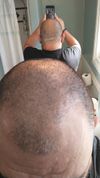
The conversation is about the proper frequency and needle length for microneedling to treat hair loss, with a user asking if they should use a 0.5 mm derma stamp daily and a 1.5 mm stamp once a week.
The conversation discusses the potential of Verteporfin, an FDA-approved drug, for hair loss treatment, particularly in combination with microneedling or PRP. Users express hope and curiosity about its application, while some remain cautious due to the need for more extensive testing.
The conversation is about concerns and advice regarding microneedling for hair loss, with potential risks like chronic inflammation, scarring, and folliculitis. The user has been using minoxidil, finasteride, and stemoxydine with good results and is considering adding microneedling, with recommendations for using a dermastamp or pen.
Microneedling with topical minoxidil is effective for hair regrowth, especially with finasteride. Users report fewer side effects compared to oral minoxidil.
A 24-year-old tried minoxidil, finasteride, keto shampoo, and derma-rolling for hair loss but saw no improvement and is now at Norwood 5. They feel there's nothing more they can do and are considering going bald despite not liking the look.
The user is seeking advice on which hair growth oil to add to their current regimen of finasteride, Nizoral, and micro-needling. They are considering oils with ingredients like biotin, caffeine, castor oil, rosemary oil, hemp, coconut, olive, lavender, peppermint, aloe, horsetail, vitamin B5, rosehip seed, and algae.
The user reported noticeable hair improvement over four months using 1 mg of finasteride and weekly microneedling. Progress photos from October 2024 to January 2025 show positive changes.
The conversation is about using 1mg finasteride and 5% topical minoxidil for hair loss, along with a dermaroller, Alpecin caffeine shampoo, and Nizoral shampoo. Users express optimism about the potential improvement in hair density.
The conversation discusses using daily microneedling at 0.25mm and red light therapy to enhance hair regrowth, especially when traditional treatments like finasteride and minoxidil become less effective. The combination is said to improve hair density and thickness, with red light therapy being more cosmetic, while microneedling is essential for challenging areas.
HMI-115, a potential treatment for hair loss that can reverse miniaturization and make individual hairs thicker, as evidenced by data from macaques given the treatment and one subject in the phase I trial.
A user is considering microneedling to enhance absorption of a prescribed topical hair loss treatment containing Minoxidil, Dutasteride, and Latanoprost, while already taking oral Minoxidil and Dutasteride. They seek advice on the effectiveness and safety of combining these treatments, especially due to the cost and their desire to maximize results.
A 24-year-old has been using finasteride, oral minoxidil, and microneedling for hair loss. They reduced minoxidil due to heartburn and are considering a hair transplant.
The conversation discusses a hair loss treatment involving oral minoxidil, topical finasteride, and a custom topical formulation with minoxidil, cetirizine, finasteride, progesterone, and hydrocortisone. The user seeks advice on the effectiveness of these ingredients for diffuse thinning.
Rapid weight loss may have triggered increased hair shedding. Continuing with finasteride, microneedling, a healthy diet, and supplements like MSM and vitamin B is advised, but results may take 6-12 months.
A 43-year-old from Thailand shares progress after 1 month using topical finasteride, minoxidil, tretinoin cream, and weekly microneedling for diffused thinning. Users compliment his appearance and suggest he doesn't need treatment.
Microneedling combined with minoxidil and finasteride initially showed significant hair growth, but stopping microneedling and reducing minoxidil use led to hair loss. Returning to the original routine may help regain lost progress.
Microneedling can be effective for hair regrowth, especially when used with oils like castor, emu, and rosemary, but should be done with caution regarding needle size and frequency. Some users avoid minoxidil due to its side effects and cost, opting for alternatives like rosemary oil.
A user shared an 8-month hair regrowth progress using finasteride, topical minoxidil, and microneedling, and others reacted positively, asking for details about the treatment regimen. The user also mentioned taking cod liver oil and a hair multivitamin with biotin and collagen.
The user is experiencing hair loss and is considering using topical minoxidil and finasteride due to concerns about liver health, specifically elevated ALT levels from fatty liver. They are advised to start with topical treatments while continuing weight loss and dietary changes to improve liver function.
A user shared their 88-day progress using 1.25mg finasteride, topical minoxidil, and weekly 1mm microneedling, noting improvement from NW 4.5 to around NW 3. Another user complimented the progress.
The discussion is about using ASCEplus HRLB exosomes for hair loss treatment, which combines 10 billion exosomes with growth factors, nutrients, biotin, and copper tripeptide. The treatment is expensive and typically administered via scalp injections, but in Europe, it's done with microneedling.
A user's progress pictures showing the results of taking Fin (0.5 mg per day), Min (5 mg per day) and microneedling with Dr. Pen Ultima M8; another user asked when the regrowth was noticed, and commented on the hair appearing darker.
The user used microneedling, zinc, vitamin D3, biotin, magnesium, saw palmetto, pumpkin seed oil, and a DHT-blocker shampoo with biotin for hair loss. They are considering adding minoxidil due to stagnation in progress.
The user plans to use an electric microneedling pen for hair loss, set to penetrate 0.6mm to 0.8mm, and apply rosemary oil in jojoba oil post-treatment. They also intend to use 5% Minoxidil daily, followed by a blend of rosemary, peppermint, and jojoba oils.
Microneedling can aid hair regrowth but poses risks like permanent hair loss if not done properly. Combining it with minoxidil, finasteride, and tretinoin, while ensuring proper sterilization and technique, is crucial for safety and effectiveness.
Microneedling is debated for hair loss treatment, with some users finding it beneficial for minoxidil absorption and others skeptical of its effectiveness. Alternatives like finasteride and minoxidil are recommended, while tools like dermarollers, dermapens, and dermastamps are discussed for their pros and cons.
User discusses switching from microneedling to macroneeding for hair loss treatment. Suggestions include using various devices and unconventional methods.
PP405 is anticipated as a future treatment for dormant hair follicles, but its effectiveness and safety are uncertain. Current treatments include oral minoxidil and microneedling, with some avoiding finasteride due to side effects.
Microneedling stimulates hair growth through stem cell activation during wound healing, not just increased blood flow. Other methods like showers or supplements don't replicate this effect.