User asks if washing hair or using hair fibers after minoxidil dries is okay and if dry scalp means full absorption. Some doctors and sources say 50-75% absorption occurs after an hour.
Diffuse thinning is unpredictable, and while some suggest treatments like finasteride or dutasteride, others emphasize acceptance as hair loss may continue. Some users share personal experiences with treatments like nizoral, scalp massage, and lifestyle changes, but results vary.
The user has been using oral Minoxidil, Finasteride, and Biotin for hair recovery and is considering adding topical Minoxidil and dermastamping to improve results. It is suggested to use micro-needling once a week with a 24-hour gap before applying topical Minoxidil.
A 29-year-old man experienced significant hair thickening at the front and top after using finasteride and microneedling for two months, as noticed by his hairdresser. He used 0.5 mg/day of finasteride orally, switched to a topical solution, and performed microneedling with a Derminator2 every 6-7 days.
A user humorously discusses their 10-month-old's hair loss, suggesting treatments like microneedling, minoxidil, finasteride, and RU58841. Replies include various satirical and exaggerated suggestions, emphasizing the post's satirical nature.
The conversation is about whether dissolving finasteride in water affects its effectiveness. The user is concerned about the impact of water on the medication's efficacy over five days.
A user shared their experience using 5% topical Minoxidil for 18 months and recently added 1 mg oral Finasteride daily, noting minimal results so far but expecting improvement. They mentioned challenges with application consistency and technique, and are hopeful for increased hair density.
The conversation discusses concerns about using a high concentration of 1% topical finasteride for hairline balding, with some users suggesting starting with a lower dose. It also mentions the use of GHK-CU peptide and the importance of considering the formulation to avoid excessive absorption.
A man in his 50s, who has been on Finasteride for 15 years, is considering adding a custom topical Minoxidil blend to his treatment due to recent hairline recession. He questions whether the custom blend is more effective than generic Minoxidil, expresses concerns about shedding and body hair growth, and seeks advice on application timing with styling products and whether to pursue other treatments like PRP or laser.
The potential stability of pyrilutamide in a mixture with water, and how it could be used in combination with Minoxidil and Finasteride to treat hair loss.
Nanoxidil is considered to have better absorption and fewer side effects than minoxidil, with added DHT blockers. The user is questioning if switching to the more expensive Spectral.DNC-N is worthwhile compared to cheaper options like Kirkland minoxidil.
The user is concerned about hair thinning and has been using finasteride 1mg and minoxidil 5%, along with Alpecin caffeine liquid and vitamins. Others suggest continuing the treatment, as it seems to be stabilizing the hair, and advise against stopping the medication abruptly.
Creating a propylene glycol-free Minoxidil and Tretinoin solution to reduce skin irritation and enhance effectiveness. An emulsifier like lecithin can help mix Tretinoin properly, and Minoxidil foam is an alternative without propylene glycol.
People are discussing making their own PP405 for hair loss treatment using JLX069 and DMSO. There is skepticism about the safety and effectiveness of this homemade solution, with some users expressing concerns about potential risks.
The conversation discusses a comparison table for a spray combining Minoxidil and Finasteride for hair loss treatment in the UK. Specific treatments mentioned are Minoxidil (Min) and Finasteride (Fin).
The conversation discusses using magnesium oil and microneedling to promote hair growth, alongside finasteride, due to financial constraints preventing the use of minoxidil. Another suggestion includes using a certilizine solution for hair health.
The conversation discusses the differences between PG/Ethanol and KB solutions for RU58841 application, focusing on potential scalp irritation. KB solution is suggested for those allergic to PG, though both contain ethanol which can dry the scalp.
A 41-year-old man experienced significant hair regrowth using topical finasteride (0.025%), minoxidil, microneedling every two weeks, and occasional Nizoral 2% shampoo. He advises against using creatine due to personal experience with increased hair shedding.
Hair loss treatments, specifically the use of oral minoxidil in combination with micro-needling. Oral minoxidil has been found to improve hair density in 90% of patients with a low side effect profile, but using 5mg per day can result in higher side effects including hypertrichosis and edema. Other treatments mentioned include finasteride and RU58841.
This conversation is about a user's experience with treating hair loss using minoxidil daily, finasteride 1.25 mg every other day and micro needling once a week, as well as their experiences with the side effects of finasteride. Replies to their post shared similar experiences and advice on switching from topical minoxidil to oral.
1 mg of finasteride is commonly prescribed because it is more effective for a larger number of people compared to lower doses, despite only slightly reducing serum DHT more than 0.2 mg. Serum DHT and scalp DHT are different, and 1 mg is believed to reduce scalp DHT more effectively, contributing to better hair growth results.
The regimen includes using a diluted 5.5% Minoxidil / 0.025% Finasteride solution daily, microneedling weekly, and ketoconazole shampoo twice a week to minimize systemic exposure while maximizing scalp DHT reduction. The goal is to achieve hair regrowth with minimal side effects.
A user's experience with microneedling monotherapy and potential treatments such as finasteride, minoxidil, Stemoxydine, rosemary oil, peppermint oil, and RU58841 for reversing hair loss.
PP405 is ineffective for miniaturized, fibrosed hair follicles in androgenetic alopecia. AMP303 may activate hair follicle stem cells, but minoxidil and finasteride are still the main treatments.
A user on finasteride for hair loss is considering topical dutasteride to further reduce scalp DHT and is using various other topicals as substitutes for minoxidil due to concerns about the safety of their cats and potential heart side effects from oral minoxidil. They are exploring whether a once-weekly application of topical dutasteride would be effective.
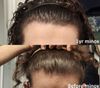
A 20-year-old male shared progress pictures after three months of using 1mg oral finasteride daily, 5% minoxidil twice daily, and a 1.5mm dermaroller weekly. He reported significant hair regrowth.
The conversation discusses the safety and cost of 2.5mg Dutasteride, and the potential for increased DHT reduction by combining Dutasteride with topical Finasteride. The original poster is currently using 0.5mg Dutasteride, 1.25mg oral Minoxidil, and a topical treatment, and is considering increasing the dosage to maximize results while avoiding less known treatments like RU58841.
Using a low dose of topical Tamoxifen effectively reduces gynecomastia caused by finasteride, with minimal side effects. The solution involves mixing Tamoxifen with ethanol and propylene glycol, applied daily to the chest.
A user shared their 3-month hair growth progress using 1mg oral finasteride, 5% topical minoxidil, and microneedling with a 1.5 mm dermaroller twice weekly. The user received positive feedback and expressed a desire for thicker hair in the future.