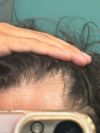
The conversation discusses hair regrowth, with the user using finasteride (1 mg), topical minoxidil, and microneedling. A reply suggests the user's hair appears fuller and healthier.
Using a 1mm derma roller every day with nanoxidil is not recommended; it should be used once a week. The user had no initial instructions and used it nightly for two months.
Microneedling combined with hair oils like bhringraj or coconut oil is discussed, but users report limited success against hair loss. Finasteride and dutasteride are mentioned as effective treatments, with one user noting significant improvement after adding finasteride to their routine.
A user reports hair regrowth after 8 months using treatments including topical Minoxidil/Finasteride, microneedling, Nizoral shampoo, Pyrilutamide, GHK-Cu/Min topical, and supplements like fish collagen peptides, zinc, and vitamin D3. They've seen progress but slower regrowth in the midsection of the scalp and are seeking advice to improve it.
Research and science related to a minor improvement in hair growth caused by the use of verteporfin, as well as potential treatments such as Minoxidil, Finasteride, and RU58841.
The user applied topical 0.1% finasteride and 5% minoxidil, along with weekly microneedling, resulting in significant hair regrowth. The user also lost 10kg through diet and exercise.
Minoxidil, finasteride, and RU58841 are discussed as treatments for hair loss, with excitement around a new drug, PP405, and a reformulated oral minoxidil in trials. Concerns about cost, side effects, and long-term use are also mentioned.
The user shared progress on hair loss treatment using Nanoxidil, which initially caused scalp irritation. They are pleased with their progress since starting the treatment in March.
Dutasteride mesotherapy in women with metabolic syndrome accelerated hair loss after initial regrowth, while women without metabolic syndrome saw continuous regrowth. The user with mild insulin resistance is hesitant to try topical dutasteride and seeks experiences from others with insulin resistance.
Microneedling can cause sneezing and eye tearing due to nerve stimulation, particularly near the temples and forehead. Some users find it lessens over time, while others prefer using finasteride and minoxidil for hair growth.
Applying minoxidil immediately after microneedling at 0.5mm can cause stinging and potential systemic absorption, so some users prefer to wait 12-24 hours. Others report no issues with immediate application, but caution is advised to avoid irritation and side effects.
A 21-year-old experiencing hair loss since age 16 is using 1mg dutasteride, 5mg minoxidil, and Nizoral, with occasional microneedling, but stopped microneedling due to scalp inflammation. They report some patchy regrowth, with stronger results at the front than the midsection.
A 33-year-old man shares his positive hair regrowth results using 1mg finasteride daily, 5% topical minoxidil twice daily, and a 0.5mm dermaroller weekly. He feels more confident and encourages others to try the routine despite potential side effects.
Microneedling may worsen hair loss due to potential scarring and inflammation, with some users suggesting caution and proper technique to avoid damage. Alternatives like Minoxidil, finasteride, and RU58841 are implied as safer options.
A 26-year-old male shared his 9-month hair regrowth progress using 1mg oral finasteride daily, 5% topical minoxidil once a day, and weekly 1.5mm microneedling. He reported no side effects and significant improvement, with users discussing various experiences and advice on similar treatments.
The user has been treating hair loss for nine years using finasteride, oral minoxidil, and microneedling, with significant improvements in hair density and texture. They emphasize the importance of consistent treatment, physical health, and lifestyle changes in achieving these results.
The user switched from finasteride to 0.5mg oral dutasteride and added 2.5mg oral minoxidil, along with occasional microneedling, to improve hair regrowth. They reported no side effects and are hopeful for continued progress, especially in the temple area.
The user switched from finasteride to DIY dutasteride mesotherapy and topical minoxidil due to side effects. They report improved well-being and no hair loss worsening after stopping finasteride.
The user is concerned about the quick prescription process for hair loss treatments like Minoxidil and Finasteride through HIMs, questioning the lack of a thorough evaluation. Another user reassures that such practices are common, emphasizing the effectiveness and low risk of these treatments, and suggests monitoring personal response to the medication.
Chinese researchers have successfully created hair follicles in vitro, potentially offering unlimited hair for transplantation and a cure for hair loss. They plan to test these follicles in vivo on human scalps.
The post and conversation are about a user's progress with microneedling and minoxidil for hair loss. The user is happy with the progress and plans to continue with the treatment, without using finasteride.
User is using a homemade topical treatment with .015% finasteride, 5% minoxidil, and microneedling at .75mm depth. They also use 2% ketoconazole shampoo, various oils, and are considering increasing finasteride concentration due to mixed results.
A user shared an 8-month hair regrowth progress using finasteride, topical minoxidil, and microneedling, and others reacted positively, asking for details about the treatment regimen. The user also mentioned taking cod liver oil and a hair multivitamin with biotin and collagen.
A user shared a 3-month hair regrowth progress using minoxidil and microneedling. They also use rosemary oil and plan to continue treatment for at least 6-9 more months.
Microneedling for hair loss, with concerns about cost and conflicting information on protocols. The user is unsure about purchasing and reusing microneedling stampers.
A 40-year-old used minoxidil, dutasteride, RU58841, and microneedling for one year, resulting in noticeable hair regrowth despite initial shedding. They believe having more hair is beneficial for dating at their age and also recommend staying fit, eating well, and sleeping over 8 hours.
New hair loss treatments like Shiseido/Replicel and Histogen were discussed, with cautious optimism about their availability by 2018. Setipiprant, Replicel, and Bimatoprost were mentioned as potential treatments expected around 2016-2017.
The post discusses the potential of GT20029 in treating hair loss, questioning if it will replace finasteride or be used alongside existing treatments. A reply indicates that its role is still uncertain.
A user's progress with hair loss treatments, including Dutasteride, Minoxidil (oral and topical), Microneedling, and RU58841, which resulted in positive results after 5 months. Another user commented on the faster growth at the front compared to the crown.
The user shared a 6-month update on using microneedling and a homemade shampoo made of aloe vera and rosemary water for hair loss. They posted progress pictures showing their results.