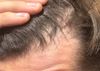
A 33-year-old male has been using minoxidil, finasteride, and microneedling for hair loss since February 2024. Opinions vary, with some seeing no improvement and others noting stabilization.
Exosomes, cetirizine, melatonin, latanoprost, and caffeine are discussed as potential hair loss treatments. There is skepticism about the effectiveness of exosomes, especially in topical form, but some users report positive results.
The conversation discusses the potential of Verteporfin, an FDA-approved drug, for hair loss treatment, particularly in combination with microneedling or PRP. Users express hope and curiosity about its application, while some remain cautious due to the need for more extensive testing.
The conversation discusses a patent filed by Shiseido for cloning Dermal Papilla (DP) cells to treat hair loss. The method involves using viral vectors to maintain the cells' growth-inducing properties, differing from Replicel's approach with Dermal Sheath Cup (DSC) cells.
User has been using minoxidil 6%, finasteride 0.3%, tretinoin 0.025%, and microneedling twice a week for 2.5 months. They are considering switching to oral treatments.
Capilia Longa and Scandinavian Biolabs are discussed, with skepticism about their effectiveness and value. The conversation suggests avoiding these products due to high cost and perceived lack of results.
FCE 28260 (PNU 156765), an under-explored 5α-reductase inhibitor, showcases promising results in research by Giudici et al., outperforming well-known treatments like Finasteride in reducing the conversion of testosterone to DHT. Its superior efficacy, demonstrated through lower IC50 values in both natural and human recombinant enzyme studies, suggests it could offer more effective management of DHT-related conditions. Additionally, its lower molecular weight hints at better potential for topical application, potentially offering advantages in treating conditions such as androgenic alopecia. Despite its potential, it has not advanced in development, possibly due to financial limitations, leaving its therapeutic prospects and side effect profile largely unexplored.
Slow, steady progress on hair loss treatments such as finasteride, minoxidil, microneedling and Nizoral; the need for patience when using these treatments over a period of months or years; and how to deal with discouragement due to slow progress.
The conversation discusses experiences with topical dutasteride for hair loss, comparing formulations from FUEClinic, MinoxidilMax, and Strut. Users share their results and side effects, with some preferring topical over oral treatments to minimize systemic absorption.
The conversation humorously discusses using off-label drugs like Minoxidil, finasteride, and RU58841 for hair growth. It jokes about the brain absorbing these treatments for maximum keratin production.
Low-level laser therapy (LLLT) devices may help thicken existing hair but are not effective for regrowing hair on bald areas. Users suggest sticking with finasteride, minoxidil, and dermapenning, as LLLT devices like Capillus are expensive and results are mixed.
The conversation discusses hair regrowth using microneedling, Minoxidil, and Finasteride over a three-month period. Specific treatments mentioned are microneedling, Minoxidil (Min), and Finasteride (Fin).
A user added 1% NMN to their 5% minoxidil mix for hair loss, which also includes melatonin, ginkgo, nettle root, and plans to add caffeine. They are asking if anyone has tried topical NMN for hair growth.
The user is exploring alternatives to finasteride and dutasteride due to concerns about side effects, and is using rosemary and jojoba oil, ketoconazole, minoxidil, microneedling, multi-peptide serum, saw palmetto, and stinging nettle for hair loss. They are also considering CB 03 01 and spironolactone.
A 22-year-old is using a hair loss treatment protocol including dutasteride, microneedling, 10% minoxidil, 0.1% finasteride topical, a healthy diet, and a hair multivitamin. Users discuss the effectiveness of microneedling and the intensity of the treatment.
The conversation discusses hair loss treatments, specifically using a regimen of minoxidil, finasteride, dutasteride, tretinoin, and microneedling. Users debate the optimal microneedling frequency, suggesting 1.5mm once every 1-2 weeks and 0.5mm every other day for better results.
A year-long journey of treating hair loss with finasteride, minoxidil, ketogenic diet, and microneedling, featuring before-and-after progress pictures.
GT20029 is a topical treatment that degrades androgen receptors to prevent hair thinning and loss, potentially offering fewer side effects than systemic treatments like finasteride. Concerns include its impact on hair texture and potential systemic effects, with market availability speculated in 3 to 5 years.
User discusses using trichosol as a vehicle for hair loss treatments like finasteride and minoxidil. They ask about others' experiences and the stability of the solutions.
This conversation discusses the effectiveness of microneedling for hair loss, particularly when used in combination with oral minoxidil and finasteride. It is suggested that microneedling alone can be more effective than topical minoxidil alone, but it won't have a synergistic effect with oral finasteride. Advice was also given regarding researching treatments further before taking action.
Hair loss discussion involves experimenting with Sulforaphane from broccoli sprouts and possibly procyanidin b2. People seek updates on progress and if it's worth adding to treatment stack like microneedling.
A questionable paper which suggests that 5% topical spironolactone is more effective than 0.1% topical finasteride for treating hair loss. It should be taken with a grain of salt due to the journal it was published in.
The conversation discusses using minoxidil and tretinoin for hair loss, with advice on microneedling and topical application timing. Users share experiences with additional treatments like melatonin, spironolactone, and microneedling techniques.
A user shared their 1.5-month progress using a routine of topical finasteride and minoxidil gel, minoxidil foam, microneedling, keto shampoo, and a multivitamin. They reported noticeable hair regrowth for the first time in a decade.
Dr. Oscar Muñoz's hair loss treatment tier list suggests oral minoxidil and finasteride are highly effective, while topical treatments like RU58841 and microneedling are less effective. Users discuss the effectiveness of various treatments, with some favoring oral options for their practicality and higher response rates.
The conversation discusses using microneedling with growth factor serum, PRF injections, dutasteride, oral and topical minoxidil, and topical exosomes to treat hair loss, particularly on the crown. OP plans to microneedle twice a month and seeks feedback on Korean growth factor serums.
Microneedling combined with 5% Minoxidil and finasteride significantly improves hair growth compared to using Minoxidil or Minoxidil with finasteride alone. The combination treatment is safe and effective, but further research is needed due to small sample size and short study duration.
Microneedling may help regrow hair in dormant bald regions by stimulating stem cell transfer. Users discuss its effectiveness and how collagen might aid in the process.