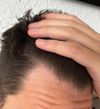
A user's nine-month journey of hair growth with treatments including finasteride, minoxidil, and nizoral; some participants thought the user had a hair transplant while others disagreed.
The conversation discusses using pumpkin seed oil, saw palmetto, fo-ti, and astaxanthin for hair loss, with additional use of Nizoral shampoo. Users express skepticism about regrowth and suggest adding a micro derm roller or considering minoxidil and finasteride for better results.
The conversation discusses HMI-115, a potential cure for hair loss. Users share mixed opinions, with some expressing skepticism and others sharing anecdotal evidence of its effectiveness, including photos of significant hair regrowth from a trial participant.
Rhamnose may promote hair growth and pigmentation, suggesting it as a potential hair loss treatment. The conversation discusses its potential alongside known treatments like Minoxidil, finasteride, and RU58841.
The user experienced negative side effects from saw palmetto, including low libido and energy, and found some improvement after using Maca and Acetyl L-Carnitine. They emphasize lifestyle changes and positivity for recovery, while expressing caution about saw palmetto's side effects.
A transwoman is struggling with hair loss despite using hormones, dutasteride, and Abiraterone, and is considering making her own treatments due to difficulty accessing them. She has also tried Eucapil and regularly uses Nizoral shampoo.
Rotenone, a natural plant extract, may promote hair growth by increasing LDH activity and blocking MPC in the scalp, but it carries risks due to its toxicity. The suggested formulation includes Barbasco extract, DMSO, propylene glycol or PEG-400, ethanol, and a carrier oil.
After a year on dutasteride and oral minoxidil, the user experienced significant hair regrowth, improving from Norwood 2 to almost Norwood 1. They added RU58841, microneedling, rosemary oil, GHK-Cu, and annurca apple supplement to their regimen and are now noticing hair loss in the temple area.
HMI-115, a potential treatment for hair loss that can reverse miniaturization and make individual hairs thicker, as evidenced by data from macaques given the treatment and one subject in the phase I trial.
A 25-year-old who started losing hair at 16 and reached almost NW7 by 20 saw hair regrowth using a regimen including dutasteride, minoxidil, nizoral, and a dermaroller, along with supplements like biotin, zinc, and omega-3. After initial success, they experienced shedding, added more supplements and treatments, and sought advice on whether to continue; responses encouraged them to persist as shedding is often part of the hair regrowth cycle.
The conversation discusses using a multimodal approach to treat androgenic alopecia, including substances like gamma-linolenic acid, DHA, sulforaphane, melatonin, cetirizine, astaxanthin, fisetin, apigenin, curcumin, limonene, genistein, and berberine. Users also mention using ketoconazole, minoxidil, and low-level laser therapy (LLLT) as part of their hair loss treatment regimens.
A user shared a DIY recipe for a NutraKos-style amino acid mix as a cost-effective alternative to the expensive product, suggesting it as a complementary supplement for hair loss. Another user argued that proven treatments like finasteride and minoxidil are more reliable, questioning the efficacy of the amino acid mix.
The user has been managing hair loss with microneedling, Nutrafol, topical finasteride/minoxidil foam, LLLT, and Nizoral, and plans to add oral minoxidil. They are seeing improvement and are cautious about using oral finasteride due to past gynecomastia concerns.
A 19-year-old is using oral dutasteride, topical minoxidil, and dermastamping to address hair loss and enhance facial hair growth, experiencing minimal side effects and increased body hair. They report positive results in hairline thickness and temple closure.
A stem cell and adenosine triphosphate cocktail showed promising results in hair regrowth for male and female mice, with potential for future clinical trials. Users humorously reacted to the success in mice, expressing hope for human application.
The user is using a routine involving microneedling, Minoxidil with tretinoin, a red light cap, scalp massages, Nizoral shampoo, and essence oil shampoo to address hair loss, with visible progress noted. They are considering topical finasteride or dutasteride if progress slows but are cautious due to past side effects.
RT1640, a combination of cyclosporin A, minoxidil, and RT175, is discussed as a potential treatment for hair regrowth and repigmentation. The unique formulation aims to enhance hair follicle growth and restore hair pigment without the negative side effects of immunosuppressants.
The conversation is about personal experiences with Nifeishi rosemary mint oil for hair loss and requests for an ingredient review to assess its quality. Specific treatments mentioned are Minoxidil, finasteride, and RU58841.
Finasteride and Ashwagandha are discussed as potential treatments for hair loss, with mixed opinions on Ashwagandha's effectiveness and safety. Some users report no benefits from Ashwagandha, while others caution against its use due to potential liver issues.
A user's progress with hair growth using oral minoxidil, oral dutasteride and Nizoral shampoo every once in a while. Replies indicate that the user has seen good results from this treatment, including thickening and darkening of their hair.
The user is experiencing hair loss and has been using RU58841 but is considering pyrilutamide and minoxidil, avoiding finasteride due to side effects. Another user suggests finasteride or dutasteride as essential, possibly in topical form, while dismissing saw palmetto as ineffective.
Hair loss treatments discussed include Fluridil, Minoxidil, Stem, Niz, Viviscal, Broccoli Sprouts, and Derma. One user claims most treatments are ineffective, while another supports Eucapil.
High dose niacin (1000mg daily) seems to have halted hair loss but did not regrow lost hair. The user plans to continue due to additional benefits like lower stress and higher good cholesterol.
The conversation is about the accidental taste of Nizoral shampoo, which contains ketoconazole, during hair washing. Specific hair loss treatments mentioned are Minoxidil, Finasteride, and RU58841.
The conversation discusses concerns that Anagenic's version of GT20029 might not be as effective or safe as Kintor's, with comparisons to issues faced by pyrilutamide. The chemical structure of the drug has been published.
The user experienced significant eyebrow and eyelash growth after starting a hair loss treatment routine that includes oral minoxidil, oral dutasteride, topical minoxidil, Nizoral shampoo, microneedling, and supplements. They also reported positive scalp hair gains and no significant side effects.
The conversation is about seeking hairline regrowth results using RU58841, dermarolling, and Nizoral. The user cannot tolerate finasteride and finds minoxidil ineffective.