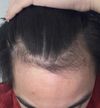
A 17-year-old is experiencing rapid hair loss from NW1.5 to NW3 in six months and feels dermatologists are unhelpful. They are using Minoxidil (Rogaine) and seeking advice on application.
The user has been using 0.5 mg dutasteride and 2.5 mg oral minoxidil for a year, recently adding microneedling and topical minoxidil, with some improvement but the crown remains the weakest area. Consistency and realistic expectations are advised, as progress is slow and coverage is challenging with fine hair.
A 19-year-old male switched from finasteride and minoxidil to dutasteride due to continued hair thinning and is experiencing increased nipple sensitivity and a small lump, raising concerns about gynecomastia. Suggestions include slowing the transition, checking hormone levels, and considering an aromatase inhibitor.
CB 03 01 (Breezula) was tried for hair loss but showed no significant improvement, with issues in dissolving and application. Finasteride and dutasteride remain the most effective treatments, while minoxidil is also used; CB's effectiveness is questioned, and topical alternatives like bicalutamide are considered.
A user shared their 9-month progress using Minoxidil, Finasteride, microneedling, and Nizoral shampoo for hair loss, expressing great satisfaction with the results. They use a Min/Fin topical spray nightly, Minoxidil in the morning, microneedle twice a week, and Nizoral shampoo twice a week.
A 25-year-old male experienced noticeable temple regrowth using 1mg finasteride, 2.5mg oral minoxidil, and 2mg GHK-Cu over three months. The user is pleased with the progress, especially on the left temple.
Finasteride, dutasteride, and minoxidil are discussed as effective hair loss treatments, with mixed opinions on their use and side effects. The conversation highlights a divide between supporting medical treatments and accepting baldness.
A user reports improved hair thickness and regrowth after three months of using oral minoxidil, topical minoxidil, dutasteride, microneedling, biotin gummies, and ketoconazole shampoo, with no side effects so far. Another user shares a similar regimen, switching from finasteride to dutasteride due to continued hairline recession.
User "hairlossblows" shares their positive experience with minoxidil, microneedling, and finasteride for hair loss treatment. They report significant hair regrowth, especially in the hairline, and minimal side effects from finasteride.
A user shared their 3-month hair growth progress using 1mg oral finasteride, 5% topical minoxidil, and microneedling with a 1.5 mm dermaroller twice weekly. The user received positive feedback and expressed a desire for thicker hair in the future.
A 10 month update on the effectiveness of a hair loss treatment regimen involving minoxidil, finasteride, dermarolling and nizoral. Questions were asked about using minoxidil alone, dermaroller length, age, and when results were seen.
The conversation discusses whether dermarolling (microneedling) works with oral minoxidil for hair loss treatment. References to studies on microneedling alone and combined with minoxidil are provided.
Minoxidil, often combined with microneedling, has helped some users improve hair growth at the temples and hairline. Finasteride is also mentioned as a treatment, with mixed results on its effectiveness.
User shared 126-day progress using Fin/Min/Niz/Microneedling for hair loss. Others discussed microneedling depth, results timeline, frontal coverage, and switching to Dutasteride.
Minoxidil isn't effective for OP, who is exploring latanoprost and bimatoprost for hair growth. Users suggest higher concentrations of latanoprost (0.1%) are needed for effectiveness, but they are costly and hard to find.
The user has been using oral minoxidil, dutasteride, RU58841, and other treatments for hair loss over nine months, seeing some improvement in hair thickness and crown volume but continued thinning at the hairline. They plan to continue treatment for another nine months despite being sensitive to DHT fluctuations and are considering increasing dosages or other options like a hair transplant.
EDHARRINGTON's journey to regrow his hair using finasteride, topical minoxidil, and micro-needling treatments over 4 years, with others commenting their support and admiration for his results.
A user had a disappointing dermatologist appointment where they were denied prescriptions for Dutasteride and oral Minoxidil for hair loss and were only offered a hair transplant referral. Other users sympathized, discussed self-medication, and suggested consulting a transplant doctor for up-to-date treatments.
A user's positive early results after 2.5 months of using a topical finasteride/minoxidil spray and Nizoral twice a week for hair loss. The user, who started losing hair six years ago at age 22, is asked to share further progress at the six-month mark.
A 25-year-old shared his 4-month progress using oral minoxidil, oral finasteride, a 1mm dermastamp, Nizoral, and upgraded shampoo and conditioner. He feels he sees some regrowth, though some commenters attribute the change to a different hairstyle.
Some men look better with shaved heads due to facial features and low body fat, while others believe a perfect hairline enhances attractiveness. Treatments like finasteride might be used to maintain a perfect hairline.
Oral minoxidil is more effective than topical for some users, increasing hair density and thickness. Lack of response to topical minoxidil may be due to insufficient sulfotransferase enzyme, which can be upregulated with tretinoin.
Ramsko1's experience with a hair loss regimen of oral minoxidil, dutasteride, ketoconazole cream, and dermarolling, which they started after considering taking their own life due to hair loss. Other users replied to offer support and ask questions about specific treatments.
The conversation is about whether topical Minoxidil could be effective for hair loss if oral Minoxidil did not work, considering the addition of microneedling and tretinoin. The user has tried oral Minoxidil for over a year without results and is seeking advice on alternative treatments.
The user is frustrated with their dermatologist's refusal to prescribe oral Minoxidil and Finasteride for hair loss, despite starting Finasteride recently. They consider discussing oral Minoxidil with their primary care doctor and exploring telehealth options.
The user applied 5% minoxidil twice daily and microneedled approximately 1.5 times a month. They noticed some progress in hair growth, though they were unsure if it was due to treatment or hair length.
The user experienced significant hair regrowth using high doses of dutasteride, minoxidil, and finasteride, but still considers a hair transplant due to thin hair and limited temple improvement. They face challenges accessing medication and are exploring additional treatments like microneedling.
A 22-year-old is concerned about a receding hairline and has been using minoxidil for 5 months without seeing new growth. Suggestions include continuing minoxidil for up to a year, considering finasteride, and possibly a hair transplant.
A user's progress with hair loss treatments over the past two years, including finasteride, minoxodil and dermarolling. Replies included speculations about whether or not this was the result of a hair transplant. The user confirmed that it was just meds.