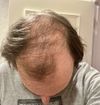
A young person regrets not starting hair loss treatments like minoxidil and finasteride earlier, leading to significant balding by age 19. They discuss the importance of early intervention and the impact of societal perceptions on those experiencing hair loss.
A 22-year-old experienced significant hair regrowth in three months using 0.5 mg dutasteride and 2.5 mg oral minoxidil, with no side effects. Users discussed the effectiveness of oral minoxidil, the necessity of dutasteride for maintaining hair, and concerns about potential side effects.
Some prefer hair systems for better appearance and confidence, while others find them costly and inauthentic. Alternatives like minoxidil, finasteride, and hair transplants are also considered.
AMP-303 and AMP-601 are new hair loss treatments targeting dermal papilla cells, with AMP-303 showing early efficacy in transitioning vellus hairs to terminal hairs after one injection. Further clinical trials are planned, and these treatments are seen as promising due to their biologic approach and less frequent application compared to daily treatments.
A user shared their positive experience using 1mg of oral finasteride daily for a year, noting significant hair regrowth and no negative side effects. Other users discussed their own experiences with finasteride, shedding, and side effects, with some considering adding minoxidil to their routine.
Hair loss involves more than just DHT, with genetic factors like TRPS affecting hair follicles. Treatments such as Amplifica's AMP-601 and AMP-303 target stem cells for potential hair growth solutions.
DHT promotes hair growth in certain areas but causes scalp hair loss, highlighting a frustrating irony. Minoxidil is mentioned as a treatment that grows hair everywhere, including the scalp.
A 24-year-old with early hair loss is managing it with finasteride, minoxidil, and dutasteride, and is considering using a hair system for more styling options while maintaining transparency. They emphasize confidence and self-expression over hair, viewing it as an amplifier rather than a foundation.
A 25-year-old experiencing hair thinning all over the body and head, despite using minoxidil and having low vitamin D levels, is advised to seek a second opinion from a dermatologist specializing in hair loss. The likely diagnosis is diffuse alopecia areata, which may require treatment with a JAK inhibitor.
A 29-year-old male is seeking advice on starting hair loss treatment and is considering using Minoxidil, Finasteride, or Dutasteride. He has not yet begun any treatment and is asking for tips based on his photos.
The user has been using finasteride for two years to stabilize hair loss and is considering adding oral minoxidil for volume. They are also contemplating switching to dutasteride and possibly getting a hair transplant for better results.
A 19-year-old is concerned about long-term microneedling for hair loss and is unsure if it will remain effective as they age. They experienced side effects from topical finasteride and are considering whether to try it again in the future, while also dealing with body dysmorphia and stress.
Androgenic alopecia (AGA) might have evolved to reduce prostate cancer risk by increasing UV exposure to the scalp, but this theory is debated. Treatments like minoxidil and finasteride are used for AGA, though the exact causes and evolutionary reasons for hair loss are unclear.
The user experienced side effects like shallow breathing, loss of libido, and erectile issues after using topical finasteride with minoxidil for hair loss. They are considering whether to continue the treatment despite these side effects.
The user is experiencing significant hair loss and is considering treatments like minoxidil, finasteride, and possibly a hair transplant. They are advised to consult a dermatologist and consider oral minoxidil and dutasteride, while being aware of potential side effects and the need for ongoing treatment.
Finasteride reduces scalp DHT significantly even at low doses, with 0.2 mg reducing it by about 55%, but higher doses like 1 mg and 5 mg offer only marginally more reduction. Users discuss side effects, with some experiencing none and others reporting issues like low libido, and they also mention using other treatments like minoxidil and dutasteride.
New hair loss treatments include Breezula, PP405, ET-02, KX-826, GT20029, VDPHL01, and CosmeRNA, with some showing promise in reactivating stem cells and reversing greying. Breezula and VDPHL01 are highlighted as potential add-ons or alternatives to current treatments like finasteride and minoxidil.
The user has used oral Dutasteride and Minoxidil for two years without regrowth, despite trying Finasteride and supplements. They consider increasing Minoxidil, adding microneedling, and switching medications, while others suggest RU58841, a hair transplant, or checking for other hair loss causes.
Finasteride is effective for DHT/AR-driven hair loss but not for chromosome 20-driven cases, where treatments like minoxidil, prostaglandin analogs, and low-level laser therapy may be more beneficial. Genetic testing can help determine the underlying cause of hair loss to tailor treatment effectively.
The conversation humorously suggests that the hair loss industry, referred to as "Big Bald," deliberately delays a cure to profit from ongoing treatments like minoxidil, finasteride, and dutasteride. Participants debate whether a cure would be more profitable than current treatments, with some suggesting that the industry prefers continuous treatments for sustained profit.
David Dobrik uses Minoxidil and possibly Finasteride for hair loss but applies them incorrectly. Users suggest he consider surgery due to his financial capability.
Microneedling with finasteride, minoxidil, DMSO, and black seed oil shows mixed hair regrowth results. There are concerns about DMSO's safety and effectiveness.
Using lice as an alternative to microneedling for hair loss treatment, with concerns about effectiveness and practicality. Some users humorously suggest genetically altering lice to produce beneficial compounds.
Procapil is marketed as a natural hair loss treatment but lacks strong evidence and is industry-biased. Minoxidil and Finasteride are the only FDA-approved treatments for androgenetic alopecia.
PP405 may reactivate dormant hair follicles but won't replace hair transplants or resurrect dead follicles. Its effectiveness, cost, and impact compared to treatments like minoxidil and finasteride are uncertain.
Hair cloning for hair loss is unlikely to be available or affordable in the next 10 years. Current treatments like Minoxidil, finasteride, and RU58841 are still the main options, with skepticism about new advancements.
A user shared their one-year progress using finasteride for hair regrowth, noting significant improvement and additional benefits from two months of minoxidil use. They reported no side effects from finasteride and attributed most regrowth to it, with minoxidil darkening their hair.
A physician experienced hair thickening and new growth using microneedling and minoxidil, but stopped using topical finasteride due to side effects like reduced libido and erectile dysfunction. The physician plans to continue with microneedling and minoxidil, considering finasteride nonessential for cosmetic purposes.