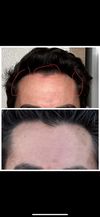
The user experienced significant hair regrowth using finasteride, minoxidil, and a 4,000-graft hair transplant performed by Dr. Nader in Reynosa, Mexico. The results were natural-looking, and the user plans a second transplant for additional density if needed.
The user is using finasteride and minoxidil for hair loss but is looking for new treatments. Pyrilutamide and GT20029 are potential future treatments, with Pyrilutamide expected next year and GT20029 possibly by 2027.
Hair loss treatments like finasteride, minoxidil, and hair transplants have side effects and limitations. There is hope for future advancements in stem cell therapy and hair follicle regeneration, though skepticism about their effectiveness and timeline persists.
The conversation humorously discusses using off-label drugs like Minoxidil, finasteride, and RU58841 for hair growth. It jokes about the brain absorbing these treatments for maximum keratin production.
A 3 year journey of hair loss, with recession and diffuse thinning; the user has been taking finasteride for 3 years and is now switching to dutasteride and oral minoxidil, and may start using topical minoxidil soon.
A person has been using 1mg Finasteride for 20 years with no side effects but is now noticing temple thinning and is considering oral Minoxidil, despite concerns about heart health and body hair growth. They are consulting a doctor about possibly taking 1.25 to 2.5 mg of oral Minoxidil.
Dutasteride significantly reduces DHT levels in hair follicles, potentially more effectively than previously thought. The discussion highlights differences in DHT measurements and the impact on hair loss treatment.
The conversation is about someone using topical finasteride, minoxidil, tretinoin, and caffeine for hair regrowth, particularly near the temple area. They are asking if the new, smaller hairs will grow and thicken to match their existing hair.
The conversation is about finding reputable clinics in Canada or near the US border that offer DUT mesotherapy for hair loss. The user is seeking recommendations and cost information for these treatments.
Microneedling can cause sneezing and eye tearing due to nerve stimulation, particularly near the temples and forehead. Some users find it lessens over time, while others prefer using finasteride and minoxidil for hair growth.
The user is considering starting finasteride for hair loss but is concerned about potential side effects due to their estradiol levels being near the upper limit. They have consulted a doctor who confirmed their levels are okay to start the treatment.
Hair cloning is humorously discussed as always being 5-7 years away, with skepticism about its near-term availability. Gene editing to reactivate dormant follicles is suggested as a more likely solution within the next ten years.
Microneedling is more effective when combined with minoxidil, especially for temple regrowth, but is considered near-useless on its own. Users suggest combining microneedling with oral minoxidil and dutasteride for better results, while some caution against potential scalp damage.
Minoxidil is toxic to cats, so users should wash hands after application and ensure it dries before pets are near. Some switch to oral minoxidil to avoid risks, while others use topical forms cautiously.
The user experienced hair regrowth after 5 months on 5 mg oral minoxidil and 1 mg dutasteride, following a year of ineffective finasteride use. They noticed progress after an initial shedding phase and hope for further improvement, with expectations of near-max regrowth around 18 months.
The user experienced significant hairline improvement after 2 months using 1 mg Finasteride and topical Minoxidil, with only initial shedding as a side effect. The progress is notable, with the user returning from near Norwood 2 to Norwood 1, and they use Rogaine for topical application.
The conversation discusses hair regrowth and miniaturization, with the user transitioning to oral dutasteride and oral minoxidil, and occasionally using topical minoxidil. The user observes baby hairs near the hairline but less on the scalp, indicating possible regrowth and shedding.
Significant hair regrowth and increased confidence after using 1 mg finasteride for 6 months and 5 mg oral minoxidil for 3 months. No major side effects, except unwanted hair growth near temples and eyebrows.
A user's decision to shave their head after struggling with hair loss for seven years, and the medications and treatments they are using to attempt regrowth. They also discuss potential future treatments that may come out in the near future.
Verteporfin shows promise in donor hair regeneration after 84 days. Combining Finasteride, Minoxidil, and Pyrilutamide with unlimited hair transplants is seen as a potential near-cure for hair loss.
A user discusses using a 1.5mm dermaroller daily in the shower for hair loss, noting redness but no bleeding, and applying coconut oil afterward. They are concerned about a receding hairline and slight hair loss near the temple.
Hair regeneration and follicle cloning are considered far from being feasible, with current treatments like finasteride, minoxidil, and hair transplants expected to remain dominant for the next 15-20 years. Some are hopeful that AI advancements might accelerate progress, but many remain skeptical about significant breakthroughs in the near future.
A 36-year-old man shared his one-year progress using 1mg oral finasteride and 5% topical minoxidil twice daily, showing significant hair regrowth on his hairline, eyebrows, and beard. He reported no major side effects, except for some eye irritation from minoxidil application near the eyes.
Existing hair loss treatments like oral finasteride, topical minoxidil, and hair transplants are still the main options, with some improvements in affordability and techniques. There is hope for enhancing these treatments, but new effective solutions are unlikely in the near future.
A user shared their hair regrowth progress, attributing success to a consistent routine using finasteride, hair growth oil, Hims shampoo, a derma roller, and 5000 mcg biotin pills. They emphasized the importance of representation for people with similar hair types and encouraged others to stick with their treatment plans.
A 21-year-old user has been using finasteride 1mg daily since March 11 and ketoconazole 1% 2-3 times a week since April 22, with no significant side effects. They are questioning if they are seeing early hair regrowth after 2.5 months of treatment.
The conversation is about the delay in the release of GT20029 phase 2 results by Kintor. It also mentions Minoxidil, finasteride, and RU58841 as treatments for hair loss.
The user shared a 1-year update on using finasteride (0.25mg three times a week), biotin, ketoconazole shampoo, and vitamin D for hair loss, showing positive results with pictures and no side effects. Other users commented on the effectiveness and the user's good response to the treatment.