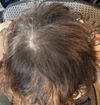
Retinol or tretinoin may improve minoxidil absorption and effectiveness. The user is considering using The Ordinary's 1% retinol as tretinoin is hard to get in their country.
The conversation discusses the availability of GT20029, a new topical hair loss treatment with fewer side effects than Minoxidil or finasteride. Users suggest using finasteride to preserve hair until GT20029 becomes available.
The user has been using Minoxidil for 6 months and biotin for 2 months without seeing results and is considering starting finasteride due to receding hair at the right temple. Replies suggest starting finasteride and comment on the user's hairline.
A 25-year-old man has been on 0.5mg Finasteride daily for a year, maintaining his hair with some regrowth and plans to increase the dose to 1mg. Some suggest adding Minoxidil for better results, while he considers it if his condition worsens.
The conversation is about the anticipation and uncertainty regarding the release of GT20029 Phase 2 results for hair loss treatment. Users express hope for its effectiveness and minimal side effects compared to other treatments like Pyri and HMI115.
The user shared progress pictures showing hair regrowth after using minoxidil, finasteride, and dermarolling, and is currently trying oral minoxidil, dutasteride, and a finasteride/minoxidil topical. Another user commented on the significant improvement, and the original poster emphasized the importance of consistency despite shedding phases.
The conversation discusses the use of trichoscopy to predict hair loss patterns and inform treatment approaches. Treatments mentioned include minoxidil, finasteride, and dutasteride, with varying effectiveness based on gender-specific hair loss patterns.
A 21-year-old experienced hormone changes after using self-made topical finasteride for hair loss, including a 20% decrease in DHT, a 47% increase in testosterone, and a 39% increase in estradiol. The user previously used minoxidil and microneedling but is now seeking ways to balance hormones, possibly through supplements or dosage adjustments.
The conversation discusses the use of hair systems as a solution for hair loss. Users share their experiences, highlighting the natural look, confidence boost, and maintenance requirements of hair systems, while also addressing concerns about cost, stigma, and potential drawbacks.
The conversation is about a user's successful hair regrowth after 5 months of using 1.25mg Finasteride, 5% Minoxidil, and Nizoral twice a week. The user, aged 28, experienced shedding in the first 6 weeks but has seen significant improvement since.
The post is about a user's successful hair regrowth over a year using daily finasteride and minoxidil. The user initially applied minoxidil twice daily, then reduced to a few times a week, and took oral finasteride every morning without side effects.
User has itching, dandruff, and scalp issues, considering Nizoral 1% shampoo for treatment. Nizoral's effectiveness for hair loss is uncertain due to limited research, short contact time, and concentration differences.
The potential stability of pyrilutamide in a mixture with water, and how it could be used in combination with Minoxidil and Finasteride to treat hair loss.
This conversation is about a user's post showing their progress in hair growth after four months of taking finasteride and minoxidil, although it was later revealed that they had also received a hair transplant. The replies to the post were mixed, with some questioning the validity of the results and others expressing admiration.
A user experienced an allergic reaction, including swollen lymph nodes, to Minoxidil 5% with an aqueous base. Switching to a non-alcohol-based Minoxidil (Prolox 5%) resolved the allergies.
The user is asking for opinions on low level laser light therapy for hair growth and thickening. They have been using it for a year but haven't seen significant results, attributing any regrowth to topical minoxidil.
The user is considering adding low-level laser therapy (LLLT) to their hair loss treatment routine, which already includes minoxidil, finasteride, and microneedling. They are debating between purchasing a cheaper LLLT device or investing in a more expensive, clinically-backed option, with concerns about the effectiveness and specifications of cheaper models.
Low-level laser therapy (LLLT) is debated for hair regrowth, with some users suggesting it should be combined with treatments like minoxidil and finasteride for effectiveness. Many users express skepticism about LLLT's efficacy and cost, emphasizing the need for the correct wavelength and quality devices.
The user is pleased with their hair growth progress after 5 months of using Minoxidil, Finasteride, and RU58841, and is curious if the baby hairs at the temple will fully connect with the rest of the hair. It's uncertain if the connection will happen yet.
Oral minoxidil can cause rare facial bloating, especially at higher doses and in women. Reducing sodium intake, drinking more water, and adjusting the dose can help manage side effects.
Topical spironolactone is considered safe for males but is not very effective for hair loss. Some users suggest trying it since it's already purchased, while others recommend alternatives like clascoterone.
The conversation humorously discusses using anal administration of Dutasteride as a novel method for treating hair loss, suggesting it could target DHT production more effectively. It includes satirical comments about the method's potential effects and absurd outcomes.
The user is considering a second hair transplant after previous treatments with finasteride and minoxidil failed to stop hair loss. Suggestions include trying dutasteride, oral minoxidil, scalp micropigmentation, or shaving the head.
The user is seeking cheaper options for finasteride and minoxidil in Canada, as their current treatment costs nearly $100 monthly. They mention insurance doesn't cover finasteride and face prescription limitations.
The user is experiencing hair regrowth in small clusters using oral minoxidil, oral finasteride, a red light cap, and Nizoral 2% shampoo. They are hopeful for continued improvement and thicker hair.
A 19-year-old male using 1 mg finasteride every two days for hair loss reports no side effects and believes maintaining his current hair condition is progress. Some users see no difference in hair regrowth, attributing changes to lighting.