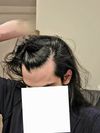
User shared progress pictures of hair regrowth on the crown/vertex after a transplant and using finasteride, Minoxidil foam, and a dermapen. They hope to fully regrow or increase density in the crown area.
A user's father, mostly bald for 20 years, is regrowing hair using a serum called "Skrzypovita Serum Pro" without minoxidil. The user is curious about which ingredients might be causing hair growth.
The conversation discusses hair loss and treatments like finasteride, minoxidil, and ketoconazole shampoo. Users suggest scalp massages, warm showers, and other methods to address scalp tension and tight spots, with some mentioning the potential effects of medications like escitalopram and probiotics.
The user reports promising hair regrowth without using finasteride, focusing instead on microneedling, dermarolling, minoxidil, tretinoin, scalp massages, and red light therapy. They emphasize consistency and a healthier, side-effect-free approach.
User noticed beard and sideburn hair loss, and thinning eyebrows, diagnosed with alopecia barbae and male pattern baldness, and prescribed Desonide cream. User seeks feedback on Desonide cream.
The user has been using a combination of finasteride/dutasteride, minoxidil, tretinoin, and hydrocortisone with microneedling and ketoconazole shampoo for hair loss. They are asking if the baby hairs growing will turn into terminal hairs with continued treatment.
A 10 month update on the effectiveness of a hair loss treatment regimen involving minoxidil, finasteride, dermarolling and nizoral. Questions were asked about using minoxidil alone, dermaroller length, age, and when results were seen.
Transplanting mice skin to humans is not feasible due to immune rejection, but some suggest genetic modification or immune suppression could make it possible. Xenograft hair transplants are discouraged.
Users discussed hair loss treatments, specifically 0.1% latanoprost with melatonin, caffeine, and biotin. Other treatments mentioned include minoxidil, finasteride, RU58841, and microneedling.
Hair regrowth treatment involving 3aHSD enzyme shows 6% improvement in 18 weeks. Sulforaphane, L-Menthol, and Dexpanthenol are potential ingredients for new hair loss solution.
The user is struggling with seborrheic dermatitis and plans to try ciclopirox olamine after finding ketoconazole too drying. They are also using finasteride daily.
The user experienced red pimples and a rash from using topical minoxidil, possibly due to propylene glycol. Suggestions included seeing a dermatologist, switching to foam without propylene glycol, using Nizoral, and adjusting application timing.
The user has been using 5% minoxidil, finasteride, and dutasteride, along with microneedling and ketoconazole, to treat hair loss, showing significant progress over a year. Side effects mentioned include brain fog, watery semen, and facial dryness.
User achieved hair regrowth using 1 mg oral finasteride, topical minoxidil twice daily, and occasional microneedling. They are happy with the progress despite still having thin hair on top.
Stem cell therapy shows promise in treating hair loss by mimicking DHT-resistant cells from the back of the head. Traditional treatments like finasteride are also discussed, but stem cells could potentially offer a more permanent solution.
Scientists have successfully grown functional hair follicles in the lab, marking a significant advancement in hair regeneration research. A user shared their personal experience with hair loss treatments, including Minoxidil and Finasteride, and plans to share a detailed protocol for hair restoration.
The conversation discusses the correct method of microneedling for hair loss, questioning whether it should be done on areas with long hair without risking hair damage, and if it's necessary for improving blood flow to existing hair. No specific treatments were mentioned.
The conversation is about the use of microneedling, specifically with a derma stamp, for hair regrowth. Users discuss their experiences, pain levels, and the satisfaction of taking control over hair loss, with some mentioning the use of Minoxidil to enhance results.
The post discusses a hair loss treatment regimen including oral finasteride, topical minoxidil, a rejuvenating scalp serum with caffeine, rosemary, and ginger, topical ketoconazole, saw palmetto, and derma rolling. The user seeks advice for scalp pimples and irritation.
Microneedling for hair regrowth, using a 1.0 dermastamp, is discussed with a focus on achieving slight redness without bleeding. Minoxidil is mentioned as an effective treatment when used after dermastamping.
A 25-year-old male is experiencing hair thinning at the hairline and vertex, considering using a dermapen or dermastamp, and seeking advice on whether to continue with natural remedies like onion juice and rosemary oil or start using minoxidil or finasteride. He is also looking for recommendations on microneedling devices.
A user shared their 5-month hair loss treatment progress using oral finasteride, Regaine foam, 2DDR serum, and microneedling, noting improvements in hair growth at the crown and front. They are considering increasing microneedling frequency or adding a shampoo to their routine.
A 21-year-old is experiencing aggressive hair loss and dandruff, possibly due to seborrheic dermatitis, and is using pumpkin seed oil, scalp massages, and anti-dandruff shampoo as treatments. They are hesitant to use prescribed Finasteride and Minoxidil and have noticed some improvement after stopping Serenoa capsules.
The user successfully improved their hair from Norwood 3 to 0.5 using finasteride, topical minoxidil, microneedling, and a hair peptide, and plans to maintain it with dutasteride. They are leaving the forum due to emotional distress caused by the community.
A 20-year-old experiencing hair thinning became depressed and sought treatment. The new dermatologist prescribed a routine including topical minoxidil, finasteride, derma stamping, Nizoral shampoo, rosemary oil, and scalp massages.
Nizoral shampoo reduced shedding but caused hair dryness. Alternatives like non-SLS ketoconazole shampoos, such as Regenpure DR, are recommended for use 2-3 times a week to avoid dryness.
Dr. Muñoz's discovery suggests that targeting potassium channels in fibroblasts could reactivate hair growth, offering new treatment possibilities for alopecia. Potential strategies include using minoxidil, diazoxide, and other potassium channel openers, as well as bioelectric devices and direct growth factor applications.
A user experienced significant hair loss after starting microneedling, despite using dutasteride and topical minoxidil. They are advised to consult a doctor as the shedding pattern is unusual and may indicate alopecia areata or other scalp conditions.
The conversation discusses the use of a derma roller versus a derma stamp for microneedling to prevent hair loss. The user has been using topical minoxidil for 2 months without results and seeks advice on needle length.