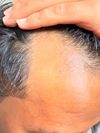
User noticed receding temples, used minoxidil and microneedling with positive results. Added saw palmetto and eucapil, experienced shedding and thinner hairline, but no side effects.
A user with high pre-finasteride estrogen levels is asking if they need to normalize their hormone levels before starting finasteride and whether they should postpone dermarolling until they begin finasteride. The user is 21.5 years old.
The conversation discusses impressive hair regrowth results using finasteride, minoxidil, and microneedling over 20 months. Some users suspect a hair transplant or hair system, while others inquire about specific product details and side effects.
PP405 cannot restore extracted hair follicles after a transplant as they are removed, not dormant. Combining verteporphin with wounding and PP405 is suggested but not confirmed effective.
The user has been using Minoxidil and Finasteride for over a year with limited success and is now trying microneedling. They seek advice on using hyaluronic acid to help the microneedling pen glide smoothly on the scalp.
The user experienced hair regrowth using finasteride every other day and topical minoxidil but is currently going through a shedding phase. Despite the shedding, progress is evident, and users suggest patience and possibly adding microneedling to improve results.
The user added microneedling to their routine of minoxidil and finasteride, resulting in noticeable hair regrowth after three months. They shared photos showing significant improvement.
A 22-year-old is frustrated with ongoing hair loss despite using treatments like topical minoxidil, finasteride, microneedling, oral dutasteride, and oral minoxidil. Their dermatologist suggests treating scalp inflammation with oral tretinoin and using exosomes for alopecia.
Using a combination of micro-needling and exosome injections as a potential treatment for male pattern baldness, which could result in 50% or more regrowth.
High cost of studying 3α-Hydroxysteroid dehydrogenase in hair loss led to suggestions of crowdfunding for research. Users discussed using Procyanidin B2/melatonin topical treatment and tracking funds with blockchain.
FCE 28260 (PNU 156765), an under-explored 5α-reductase inhibitor, showcases promising results in research by Giudici et al., outperforming well-known treatments like Finasteride in reducing the conversion of testosterone to DHT. Its superior efficacy, demonstrated through lower IC50 values in both natural and human recombinant enzyme studies, suggests it could offer more effective management of DHT-related conditions. Additionally, its lower molecular weight hints at better potential for topical application, potentially offering advantages in treating conditions such as androgenic alopecia. Despite its potential, it has not advanced in development, possibly due to financial limitations, leaving its therapeutic prospects and side effect profile largely unexplored.
The user is considering another hair transplant or scalp micropigmentation (SMP) for a congenital bald spot, but previous transplants were less effective due to scar tissue. Suggestions include using hair fibers, changing hairstyles, or doing nothing, as the spot is not very noticeable.
The conclusion of the conversation is that the user, PirateBeastBaby, had good results with microneedling for hair loss after using oral finasteride and topical minoxidil 20 years ago. They believe that microneedling was the gamechanger for their hair growth.
A 46-year-old man is using minoxidil, finasteride, and derma rolling for hair regrowth but is unsure of the results and considering a hair transplant. Many suggest he looks good bald and recommend continuing treatment or trying scalp micropigmentation.
A user's father experienced hair regrowth and other health improvements after two IV exosome treatments. The user also had four rounds of exosome therapy, noting significant hair regrowth and relief from headaches, but no change in gray hair.
The conversation is about a 20-year-old male considering a topical gel combining finasteride, minoxidil, and tretinoin for hair loss, looking to replace his daily minoxidil with this new treatment. He has seen good regrowth with minoxidil but is nervous about starting finasteride.
Mixing RU58841 with cetosomal minoxidil is discussed due to scalp irritation from ethanol PG vehicles. A mixture of the two turned bright pink when left to dry.
Significant hair regrowth was achieved using a topical combination of 0.3% finasteride and 6% minoxidil, with weekly dermastamping and ketoconazole shampoo, without side effects. Others suggested additional treatments like red light therapy and PRP.
A 30-year-old shared their 7-month hair regrowth progress using topical minoxidil twice daily, 1 mg finasteride daily, and weekly microneedling. Users discussed the effectiveness of these treatments and suggested adding retinol for better results.
The user has been using topical minoxidil 6% and finasteride 0.05% once daily, along with microneedling, vitamins, and nizoral shampoo. They recently increased the topical treatments to twice daily for faster results, experiencing only initial shedding.
The conversation discusses hair regrowth using finasteride, minoxidil, and a dermaroller. Users also talk about the benefits of using a stamp over a derma roller for scalp treatment.
A 22-year-old male is experiencing hair loss due to seborrheic dermatitis, not male pattern baldness, and is seeking advice. Suggestions include using Nizoral, sulfate-free and ketoconazole shampoos, cutting hair short, using cold water, avoiding picking scabs, and trying selenium sulfide shampoo or finasteride.
The user is using a treatment of topical minoxidil 7% and finasteride 0.1% twice daily, along with a low-level laser therapy cap, biotin, and collagen supplements, and is seeing good progress on the hairline and temples but not the midscalp. They experienced initial shedding, saw results by month three, and are happy with the progress, though some users express concern about using finasteride at a young age.
A user claimed to cure their baby's baldness by using finasteride, minoxidil, ketoconazole, dermarolling, scalp massages, and headstands to increase blood flow. Commenters responded with humor, suggesting various exercises and questioning the legitimacy of the transformation.
The user is seeking help with using Ell-Cranell for hair loss treatment. They are unsure about the correct application method and dosage. They also inquire about combining microneedling with topical alfatradiol and question a study that referred to alfatradiol as a hair growth inhibitor in male mice.
The user shared progress pictures showing improvement in hair growth after one year of using finasteride and minoxidil. They are considering microneedling to further improve their hairline and have chosen to use a derma stamp.
Mike, 46, is experiencing hair thinning at the temples and frontal hairline. He plans to try microneedling with a pen and topical dutasteride after oral minoxidil and finasteride showed limited effectiveness and oral dutasteride caused side effects.
An 18-year-old using topical finasteride for hair loss is experiencing side effects like delayed ejaculation and lower sex drive after three months. They are considering whether to continue with the treatment or adjust it, possibly switching back to minoxidil.
The user is using a solution of 5% minoxidil and 0.1% finasteride with micro-needling and is considering adding 1mg oral finasteride. They notice small hairs on their forehead and are questioning if these indicate potential regrowth.