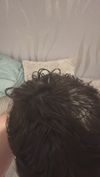
A 20-year-old male with a high hairline seeks advice on potential hair loss, noting a family history that typically doesn't progress beyond Norwood 2. A user suggests it appears to be a mature hairline rather than hair loss and advises monitoring for changes.
The VT Reedle Shot, a skincare product using silica spicules, is discussed as a potential at-home alternative to microneedling for hair regrowth. It is suggested that different intensities may aid in hairline regrowth.
If treatments like finasteride, minoxidil, PRP, microneedling, and exosomes fail, opinions differ on using a hair system or shaving. Some choose shaving for simplicity, while others consider hair systems despite maintenance concerns.
A user's experimentation with various hair loss treatments, including medications and topical applications; as well as their desire to experience unusual sensations through the use of drugs.
Microneedling is discussed as a method to improve hair growth, with users sharing their experiences and results using different needle depths and frequencies. Treatments mentioned include minoxidil, finasteride, rosemary oil, and saw palmetto supplements.
A gel of keratin microspheres promotes hair follicle growth, showing similar effectiveness to minoxidil in mice. The treatment activates hair growth pathways and reduces inflammation, with potential applications in drug delivery for hair-related disorders.
A user found that scalp itch might be linked to inflammation rather than DHT alone and noticed hair improvement with certain cancer drugs. They also discovered that black seed oil relieved their scalp itch and are experimenting with a mix of essential oils for dry scalp, questioning if oils affect minoxidil absorption.
Microneedling combined with tretinoin is discussed for its effectiveness in treating hair loss. Minoxidil, finasteride, and RU58841 are also mentioned as potential treatments.
A user shared their positive experience with Roots by GA, a company that creates personalized hair loss treatments based on DNA analysis, which confirmed their inability to tolerate finasteride. The user is satisfied with their progress 30 days after a hair transplant and the customized formula they received.
A user is seeking recommendations for dermatologists or hair clinics in the Greater Sacramento or Bay Area for exosome treatments, comparing topical application plus microneedling versus direct scalp injections. They are also asking for personal experiences and before-and-after photos.
The conversation discusses a new model for understanding androgenetic alopecia (AGA), linking it to dietary and lifestyle factors similar to PCOS, and highlighting the role of DHT, vascular damage, and inflammation. Treatments mentioned include Minoxidil, finasteride, and RU58841.
The conversation is about finding an affordable and effective low level laser therapy device for hair loss, with a preference for a cap but open to a comb.
Microneedling can aid hair regrowth but poses risks like permanent hair loss if not done properly. Combining it with minoxidil, finasteride, and tretinoin, while ensuring proper sterilization and technique, is crucial for safety and effectiveness.
A user's progress with their hair loss treatment, which includes finasteride and nizoral, as well as the potential for using minoxidil; other users providing advice based on their own experiences; and others discussing how buzz cuts can make diffuse thinning look worse than it is.
The user is experiencing one-sided diffuse thinning and has been using finasteride and liquid minoxidil for 4-5 years with minimal results. They are considering whether to save for a hair transplant or address scalp sensitivity and irritation first.
A user shared their experience with a 7600 graft hair transplant using scalp, beard, and chest hair over three procedures, expressing satisfaction with the results despite mixed feedback. They also used finasteride to thicken hair and considered scalp micropigmentation for further improvement.
The conversation discusses potential causes of pigmentation around hair follicles, suggesting sebum buildup, autoimmune conditions, or dermatitis. Treatments mentioned include finasteride, dutasteride, and an anti-inflammatory diet, with a recommendation to consult a doctor for a proper diagnosis.
Researchers at the University of Virginia discovered a new group of stem cells in hair follicles that could potentially restore hair growth. The findings suggest that activating these stem cells might offer a new way to combat hair loss, though practical treatments are still years away.
Hair loss treatment progress after 8 months using finasteride, minoxidil, nizoral, and dermarolling. Discussion includes positive feedback on results and question about needle replacement for dermarolling.
AHK and GHK are discussed for hair growth in the crown area, with questions about side effects and safety after microneedling. Users share experiences and concerns about these treatments.
The conversation discusses the use of hair systems as a solution for hair loss. Users share their experiences, highlighting the natural look, confidence boost, and maintenance requirements of hair systems, while also addressing concerns about cost, stigma, and potential drawbacks.
Low-Level Laser Therapy (LLLT) is seen as a safe and effective method for maintaining hair and promoting regrowth in androgenetic alopecia (AGA) and male pattern baldness (MPB), with devices like the HairMax LaserComb® and iRestore helmet being popular. Some users and professionals are skeptical about its long-term effectiveness and cost.
The user underwent a hair transplant with 3500 grafts and has been using Finasteride and Minoxidil for 5.5 months, seeing some growth. They plan to have a second transplant for the crown area and are seeking opinions on future results and density improvement.
Kintor's GT20029, a treatment for hair loss, has completed Phase 1 successfully, showing promise as an androgen receptor degrader that could potentially regrow hair. It is considered more effective than Pyrilutamide, with infrequent dosing and minimal systemic absorption.
The post is about a user's 8-month progress after a hair transplant at Attica Clinic using 1400 grafts, oral Biotin, Pura D'or Serum, Klorane Quinine Shampoo, microneedling, and daily 5-minute scalp massages. The comments vary, with some praising the results and others criticizing them as unnatural.
A user shared their experience with a beard-to-scalp hair transplant, noting no visible scars and improved hair density using finasteride and minoxidil. The conversation discusses the differences between beard and scalp hair, potential changes in hair texture, and the use of beard hair for increased scalp coverage.
The post discusses the potential of upregulating aromatase to treat hair loss, suggesting that increasing CCL2 levels through Vitamin D or microneedling might help. The user questions why microneedling doesn't work for everyone, especially those with advanced hair loss.