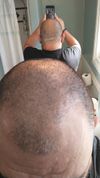
The user is treating hair loss with dermarolling, a laser helmet, scalp massages, and Nizoral. They stopped using minoxidil and finasteride and are considering pumpkin seed oil and sulforaphane.
miR-205, a tiny RNA, can stimulate hair growth by softening aging hair follicle stem cells in mice. Future tests aim to see if this can work in humans.
The conversation is about the use of microneedling, specifically with a derma stamp, for hair regrowth. Users discuss their experiences, pain levels, and the satisfaction of taking control over hair loss, with some mentioning the use of Minoxidil to enhance results.
User reports hair loss improvement with twice-weekly 0.25mg Fin, twice-weekly Min, weekly 0.5mm microneedling, and daily massages. Unconventional regimen contradicts typical advice but may reduce side effects.
The conversation discusses the effects of finasteride on hair loss and its potential neurological and sexual side effects. Users share personal experiences, with some reporting positive outcomes and others expressing concerns about cognitive function.
Microneedling's effectiveness for hair growth is debated, with some suggesting it enhances minoxidil absorption, but evidence is inconclusive. Concerns exist about its impact on hair transplants, and opinions vary on its use with other treatments like RU58841 and stemoxydine.
A hair loss treatment protocol involving topical and oral medications such as Minoxidil, RU58841, Finasteride, Dutasteride, Melatonin, Zinc, Vitamin B6, NAC, Caffeine, Biotin, Ginseng, and Semen; other treatments including Microneedling, Laser Helmet, Nizoral shampoo, Scalp Massage and supplements like Vitamin C, Vitamin D, Fish Oil, and Biotin; and the potential side effects of using this protocol.
HMI-115, a newly discovered hair loss treatment that could potentially be effective for those with diffuse thinning and telogen effluvium. It is based on prolactin receptor antagonist signaling and has already undergone Phase I trials in women, with potential commercialization by 2027.
The conversation is about the effectiveness of microneedling and scalp massage for hair loss. One user reports success with these methods alone, while another is using them alongside medications but is considering stopping due to side effects.
The user is considering adding microneedling to their current hair loss regimen, which includes 1mg finasteride daily, 1.25mg oral minoxidil twice daily, and Nizoral once a week. Opinions on microneedling's effectiveness vary, but some suggest it could enhance results.
The conversation discusses aggressive hair loss treatments, including finasteride, dutasteride, minoxidil, topical cetirizine, and experimental options like Estrogel, oh-flutamide, and RU58841. Users share experiences and suggest trying oral minoxidil and el cranell, noting the complexity and challenges of treating hair loss.
Cold shock therapy may promote hair growth by stimulating follicular muscles and affecting stem cells. The exact mechanisms and full range of elements involved are not yet fully understood.
Treating androgenic alopecia with minoxidil, finasteride, and antiandrogens, alongside exercise, cryotherapy, and natural substances to stimulate cold receptors for better hair growth. The method focuses on enhancing treatment effectiveness by considering environmental and behavioral factors and the role of cold receptors and muscle stress.
The conversation is about a hair regrowth regimen that includes using minoxidil, peppermint oil, a red light hat, and microneedling. The user is seeking advice on the effectiveness and frequency of these treatments.
Microneedling may still be beneficial for those on oral minoxidil due to its effects on tissue repair and blood flow, not just absorption. Some users report mixed results, and the effectiveness of combining microneedling with oral treatments remains debated.
The conversation is about using RF microneedling with ExoHealer, along with finasteride and minoxidil, to improve hair thickness and reduce shedding. The user reports noticeable improvements in scalp texture and oiliness, with plans to consider stem cell treatments in the future.
The user has been using topical finasteride and minoxidil for two years with decent regrowth and recently added microneedling to their routine. They are questioning if the small hairs observed are new regrowth from microneedling or just vellus or miniaturized hairs.
Gut microbiome imbalances can cause scalp inflammation and affect hair follicles, potentially leading to hair loss. Treatments include finasteride, peptides like BPC-157, TB-500, KPV, and lifestyle changes such as diet and exercise.
The conversation is about enhancing dermarolling for hair loss by using topical peptides like tb-500 or GHK-Cu to aid in healing and hair growth, and whether anyone has experienced significant results from this method.
Microneedling is considered an important addition to hair loss treatments like Finasteride, Minoxidil, and Nizoral, with evidence suggesting it enhances Minoxidil's effectiveness and can improve hair growth on its own. Users discuss various microneedling techniques, including heavy weekly sessions and lighter daily sessions, while expressing concerns about potential scalp damage and discomfort.
Microneedling frequency and depth, with suggested protocols involving 0.3mm every day before applying topical treatments like Minoxidil or Finasteride, and 0.5-1.5mm once or twice a month for wounding.
The conversation discusses microneedling for hair regrowth, emphasizing the importance of disinfecting the scalp to avoid infections. It also mentions using minoxidil and castor oil in the treatment routine.
The conversation discusses biannual SCUBE3 injections and microneedling as treatments for hair loss. Specific treatments mentioned include Minoxidil, Finasteride, and RU58841.
Microneedling is discussed as a favorable hair loss treatment, with no consensus on whether to glide or remove the device between areas. Scalp irritation varies by individual, and some users report no need for gel during the process.
The conversation is about managing a hair loss routine using Minoxidil twice daily, Tretinoin cream once daily at night, and microneedling once daily at night. The user is seeking advice on how to incorporate these treatments effectively without overlapping too much at night.
The conversation discusses scalp itching and tenderness after microneedling, despite using medicated shampoos and proper sanitation. The user plans to see a dermatologist and is concerned about possible infection or allergic reaction.
The conversation discusses alternative hair loss treatments beyond the commonly used Minoxidil and Finasteride. One user is trying diclofenac gel, caffeine + antioxidant serum, finasteride, ketoconazole shampoo, and has stopped using Minoxidil due to ineffectiveness, while another user has adopted lifestyle changes like exercise, diet, stress reduction, and topical caffeine, along with scalp massages and microneedling.
The user reported noticeable hair improvement over four months using 1 mg of finasteride and weekly microneedling. Progress photos from October 2024 to January 2025 show positive changes.