Search
for
Sort by
Community Join
360-390 / 1000+ resultscommunity are all vellus hairs likely to go terminal if fin/dut + min + tret are used long enough?
The user has been using a combination of finasteride/dutasteride, minoxidil, tretinoin, and hydrocortisone with microneedling and ketoconazole shampoo for hair loss. They are asking if the baby hairs growing will turn into terminal hairs with continued treatment.
community Can I use tretinoin, minoxidil, and The Ordinary hair serum on the same night?
Using tretinoin, minoxidil, and The Ordinary Multi-Peptide Serum together for hair loss is discussed, with suggestions to skip the serum as it is ineffective for regrowth. Tretinoin is recommended for temple regrowth, and combining it with derma stamping is advised.
community Can this fate be avoided? Or must i simply accept it.
A 19-year-old is experiencing early hair loss, possibly due to oily skin, stress, poor diet, and lack of sleep. They have tried ketoconazole shampoo without success and plan to visit a dermatologist for further advice.
community Is this a scam? Or is this minoxidil worth it?
Minoxidil with Tretinoin costs $50 monthly, but Kirkland brand is suggested as a cheaper alternative. The conversation questions if the higher-priced option is worth it.
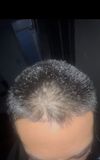
community 19M: Finasteride Not Helping Seb Derm and Hair Loss
A 19-year-old is experiencing worsening hair loss and severe seborrheic dermatitis despite using finasteride for six months. Nizoral (ketoconazole) is no longer effective, and they are seeking over-the-counter solutions and advice for an upcoming dermatologist visit.
community What can I use to prepare a lotion that doesn't irritate my scalp or make my hair sticky? (Want to experiment with metformin and Alpha Keto glutarate)
The conversation is about a user who tried dissolving a metformin pill in water for hair treatment but faced issues with hair sticking together. The user is seeking advice on preparing a non-irritating, non-sticky lotion at home, possibly experimenting with metformin and Alpha Keto glutarate.
community Don’t neglect your scalp health guys
community Would topical minoxidil + tretinoin cause less(or none) hypertrichosis compared to oral minox?
A user is considering switching from oral minoxidil to a combination of 5% topical minoxidil and tretinoin to reduce hypertrichosis. They hope this combination will be effective without causing excessive body hair growth.
community about homemade topical finasteride
A user started using homemade topical finasteride with PG-free liquid minoxidil for hair loss. They noticed the solution became milky with floaters and asked if it needed filtering.
community Washing hair every day instead of a couple times a week
The user discusses the potential impact of external DHT in sebum on hair loss and plans to wash their hair daily with salicylic acid exfoliation. They believe this might help reduce hair loss despite internal factors.
community New Approach to Ketoconazole or just waste of time?
The post discusses using 2% ketoconazole shampoo as a competitive androgen receptor antagonist for hair loss, applied for 1.5 hours daily. The user questions its effectiveness and potential benefits compared to finasteride and minoxidil.
community Effectiveness of Nizoral 1% Shampoo vs 2-in-1 for Dry Scalp
The conversation discusses whether a 2 in 1 shampoo and conditioner with ketoconazole 1% is less effective than using the shampoo alone for someone with a dry scalp and seborrheic dermatitis. The focus is on choosing the right product for hair and scalp health.
community Isn’t Minixidilmax’s PG solvent just superior to the Anageninc K&B solvent
PG solvent is considered superior to K&B solvent for RU58841 and Pyralutamide due to cost and effectiveness. The user questions why they should use K&B when PG offers more benefits.
community Ru58841 completely got rid of my seb derm
RU58841 cured seborrheic dermatitis, oily scalp, dandruff, and scalp pain, improving hair health when combined with Minoxidil. Another user noted diet impacts their seborrheic dermatitis and that finasteride hasn't changed their condition.
community making a clascoterone lotion from powder
A user is considering making a 2% clascoterone lotion from powder due to unavailability in their location. They plan to mix clascoterone powder with retinol lotion and use literature to determine the correct dosage.
community Shoutout to Zinc pyrithione and Piroctone olamine
Zinc pyrithione and piroctone olamine are effective for reducing hair shedding, possibly more so than ketoconazole. There is a concern about zinc pyrithione shampoo interfering with minoxidil, but it's unclear if this is proven.
community Ru58841 cleared my forehead acne
RU58841 helped clear forehead acne. The user mixes it with 5% minoxidil and considers making a cream for acne treatment.
community Suggestions?
The user is experiencing chronic folliculitis with scalp sores and is concerned about a receding hairline. They have tried various treatments including antibiotics, Nizoral 2% shampoo, and lifestyle changes, but are seeking further advice.
community Can I use Nizoral 2% if I don’t have any dandruff?
The conversation discusses using Nizoral 2% for hair loss treatment without having dandruff, with advice on allowing it to absorb for 10 minutes before rinsing and a personal experience of the product causing dry and itchy scalp.
community Minoxidil Skin Delivery from Nanoemulsion Formulations Containing Eucalyptol or Oleic Acid: Enhanced Diffusivity and Follicular Targeting
Minoxidil can be effectively delivered through nanoemulsions containing eucalyptol or oleic acid, enhancing its diffusivity and targeting hair follicles. This contradicts the advice against mixing minoxidil with oils in topical formulations.
community Has anyone tried Peptonix microneedling?
The conversation discusses Peptonix microneedling, a copper peptide serum, as a potential hair loss treatment. Users compare it to finasteride and minoxidil, noting side effects and personal experiences with these treatments.
community Am I misunderstanding the medication dosage calculation?
The conversation discusses confusion over the dosage calculation of a topical solution containing 0.25% finasteride, 5% minoxidil, and 0.001% tretinoin. The user considers switching to a 0.025% finasteride solution to enhance the effects of tretinoin and minoxidil.
community Lipisomal Solution (Dutasteride / Tretinoin & Minoxidil & Tretinoin) Horror Story Warning
Using liposomal solutions with dutasteride, minoxidil, and tretinoin worsened hair loss due to buildup and scalp issues. Consulting a professional and returning to simpler treatments like finasteride and minoxidil improved the situation.
community What do you think about this prescription
The user visited a trichologist due to ineffective topical finasteride treatment for hair loss. The trichologist recommended a new regimen including a two-month course of locoidon (cortisone 0.1%), followed by a solution containing minoxidil, hydrocortisone butirrate, estrone, progesterone, tocopherol acetate, trichosol, and transcutol.
community Trichosol, polyethylene glycol, and DMSO
The user experiences irritation from alcohols in minoxidil and is considering alternatives like trichosol mixed with polyethylene glycol or DMSO. They seek advice on the best nonirritating option.
community so many social media ads that have fin/min and then plus other stuff. are any of them worth it
The conversation discusses various hair loss treatments, including Minoxidil, finasteride, tretinoin, latanoprost, and GHK-Cu, with skepticism about expensive branded products like Zeus. Users suggest that similar results can be achieved with cheaper alternatives.
community 8 weeks in with microneedling and minoxidil/tretinoin
The user is using a combination of microneedling, minoxidil, tretinoin, scalp massages, and red light therapy to address hair loss, with a focus on the hairline and temples. They emphasize the importance of scalp massages and have seen regrowth, attributing success to their comprehensive routine.
community Tretinoin absorption Minoxidil
Tretinoin may help more minoxidil convert to its active form and could potentially increase its absorption, raising concerns about safety if too much enters the bloodstream. It's unclear if tretinoin affects finasteride absorption.
community Can topical tretinoin only applied to face (not hairline) exacerbate hair loss?
Topical tretinoin applied to the face may exacerbate hair loss in some individuals, potentially triggering conditions like frontal fibrosing alopecia. Experiences vary, with some users reporting no impact on hair, while others experience significant hair loss.