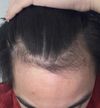
Potential treatments for hair loss, specifically the combination of liquid minoxidil and pyrilutamide, with some suggesting that adding finasteride may be beneficial.
The conversation discusses a new study on topical pumpkin seed oil for hair loss in mice. Treatments mentioned include Minoxidil, finasteride, and RU58841.
A user's experience with microneedling monotherapy and potential treatments such as finasteride, minoxidil, Stemoxydine, rosemary oil, peppermint oil, and RU58841 for reversing hair loss.
The conversation discusses a new liposomal topical finasteride from Hasson and Wong, available in Canada and Italy, soon in the US, costing $40/month. It claims to reduce scalp DHT by 50% without affecting serum DHT, potentially benefiting those who can't tolerate oral finasteride or RU58841.
A 17-year-old is experiencing rapid hair loss from NW1.5 to NW3 in six months and feels dermatologists are unhelpful. They are using Minoxidil (Rogaine) and seeking advice on application.
Mallia Aesthetics has developed MAL-838, a hormone-free product derived from sCD83, which stimulates hair growth without disrupting the skin microbiome. sCD83 promotes hair growth by activating hair follicles and preventing cell death, offering a localized treatment without systemic side effects.
Using lice as an alternative to microneedling for hair loss treatment, with concerns about effectiveness and practicality. Some users humorously suggest genetically altering lice to produce beneficial compounds.
A user shared their hair loss treatment routine, which includes oral and topical Minoxidil, dermarolling, Keto shampoo, multivitamins, Biotin, oils, protein intake, and water. Another user suggested adding finasteride and continuing the routine for 6-12 months.
The user has been using topical minoxidil and finasteride for four months, along with microneedling and Nizoral, noticing thicker lashes and eyebrows but not much scalp hair growth. They apply the treatment twice daily with a 5% minoxidil and 0.3% finasteride solution.
The user has been using topical minoxidil for over a year and added kx826/pyrilutamide to improve hair growth, avoiding finasteride due to side effects like lowered libido and panic attacks. They report positive results with reduced shedding and healthier hair, particularly in areas previously unresponsive to minoxidil.
Clascoterone in Winlevi, a topical AR antagonist, is being re-examined due to concerns about HPA axis suppression in adolescents, but it's unlikely to be banned for adult use in androgenetic alopecia (AGA). The European Medicines Agency recommended refusing Winlevi for acne vulgaris, but this may not affect Breezula's approval for AGA.
A user is considering a hair transplant in a "mohawk" pattern with scalp micropigmentation (SMP) on the sides and back, questioning its feasibility and appearance. Others discuss donor region quality, potential scarring, and alternative treatments like dutasteride and RU58841.
User shared 8-month hair loss treatment progress using topical fin/min, topical dut, mk677, RU, and microneedling. They experienced watery semen as a side effect but saw significant improvement in hair growth.
A user with alopecia totalis, borderline universalis, seeks advice on getting into a Xeljanz trial or appealing insurance for coverage. They experienced significant hair regrowth but are now seeing hair loss again and want to try Xeljanz.
Veradermics' oral minoxidil shows promise for hair regrowth, with some users reporting significant improvements, while Pelage's PP405 results are less convincing and lack transparency. There is skepticism about both treatments' long-term effectiveness and potential side effects.
A 15-year-old experiencing severe diffuse thinning plans to use minoxidil, dermarolling, and possibly ketoconazole, with hopes to later incorporate finasteride. Concerns about starting finasteride too young and the need for a dermatologist consultation are discussed.
A user is seeking suggestions for a custom hair lotion mix containing minoxidil, finasteride, caffeine, niacinamide, and biotin. Another user suggests adding tretinoin, topical valproate, and bimatoprost.
User discusses trying Low Level Laser Therapy (LLLT) for hair loss and its high cost. Another user shares their experience combining micro needling, minoxidil, and LLLT, seeing positive results after 2 months.
Liposomal formulations of finasteride and minoxidil may enhance drug delivery to the skin and hair follicles more effectively than traditional solutions, potentially improving treatment outcomes. However, more human clinical trials are needed to confirm these benefits.
The user experienced hairline improvement using microneedling once a month with a 12-pin set at 1.5-2.0mm and taking Tru Niagen, alongside a heavily modified diet. They attribute the slow hairline improvement to environmental factors, particularly diet, rather than solely genetic factors.
User "hairlossblows" shares their positive experience with minoxidil, microneedling, and finasteride for hair loss treatment. They report significant hair regrowth, especially in the hairline, and minimal side effects from finasteride.
A 45-year-old male successfully slowed hair loss using Nizoral and low-level laser therapy (LLLT) but cannot use Minoxidil, finasteride, or dutasteride for medical reasons. He seeks suggestions for hair regrowth options.
PP405, a topical LDH inhibitor, has shown to stimulate hair follicle stem cell proliferation in humans with moderate hair loss. They are advancing to more detailed trials this year.
Nicotinamide serum is discussed for its potential benefits in reducing inflammation related to hair loss. One user combines it with minoxidil for hair growth.
Veradermics' new hair loss treatment, VDPHL01, is likely a modified release oral minoxidil, which has received $75 million in funding for clinical trials. Despite skepticism about investing in a known treatment, some believe it could offer improved efficacy and reduced side effects.
A 31-year-old experiencing rapid hair loss is considering whether to shave their head or use treatments. They were prescribed B12, topical finasteride 0.1%, and minoxidil 10% but are unsure about the correct dosage and potential side effects.
The user noticed hair thinning since age 15, initially attributed to a Vitamin D deficiency. They are currently using Rogaine and considering Propecia but are hesitant about a scalp biopsy; they seek financially practical treatments for male-pattern baldness.
The conversation discusses using minoxidil and finasteride for hair loss, with concerns about absorption and considering adding tretinoin for better results. Microneedling is suggested as a method to improve absorption, with varying depths and frequencies recommended.