Search
for
Sort by
Community Join
480-510 / 1000+ resultscommunity Why the Brain Resists Updating Your Appearance: The Neuroscience Behind “It Happened Overnight”
The brain resists updating its perception of gradual appearance changes, like hair loss, due to its preference for stability and reliance on an internal model. This delay in perception can make changes feel sudden once the brain finally updates its model.
community Are there countries that prohibits importing Koshine KX?
The conversation discusses concerns about importing Koshine KX, a hair loss treatment. A user reassures that there is no risk of getting caught.
community nice to meet you my name is Fin Diesel
A joke about someone named "Fin Diesel" living life one milligram at a time, referencing the treatments Finasteride and Minoxidil used to treat hair loss; users discussed whether the look would be better with or without hair.
community Baby hair on hairline: regrowth or balding?
The user has been dermarolling and applying argan oil with peppermint or rosemary oil, noticing baby hair growth on the hairline. They are questioning if this indicates treatment success or faster hairline recession.
community Anyone had experience with Hair XL?
A user inquired about Hair XL offered by a clinic in the Netherlands, questioning if it is a form of Exosome treatment. The conversation seeks experiences and clarity on the treatment.
community I found the solution for the Minox dandruff problem
A user found a solution for Minoxidil-induced dandruff by using a custom NRF 11.121 mixture from a local pharmacy, which includes ingredients like Isopropyl palmitate and Cremophor RH 40. This formulation prevents dryness and allows better penetration when using hair shaders.
community M21. Fin/Dut/Minox hair loss jorney
community Update: 4~ Months, 1mg dut, 5mg min 21M
A 21-year-old experiencing hair loss since age 16 is using 1mg dutasteride, 5mg minoxidil, and Nizoral, with occasional microneedling, but stopped microneedling due to scalp inflammation. They report some patchy regrowth, with stronger results at the front than the midsection.
community Functional hair follicles grown from stem cells: Scientists have created natural-looking hair that grows through the skin using human induced pluripotent stem cells (iPSCs), a major scientific achievement that could revolutionize the hair growth industry.
Scientists have grown natural-looking hair from stem cells, potentially revolutionizing hair growth treatments. Concerns include cost, DHT resistance, and the need for future procedures.
community 4 months of consistency. Fin + Minox + Needling. No HT needed anymore? (Before/After)
The user experienced significant hair regrowth and improved hair density after four months using finasteride, minoxidil, and microneedling, avoiding the need for a hair transplant. They plan to continue their current routine due to positive results and are not considering switching to dutasteride.
community What’s your nuclear protocol???
People discussed their intense hair loss treatments, including the use of dutasteride, RU58841, minoxidil, tretinoin, essential oils, microneedling, and various topical sprays. Some users reported success with these methods in preventing hair loss and stimulating hair growth.
community Maneup GHK-Cu or similar top peptide
Maneup GHK-Cu peptide was used for hair loss, resulting in some hair growth in the receded hairline, but the new hairs were dry and split easily. Users discussed their experiences with this treatment.
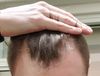
community Determining My Norwood Level with Photos
The conversation is about determining the Norwood level of hair loss. Treatments mentioned include Minoxidil, finasteride, and RU58841.
community Has anyone tried this hairloss compound before?
Nanoxidil is mentioned as a less-studied alternative to Minoxidil for hair loss. Users report no progress and advise against using it.
community PP405 (Everychem 3HP) users - assemble and share your updates!!
Users discussed experiences with Everychem's solution similar to PP405 for hair loss, noting some positive results like increased hair thickness and new growth. There was skepticism about the product's legitimacy and safety, with some users reporting early signs of effectiveness and others expressing concerns about the lack of evidence and safety profiles.
community Itchy/Sore scalp with hair loss M(28).
A 28-year-old male is experiencing hair loss, itching, soreness, and numbness on the scalp, with symptoms including dry, brittle hair and scalp irritation. Treatments tried include Nizoral, salt water, various oils, and antihistamines, with limited success; a chemist suggested a possible fungal infection, while a doctor suspected male pattern baldness.
community 1 Year Fin/Min/Niz update
User tried finasteride, minoxidil, and nizoral for hair loss with minor results. Derma rolling improved hair thickening significantly.
community Should You Trust Hair Restoration Docs That Sell BS Treatments?
Hair loss discussion mentions ineffective treatments like Nutrafol and low-level laser therapy sold by transplant clinics. Trust in hair restoration doctors questioned due to promoting these treatments.
community Continuous nizoral 1% shampoo use?
Nizoral 1% shampoo can be used continuously for hair loss, but it may cause dryness, which can be managed with conditioners. Some users combine it with other treatments like minoxidil and AHK-Cu for better results.
community How do you check the purity of Ru or Breezula
The conversation is about someone wanting to import RU58841 or CB-03-01 from China for hair loss treatment but being concerned about receiving counterfeit products. Specific treatments mentioned are RU58841 and CB-03-01.

community M17 regrowth journal
A 17-year-old is addressing hair loss with finasteride, topical minoxidil, and microneedling. They are considering adding GHK-Cu to their regimen, but others advise caution with finasteride due to age.
community PTD-DBM Update: Q&A With Dr. Kang-Yell Choi
PTD-DBM is being explored for hair regrowth by targeting CXXC5, with clinical trials expected after pre-clinical studies. Users express anticipation and skepticism about its effectiveness.
community Why was this compound abandoned ?
KY19382, a promising compound for hair loss, is not widely discussed or used. One user is currently testing it and plans to share results in a few weeks.
community Micro needling has made my hairline worse?
The user has been microneedling at 0.25mm once a week for 4 weeks and noticed further hairline recession. They are concerned about the impact of vitamin deficiencies, like biotin, on hair growth.
community RU58841, 8% HPLC-MS done by jano, they legit
The conversation is about testing the effectiveness of RU58841 for hair loss, with the user planning to increase their dose to 30 mg per day along with 20 mg of Minoxidil. The test results showed approximately 70 mg/ml, which the user considers a good result.
community Fuck hair loss; acquire beard.
A user's transformation from an accountant to a spartan with a full beard, discussing the potential of DUPA and alopecia areata, as well as treatments like vitamins, topicals, and natural treatments for potential regrowth.
community Another progress pic. 2 months. Dut. Min. Oral min. Keto. Dermarolling. Retinol. And taking a millions pics a day. 40 years old.
User "mynameisbogus" shares 2-month progress using Dut, Min, Oral Min, Keto, Dermarolling, and Retinol for hair loss at age 40. Others discuss impressive results and potential for full hair regrowth.
community Reminder: NURTURE those dormant hair follicles for as long as you can until PP405 comes out in 2028-2030
PP405 is anticipated as a future treatment for dormant hair follicles, but its effectiveness and safety are uncertain. Current treatments include oral minoxidil and microneedling, with some avoiding finasteride due to side effects.
community I got an idea to cure baldness but i need your help
User suggests finding unknown baldness cure by applying random items on scalp and reporting results after 6 months. Various users humorously agree to try different substances, including whale sperm and hydrochloric acid.