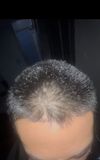
Mixing minoxidil with castor oil (and possibly rosemary oil) to prevent dry scalp. Concerns about whether this affects the potency or absorption of minoxidil.
OP struggles with scalp flakes causing hair loss and has tried Selsun Blue, Ketoconazole, and ZPT Shampoo without success. Suggestions include using salicylic acid shampoo, shaving the head, using Nizoral, and combining treatments like Minoxidil and finasteride.
A user is considering an extensive hair loss treatment regimen including oral dutasteride, oral minoxidil, topical finasteride, tretinoin, microneedling, keto shampoo, laser comb, and PRP injections. Suggestions include simplifying the routine, possibly increasing minoxidil dosage, and considering alternatives like RU58841, while cautioning against using estrogen due to potential side effects.
OP is considering using KX-826 for hair loss due to side effects from other treatments like Minoxidil and finasteride. Users discuss the risks and safety of KX-826, with some suggesting caution due to its status as a research chemical.
User regrew lost hair using microneedling, minoxidil, finasteride, Nizoral, fish oil, and collagen peptide. Progress was slow but constant, and patience was important.
Rosemary oil is compared to minoxidil 2%, but its effectiveness and safety are questioned. Minoxidil 5% is considered safer and more reliable for hair loss prevention.
Ketoconazole shampoo is recommended at a 2% concentration for hair loss, with advice to leave it in the hair for 2-5 minutes. Users discuss different brands, noting that Nizoral contains artificial dyes, and suggest alternatives without dyes.
The conversation discusses using black pepper to potentially enhance the absorption of dutasteride for hair loss treatment. It also humorously mentions other unconventional methods and ingredients like grapefruit juice and garlic.
A user shared their 9-month progress using finasteride, minoxidil with peppermint oil, biotin, coconut or almond oil, Nizoral shampoo, and derma stamping. They experienced significant hairline improvement despite some shedding and dry hair.
The conversation is about hair loss treatments, specifically a stack including topical Ashwagandha, Copper Peptide, Gotu Kola, Ketoconazole, and PDA. One user found Topical and Sub-Q GHK-CU effective.
A user named Mmherak is experiencing hair loss, with low B12 and iron deficiency, and has been recommended minoxidil and spironolactone by dermatologists. Other users suggest seborrheic dermatitis or dandruff, recommending treatments like Nizoral shampoo, ketoconazole, and Selsun Blue.
A 35-year-old man with 10 years of hair loss at NRW7 started using topical Minoxidil and noticed some hair regrowth. He plans to continue with Minoxidil, add microneedling, and possibly try topical treatments like finasteride or dutasteride.
User shares 8-month progress using Fin/Min/Niz and microneedling for hair loss, with positive results and no side effects. Discusses routine, including Fin 1mg daily, Minox 2x daily, Niz 2x weekly, and derma pen 1.5mm weekly.
The user experienced severe hair shedding despite using oral finasteride, minoxidil, dutasteride, and RU58841, and was diagnosed with Non-Alcoholic Fatty Liver Disease (NAFLD). They are considering switching to topical treatments due to the ineffectiveness of their current regimen.
Mallia Aesthetics has developed MAL-838, a hormone-free product derived from sCD83, which stimulates hair growth without disrupting the skin microbiome. sCD83 promotes hair growth by activating hair follicles and preventing cell death, offering a localized treatment without systemic side effects.
A user is using a mix of 15ml coconut oil and 6 drops of rosemary oil applied to the scalp three times a week for an hour before washing, seeking natural hair growth methods before considering medications. The user asks if this technique is effective and requests respectful advice.
Keratin microspheres may offer additional mechanisms to combat hair loss compared to minoxidil. The process to create these microspheres is relatively simple and can be done at home with basic equipment.
The conversation humorously discusses various hair loss treatments and options, including Minoxidil, finasteride, RU58841, biotin, ketoconazole, saw palmetto, dutasteride, and nutrition. It also mentions hair extensions and hairstyling as methods to achieve desired hairstyles.
A user's success in hair regrowth after taking oral and topical medications, such as minoxidil and dutasteride, and using microneedling. Other users shared their experiences and advice with treatments used to reverse hair loss.
The user saw hair regrowth after inconsistently using treatments like microneedling, peppermint and rosemary oils, ketoconazole shampoo, zinc pyrithione shampoo, and scalp massages, but stopped minoxidil due to heart palpitations. They plan to start a consistent treatment with a minoxidil and finasteride topical solution and will share results in six months.
Hair loss treatments discussed include Fluridil, Minoxidil, Stem, Niz, Viviscal, Broccoli Sprouts, and Derma. One user claims most treatments are ineffective, while another supports Eucapil.
PP405 is anticipated as a future treatment for dormant hair follicles, but its effectiveness and safety are uncertain. Current treatments include oral minoxidil and microneedling, with some avoiding finasteride due to side effects.
The user is exploring hair growth stimulants other than Minoxidil, mentioning Stemoxydine, various peptides, drugs like Latanoprost and Bimatoprost, and natural remedies such as Rosemary Oil and Caffeine. They express concerns about the long-term effectiveness and safety of these alternatives and seek more information on viable options for hair regrowth.
A satirical post where someone claims to have developed a radioactive isotope scalp serum using Polonium-210 that outperforms Minoxidil and finasteride for hair regrowth. The serum reportedly stimulates DNA repair in hair follicles, leading to significant hair density increase, but the post is met with skepticism and concerns about safety.
The user added microneedling to their routine of minoxidil and finasteride, resulting in noticeable hair regrowth after three months. They shared photos showing significant improvement.
The conversation discusses hair loss treatments, with the original poster using microneedling, rosemary oil, pumpkin seed oil, and Nizoral shampoo, and experiencing increased shedding. Responses suggest that shedding is typically a good sign only with medical treatments like minoxidil or finasteride, and recommend considering DHT blockers or medical treatments for effective results.
Natural vitamins like pumpkin seed oil, saw palmetto, and ecklonia cava are discussed for their potential to lower DHT levels. They may work similarly to finasteride but are significantly weaker.
Sulforaphane shows potential for hair regrowth, with users reporting reduced shedding and regrowth. Some users combine it with Minoxidil and finasteride for better results.
Peppermint oil and minoxidil were compared for hair growth in mice, with peppermint oil showing potential. A user plans to use topical finasteride and minoxidil for hair loss treatment.
Kintor Pharmaceutical's KX-826 shows promising results for hair loss treatment. Users discuss the use of anti-androgens like spironolactone and RU58841, noting concerns about concentration and safety.