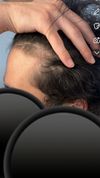
KY19382, a promising compound for hair loss, is not widely discussed or used. One user is currently testing it and plans to share results in a few weeks.
Use finasteride or dutasteride with minoxidil for at least a year to improve hair density before considering a hair transplant. A transplant might be needed if medications don't provide sufficient regrowth.
A 21-year-old has been using 1mg finasteride and 2.5% minoxidil for 9 months with some improvement in hair density. They plan to add collagen, 1% ketoconazole shampoo, and biweekly microneedling to their routine.
The conversation is about an 18-year-old's progress with hair regrowth using oral Minoxidil, dermarolling, and RU58841 over three months, starting treatment after beginning to lose hair at 16. Participants are impressed with the improvement and encourage continued treatment.
A 20 year old male's experience with hair loss treatments, including finasteride, minoxidil, microneedling, nizoral shampoo, dutasteride, alfatradiol, stemoxydine and RU58841, over the course of two years. The user reported losing ground overall but their hair becoming curly, which helped hide more scalp.
Finasteride is effective for DHT/AR-driven hair loss but not for chromosome 20-driven cases, where treatments like minoxidil, prostaglandin analogs, and low-level laser therapy may be more beneficial. Genetic testing can help determine the underlying cause of hair loss to tailor treatment effectively.
The conversation discusses Kevin's accurate information on hair loss treatments and highlights Dr. Bloxham's ongoing work with Verteporfin on FUT scars, suggesting people follow Dr. Bloxham's YouTube for updates. It also thanks Haicafe and Melvin from the hair restoration network forum for their contributions.
The user improved their hair loss from stage 5 to stage 3 using Minoxidil, Finasteride, and a Dermapen. They saw results after 6 months, experienced a shedding phase, then saw more gains, advising others not to be discouraged during the shedding phase.
A user shared their one-month progress using Minoxidil and RU58841 for hair loss, noting significant shedding after micro-needling and seeking opinions on their regrowth. They stopped micro-needling and added RU58841 to their treatment.
A 19-year-old has been using finasteride, minoxidil, and microneedling to treat hair loss with no regrowth, feeling mentally affected by it. Advice given includes continuing treatment, considering a hair transplant, addressing potential vitamin deficiencies, and possibly switching to dutasteride or adding ketoconazole shampoo.
The conversation discusses hair loss and treatments, with users suggesting the original poster's hair has receded despite using a dermaroller and RU58841 for two months. Many recommend starting finasteride and minoxidil for better results.
The conversation is about finding alfatradiol in the US for hair loss treatment. Specific treatments mentioned are Minoxidil, finasteride, and RU58841.
A 21-year-old is using Dualgen-5R (minoxidil and tretinoin) and weekly dermarolling to address hair loss, noticing some progress after three months. They plan to add an anti-androgen like RU58841 or Kx826 for better long-term results.
The user is using minoxidil, finasteride, Nizoral 2%, and microneedling for hair loss but finds Nizoral drying. They seek affordable shampoo and conditioner recommendations, with one reply suggesting baby shampoo for non-Nizoral days.
The conversation discusses hair cloning trials expected to start in 2020-2021 and mentions concerns about potential delays due to the Coronavirus. Treatments like Minoxidil, finasteride, and RU58841 are referenced.
The conversation discusses treatments for Androgenetic Alopecia, including Minoxidil, finasteride, RU58841, and topical caffeine. It emphasizes that there are multiple treatment options available in 2025.
The user has been using 1mg finasteride and 2.5mg oral minoxidil daily for 18 months without success in treating hair loss. They are frustrated with their diffuse androgenetic alopecia and unsure of what to do next.
The user is using a hair loss treatment regimen that includes RU58841, minoxidil mixed with finasteride, adenosine, dermarolling with lidocaine cream, and biotin. They are questioning if they are dermarolling too aggressively and are willing to accept baldness if no improvement is seen in 6 months.
Low-Level Laser Therapy (LLLT) is seen as a safe and effective method for maintaining hair and promoting regrowth in androgenetic alopecia (AGA) and male pattern baldness (MPB), with devices like the HairMax LaserComb® and iRestore helmet being popular. Some users and professionals are skeptical about its long-term effectiveness and cost.
Hair loss recovery using estrogen and anti-androgen treatment for 18 months showed significant improvement. However, results vary and alternative treatments like RU58841 and Dutasteride may work without systemic feminization.
A 22-year-old male is not seeing hair regrowth after using minoxidil and finasteride for a year and additional treatments for three months. Suggestions include improving scalp absorption with sea salt and trying a lipid-based solution, microneedling, and possibly switching to dutasteride if no improvement after 1-2 years.
A 20-year-old male has been using Minoxidil, Finasteride, and Nizoral for 9 months to treat hair loss. Despite the treatment, he believes his condition has worsened and he's experiencing intense shedding.
The post discusses using Sandalore as a potential hair loss treatment, emphasizing precise measurements and safe handling. The user compares Sandalore's effects to Minoxidil and mentions preparing a solution with ethanol and DMSO.
RU58841 is a strong non-steroidal antiandrogen for hair loss but may cause cardiovascular issues in some users. Alternatives like Pyrilutamide and Breezula are suggested due to better safety profiles and lower systemic risks.
A user shared their successful hair loss and gray hair reversal routine, which includes Minoxidil, Cetirizine HCl, Latanoprost, Dutasteride, Melatonin, Caffeine, Tretinoin, Vitamin D3, and Vitamin E. They also use a red light cap, oral Minoxidil, and are developing new treatments.
HMI-115, a newly discovered hair loss treatment that could potentially be effective for those with diffuse thinning and telogen effluvium. It is based on prolactin receptor antagonist signaling and has already undergone Phase I trials in women, with potential commercialization by 2027.
The conversation is about the potential benefits of Rapamycin for hair pigmentation and regeneration, based on effects observed in mice. The original poster is seeking personal experiences from others using Rapamycin for longevity.
A user's progress with hair loss treatments, including minoxidil, microneedling, nizoral 2%, finasteride 0.5mg/day and 0.5mg/ml per day in minoxidil, as well as RU58841 purchased from Anagen Inc., which allowed the user to go outside without a hat or cap for two years.