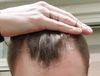
A user trying to avoid an expensive hair transplant, and the replies suggesting they wait two years on treatment before deciding if they need a transplant or not.
The conversation discusses skepticism about the effectiveness of scalp tension theory and scalp massagers for hair regrowth, contrasting it with treatments like finasteride and minoxidil, which have more user-reported results. Participants question the belief in scalp tension theory, suggesting it may be a marketing tactic, while others argue for a multifactorial approach to hair loss.
The user experienced hair regrowth and improved hair density using oral finasteride and topical minoxidil, with microneedling as an additional treatment. They are considering a hair transplant for low-density areas but are uncertain due to existing follicles.
The user experienced noticeable hair regrowth after using finasteride for 2 years, oral minoxidil for 1 year, and recently starting dermarolling. The right temple shows significant improvement, while the left remains similar.
The conversation discusses hair loss treatments, specifically the use of finasteride and minoxidil in a topical compound, along with microneedling. Users share progress and experiences, noting significant hair growth and improvements over time.
The conversation is about a user questioning if they have experienced hair regrowth after using topical minoxidil and oral finasteride for 2 months and 2 weeks, with mixed opinions on whether the perceived changes are due to lighting or actual regrowth. Most users suggest that noticeable regrowth typically takes 6-12 months, and the differences in photos may be due to lighting and hair styling.
The conversation is about using Minoxidil and microneedling for hair regrowth. Some users notice a difference, while others attribute changes to lighting, angle, or hair styling, and suggest waiting longer for noticeable results.
Nanoxidil is considered to have better absorption and fewer side effects than minoxidil, with added DHT blockers. The user is questioning if switching to the more expensive Spectral.DNC-N is worthwhile compared to cheaper options like Kirkland minoxidil.
Tretinoin and microneedling both enhance hair growth through different mechanisms, with microneedling being considered safe for long-term use. Optimal microneedling needle length varies, but 0.8 mm is suggested for hair growth, and a Dermastamp is recommended to avoid skin damage.
The post discusses using microneedling alone for hair regrowth without finasteride or minoxidil due to side effects and dependency concerns. The user is also considering the "Zix" formula, acetic acid, topical zinc solutions, and lithium chloride.
A 30-year-old male is experiencing hair loss and is concerned about his receding hairline, seeking advice on his Norwood scale classification. He is apprehensive about using Minoxidil and finasteride as treatments.
The conversation discusses the effectiveness of finasteride and microneedling for treating hair loss. The linked article is seen as an advertisement for these treatments.
Hair loss may be linked to blood flow and inflammation, with treatments like Minoxidil, finasteride, and quercetin being discussed. The conversation also mentions the role of 5AR enzyme distribution in hair follicles.
The user experienced significant hair regrowth and improved hair quality after six months of using oral minoxidil, finasteride, and micro-needling. They reported increased libido initially but no other side effects, and they plan to continue the treatment.
The user is questioning if their hair is regrowing and considering adding tretinoin to their regimen, which includes minoxidil. They are concerned about male pattern baldness and comparing their current hairline to past photos.
User Topher1999 achieved hair regrowth using Dutasteride 3 times a week and microneedling with Dr. Pen Ultima A6 every 2 weeks for 9 months. They believe microneedling is the main reason for hairline gains.
User celebrates 2-year anniversary of 2500 FUE hair transplant procedure and worries about future hair loss. Others compliment the results and suggest using Dut and Min to maintain hair.
The conversation is about a user experiencing hair thinning potentially due to excessive microneedling while using finasteride and minoxidil. Many suggest reducing microneedling frequency and considering alternative treatments like dutasteride or a hair transplant.
The conversation discusses microneedling techniques and the use of Minoxidil, copper peptides, EGF, FGF, ceramides, and hydration serums to enhance hair growth. It explores optimizing scalp conditions and the potential benefits of various compounds in conjunction with microneedling.
The conversation is about a user's one-year progress after a 3,200 graft FUE hair transplant and their use of oral finasteride and minoxidil. People are impressed with the results and are discussing the effectiveness and cost of the treatment.
The conversation discusses microneedling for hair loss, with the original poster experiencing pinpoint bleeding after using needles of 1.25mm and 0.5mm, possibly due to adding GHK-Cu to their treatment regimen. They are inquiring if others bleed at similar depths.
The user compared microneedling with a stamp versus a pen, finding the Dr. Pen more effective and easier to use than the Bioneedle stamp. They also mentioned using oral minoxidil for hair loss treatment.
A user shared their 16-month hair regrowth progress using finasteride, oral minoxidil, and micro-needling, noting significant improvement and minor side effects like stray ear hairs. Consistency in treatment was emphasized, with noticeable hair improvement within the first 6 months.
A user's progress with their hair loss treatment, which includes finasteride and nizoral, as well as the potential for using minoxidil; other users providing advice based on their own experiences; and others discussing how buzz cuts can make diffuse thinning look worse than it is.
The user reported positive hair regrowth results after six months of using 0.5 mg finasteride and nanoxidil, despite experiencing initial side effects like testicular pain and changes in libido. They noted that nanoxidil was chosen over minoxidil due to less scalp irritation.
The user experienced significant hair regrowth over 10 months by using 1.5mg oral finasteride and minoxidil daily, along with weekly derma stamping, after a previous hair transplant and initial thinning. The conversation highlights the importance of using DHT blockers post-transplant to maintain results.
A user on finasteride, minoxidil, dermastamp, and Nizoral is seeing baby hairs and asks if it's regrowth. Another user confirms it is regrowth and encourages them to continue.
The user improved their hair loss from stage 5 to stage 3 using Minoxidil, Finasteride, and a Dermapen. They saw results after 6 months, experienced a shedding phase, then saw more gains, advising others not to be discouraged during the shedding phase.