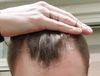
User tried various hair loss treatments, including natural remedies, topical and oral finasteride, RU with stemoxydine, and topical dutasteride. All treatments had side effects, and topical dutasteride thickened hair but also caused side effects.
The conversation discusses hair loss treatments, mentioning minoxidil, finasteride, RU58841, VDPHL, GT20029, and follicle cloning as potential solutions. It also reveals that the discussion about PP405 was an April Fool's joke.
A 25-year-old shared progress in hair regrowth after 7 months using dutasteride, minoxidil, and microneedling, noting some baby hair growth on the temples. The user plans to continue this treatment, having found it effective despite some initial shedding and challenges with styling due to topical minoxidil.
Hair loss treatment should target dermal white adipose tissue (DWAT) to restore hair follicles. Potential remedies include tocopherol (vitamin E), botox, rosiglitazone, niacin, kojyl cinnamate esters, and ADP355.
Minoxidil may cause wrinkles and dark circles, which some users report can be mitigated by adjusting dosage. Reactions vary, and while some dismiss these side effects, others experience significant changes.
The user has been taking dutasteride 0.5mg and minoxidil 5mg orally for 3 years to treat hair loss, which has stabilized their condition. They are considering adding topical RU58841 to their regimen but are uncertain of its effectiveness and contemplating a hair transplant instead.
User has been using topical finasteride and minoxidil for a year, seeing regrowth only on the hairline, not the crown. They also use keto shampoo, rosemary oil, and microneedle weekly, and are considering switching to oral treatments.
The user shared their 6-month hair loss progress using topical minoxidil, oral minoxidil, finasteride, and microneedling. They noted thicker eyebrows and eyelashes but also increased body hair.
A 40-year-old shared progress pictures showing results after 3.5 months of using dutasteride for hair loss. The conversation likely discusses this specific treatment and its effects on hair regrowth.
Mixing RU58841 with cetosomal minoxidil is discussed due to scalp irritation from ethanol PG vehicles. A mixture of the two turned bright pink when left to dry.
Topical dutasteride is considered for hair loss, but concerns about systemic absorption and side effects like reduced libido are common. Users have mixed results, with some preferring oral finasteride or dutasteride despite side effects, while others find topical treatments beneficial but challenging.
A user from China is participating in a clinical trial for Pyrilutamid, a potential hair loss treatment originally developed for prostate cancer. They've experienced no side effects except initial scalp itchiness, and will share results after the year-long trial.
The conversation discusses sourcing topical dutasteride for hair loss treatment, with mentions of Dr. Mwamba's products and Farmacia Prati as potential suppliers. Additional treatments like topical tocotrienols and botox are suggested as extensions to the regimen.
A user is seeking advice on making a topical bicalutamide solution as an alternative to RU58841 for hair loss, while already using dutasteride and minoxidil. They are considering crushing bicalutamide pills and adding them to their minoxidil.
A 22-year-old female with AGA due to PCOS is using 5% minoxidil foam and 2mg finasteride daily, and is seeking advice on microneedling frequency and safety. Concerns about finasteride dosage and its effects on PCOS were discussed, with emphasis on trusting the prescribed treatment plan.
The user reported significant hair regrowth after seven months using topical minoxidil 5% combined with 0.1% finasteride and weekly micro needling. The community responded positively, noting visible improvement and discussing the effectiveness of topical versus oral finasteride.
A user experienced increased hair density loss after 4 months on dutasteride combined with finasteride. They are also using topical dutasteride with azelaic acid and alfatradiol but cannot tolerate antiandrogens like RU58841 due to headaches.
A female user in her mid-20s with androgenetic alopecia and suspected telogene effluvium who has been taking Dutasteride, Spironolactone, Minoxidil, Dermarolling, Ketoconazol shampoo, and Yaz contraception for her hair loss for the past 6 months. She had a small shed during this time that she believes to be stress related.
The conversation discusses using minoxidil and finasteride for hair loss, with concerns about absorption and considering adding tretinoin for better results. Microneedling is suggested as a method to improve absorption, with varying depths and frequencies recommended.
The conversation discusses severe hair shedding and thinning, with the original poster using finasteride, oral minoxidil, and other supplements without improvement. The discussion highlights the possibility of telogen effluvium and the importance of addressing potential underlying health issues, such as stress and gut health, rather than assuming diffuse unpatterned alopecia (DUPA).
A user shared progress pictures after using finasteride and minoxidil for two years, showing significant hair improvement. The user started treatment at age 20 and reported no side effects.
Pyrilutimide, a treatment for hair loss; it's effectiveness compared to other treatments such as Finasteride and RU58841; and some users’ experiences with the treatment.
The user has been using oral dutasteride and topical minoxidil for 8 years, added oral minoxidil 6 months ago, but continues to experience hair thinning despite reduced shedding. They are considering checking iron levels, switching medication brands, and exploring other treatments like RU58841.
The user is experiencing slow hair loss despite using Dutasteride, Minoxidil, Dermarolling, and Nizoral for 1.25 years and is considering further tests and treatments. They are also supplementing with vitamin D and iron and using a prescribed steroid cream.
The user is experiencing increased hair miniaturization despite using oral minoxidil, dutasteride, and microneedling. They are considering reintroducing finasteride and adjusting dutasteride dosage.
Microneedling with 0.6 mm needles combined with 5% minoxidil is more effective for hair count and thickness than minoxidil alone or with 1.2 mm needles. Biweekly microneedling at 0.6 mm depth is recommended for better results in treating androgenetic alopecia.