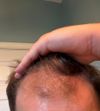
A user thanks the group for sharing experiences, leading them to start finasteride, dermarolling, and castor oil, while using Nizoral and LLLT. They plan to reintroduce minoxidil later.
The conversation is about a user's hair growth progress after 9 months of using oral minoxidil and finasteride, along with dermastamping. The user reports improved hair health and color, with some visible scalp remaining, and no side effects from the treatment.
The user did not respond to minoxidil and is considering using tretinoin to improve results. They also explored finasteride, microneedling, adapalene, red light therapy, and oral minoxidil as potential treatments.
The conversation is about managing allopregnanolone deficiency caused by 5-alpha-reductase inhibitors like finasteride or dutasteride. Specific treatments discussed for hair loss include Minoxidil, finasteride, and RU58841.
The user shared their 12-month hair regrowth progress using 1mg finasteride, 5mg oral minoxidil, and topical minoxidil. They also used a derma stamp weekly and treated seborrheic dermatitis with Mometasone and Nizoral.
The user followed a hair loss treatment using 2.5mg oral Minoxidil and 0.5mg oral Dutasteride daily. They initially tried a homemade topical Dutasteride but switched to capsules, achieving impressive results.
Finasteride can effectively slow or halt hair loss, even for those genetically predisposed to significant balding, like Norwood 6 or 7. Many users report long-term maintenance or improvement, often combining it with other treatments like Dutasteride or Minoxidil for better results.
The conversation discusses hair loss treatment using daily topical minoxidil and finasteride, daily 0.5mm dermarolling before application, and 2% ketoconazole shampoo three times a week. Users believe dermarolling enhances the absorption of the treatments and expect significant improvements over time.
The conversation discusses a transgender individual's successful hair loss treatment over 1.5 years using 2.5mg oral minoxidil, 5mg finasteride, and 8mg weekly injectable estradiol valerate. Some users debate the appropriateness of this approach within the group's goals, while others support the individualized treatment and its additional benefits for transgender individuals.
The user shared a 6-month aggressive hair loss treatment progress, using oral minoxidil, finasteride/minoxidil topical, dutasteride, derma stamping, Nizoral, and daily Cialis, which notably improved regrowth. Commenters observed significant improvement, with one noting a change from a Norwood 5 to a Norwood 1 in hair loss classification.
The conversation is about the accidental taste of Nizoral shampoo, which contains ketoconazole, during hair washing. Specific hair loss treatments mentioned are Minoxidil, Finasteride, and RU58841.
The user has been using finasteride 1mg and minoxidil 5% daily, along with Nizoral 2% twice a week for 16 months, and has seen improvement in hair regrowth, moving from Norwood 4 to between Norwood 2 and 3. The minoxidil used is a local pharmacy brand.
A user has been using dutasteride, RU58841, minoxidil, and ketoconazole for 2 years with no progress and worsening hair recession. They seek advice on how to proceed.
A 20-year-old is experiencing hair loss and is using finasteride, ketoconazole, and topical minoxidil. They suspect retrograde alopecia due to hair loss on the sides and nape, despite noticing some hair thickening on top.
The conversation discusses a last-resort hair loss treatment combining topical finasteride, minoxidil, melatonin, and progesterone, with claims that topical finasteride can inhibit up to 52% of scalp DHT. One reply clarifies that progesterone is not an anti-androgen but has anti-androgenic properties because it competes with androgens for receptors.
User shared progress pictures showing significant hair improvement after using finasteride (0.25-0.5mg daily) for 11 months. Other treatments like microneedling, ketoconazole, and scalp massage were mentioned but not used consistently.
The user has been using Minoxidil and Finasteride since late 2019 with good results but is experiencing a dry, flaky scalp and shedding hairs. They also use Nizoral, biotin, zinc, magnesium, and collagen supplements, and their dermatologist prescribed fluocinolone acetonide to reduce flaking.
The user shared progress pictures after using topical finasteride, minoxidil, and tretinoin for about 9 months, along with weekly microneedling, cold showers, and a diet free of processed foods. They reported no side effects.
A user shared a 2-year progress picture showing improvement in hair loss using only finasteride, with others discussing their own experiences and considering additional treatments like minoxidil or hair transplants. Some users reported hair loss stabilization, while one user experienced regrowth after increasing their finasteride dosage.
A user on 1mg finasteride for a year has low estradiol levels but no significant symptoms, and others suggest monitoring without immediate concern. Some users discuss potential effects of low estrogen, like low libido, but the user reports no erectile dysfunction.
Regrowth from using a regimen of finasteride and topical minoxidil daily, with additional microneedling since January 2023, as well as intermittent usage of nizoral and biotin tablets. The replies suggest that the user has seen positive results in their hairline.
A 32-year-old male shares his 5-year progress using finasteride, minoxidil, RU58841, and ketoconazole for hair loss. Despite consistent use, he feels his hair isn't as thick as before and is concerned about continued shedding and hairline miniaturization.
User "Ant1pal" shares progress pictures of hair regrowth using Minoxidil, Estradiol valerate, and Spironolactone. Users discuss potential side effects and the possibility of localizing estrogen to hair follicles for better treatment.
The user updated their hair loss treatment to include daily dutasteride, oral minoxidil, topical dutasteride with minoxidil and tretinoin, and RU58841. Commenters feel the extensive treatment is unnecessary for the user's level of hair loss.
The conversation is about a user's hair loss progress and treatment methods. The majority of users suggest shaving the head for better application of treatments like Minoxidil, microneedling, and oils. They also recommend adding finasteride and nizoral shampoo to the regimen.
The user, Salty-Peace-577, shared their 5-month update on using 0.5mg oral finasteride and 2.5mg oral minoxidil for hair loss. They experienced significant hair growth, particularly in their eyebrows, and shared their regimen and tips for hair growth. Some users in the conversation also discussed the side effects they experienced with different dosages of the medications.
A user shared their positive experience with a clinical trial for a new oral medication, VDPHL01, which is a reformulated version of oral minoxidil taken at a high dose of 17mg daily, showing significant hair regrowth after six months. The user noted that this formulation is believed to be more effective and time-released, with fewer side effects compared to regular oral minoxidil.
A user experienced hair regrowth after 3 months using finasteride, both topical and oral minoxidil, 0.5mm microneedling daily, and 300mg testosterone. They reported noticeable muscle gains and no side effects while being on testosterone replacement therapy.
A user is seeking affordable hair vitamins without biotin, already taking zinc and D3+K2, and has been dealing with chronic telogen effluvium since 2013. They previously used Nutrafol Vegan but found it too expensive.
A 27-year-old male with Norwood grade 5 hair loss is using dutasteride and a hair serum with Redensyl, Anagain, Procapil, and Capilia Longa, but is hesitant to use oral minoxidil due to past allergic reactions to topical minoxidil. He plans to try dutasteride alone for 3 months before considering adding oral minoxidil.