Search
for
Sort by
Community Join
720-750 / 1000+ resultscommunity Whatever else happens, at least I can say, I DID NOT BALD GRACEFULLY!
The user had a hair transplant and used finasteride, minoxidil, and pumpkin seed oil to combat hair loss. They are proud of their efforts to preserve their hair rather than accepting baldness.
community Are these all vellus hairs that will go terminal?
The user is using oral minoxidil, ghk-cu, and HGH for hair regrowth, noticing small vellus hairs on the crown. They avoid traditional DHT blockers like finasteride due to side effects, despite skepticism from others about the effectiveness of ghk-cu.
community 5 months and a half in topical minoxidil 5% everynight, 3 months of multivitamins + zinc (conzace), and almost 2 weeks or 2 weeks of triamcinolone (to determine if alopecia areata) 17M
The user has been using topical minoxidil 5% for five and a half months, multivitamins with zinc for three months, and triamcinolone for almost two weeks to address hair loss. They are considering starting finasteride at age 18 and are unsure about hair regrowth progress.
community Tattooing Hair Loss Drugs into your Scalp
Tattooing hair loss drugs like minoxidil and dutasteride into the scalp is discussed as an alternative to daily pills, with mixed opinions on its effectiveness and convenience. Some users report positive results, but concerns about cost, potential side effects, and the procedure's discomfort are noted.
community A Systemic Review on Topical Marketed Formulations, Natural Products, and Oral Supplements to Prevent Androgenic Alopecia: A Review
Topical formulations, natural products, and CAM therapies are being used to treat Androgenic alopecia to avoid side effects of Finasteride and Minoxidil. The review covers various low-risk, alternative treatment options.
community Slowly making a comeback. Can i hope for more?
The user is using topical minoxidil, topical finasteride, tretinoin cream, microneedling, and ketoconazole and caffeine shampoo for hair regrowth. They are satisfied with the progress but unsure if more regrowth is possible and are advised to continue the routine for a year.
community 4 months into topical minoxidil+fin solution
community Just topical min and fin, 6 months.
The conversation is about using a topical spray containing minoxidil, finasteride, and tretinoin for hair regrowth over six months, with positive results and minimal side effects. The user also mentions using biotin and alpecin, and discusses the benefits of topical application over oral forms.
community Is it harder to notice new growth with long hair?
The user is experiencing hair loss and is considering using finasteride again, along with ketoconazole shampoo and curl cream, to manage their long hair. They are concerned about the appearance of new hair growth and the potential shedding phase from minoxidil.
community Advice for woman that doesn't have recession; just trying to make my natural "M" widow's peak into an upside down "U" if that makes sense? Minimal scarring with maximum density. Prefer long hair transplant if possible. Big discussion of techniques and surgeons inside.
The user is seeking advice on hair transplant techniques and surgeons to reshape a natural widow's peak into a more rounded hairline, preferring long hair transplants with minimal scarring and maximum density. They are currently using finasteride and oral minoxidil, which have not been effective, and are considering various surgeons primarily in English-speaking countries and the EU, excluding Turkey.
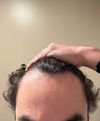
community M20 with Hair Loss - Clascoterone an Option?
A 20-year-old is experiencing hair thinning and is considering Clascoterone and Minoxidil as treatments, avoiding finasteride due to concerns about fertility and hormones. A suggestion was made to use Clascoterone for local DHT targeting and combine it with Minoxidil for maintenance and regrowth while avoiding systemic side effects.
community SCUBE3 and GT20029 could be the closet thing to a cure: Hair Follicle Regeneration and Protection Against DHT
SCUBE3 and GT20029 are potential treatments for hair loss, with SCUBE3 stimulating hair growth and GT20029 protecting against DHT. A combined approach using SCUBE3, finasteride or dutasteride, and later GT20029 could provide a comprehensive treatment for androgenetic alopecia.

community Is there a chance to regrow hairline or are those folicules gone?
The user is concerned about regrowing a plucked widow's peak and is considering using Minoxidil. They have been using the Growplex pack for a month without noticeable results.
community Male Pattern Baldness Routine
An 18-year-old diagnosed with male pattern baldness is using probiotics, saw palmetto, pumpkin seed oil, soy isoflavones, biotin, fish oil, quercetin, a multivitamin, and ketoconazole shampoo. Replies suggest these methods are ineffective and recommend finasteride, minoxidil, and a derma roller.
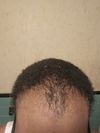
community Can this be fixed
A 24-year-old noticed hair thinning over 4-6 years and is seeking advice on whether it can be salvaged. Treatments mentioned include Minoxidil, finasteride, and RU58841.
community r/tressless members when encountering people with good hair genetics
Hair loss discussion includes treatments like Minoxidil, Finasteride, and RU58841. Users share experiences and support, mentioning that many people face hair thinning.
community Experiences maintaining hair on alfatradiol?
community Help with Routine for 50 year old Black Woman
A 50-year-old Black woman with alopecia areata and traction alopecia is seeking a science-based hair loss routine. Current treatments include spearmint tea for DHT levels and considering PRP.
community Any other treatments to still be hopeful for?
The conversation discusses the potential of new hair loss treatments, with a focus on pyrilutamide, gt20029, and topical alfatradiol, and the possibility of improving their effectiveness through methods like increased concentration and microneedling. Dutasteride is also mentioned as a stronger option.
community 2 years of treatment with fin, dut and oral minoxidil
The user experienced chronic telogen effluvium and mild male pattern baldness, treated with finasteride, oral minoxidil, and later switched to dutasteride, which stopped excessive hair shedding. Other treatments like low-level laser therapy, hair loss shampoos (except ketoconazole), and supplements were ineffective.
community REGROWING TEMPLES...From silk bald to strong Vellus hairs!
The user experienced tiny vellus hairs from 0.5mg finasteride and 2.5mg minoxidil over 9 months. Topical minoxidil, alfatradiol, and RU58841 applied twice daily for 1.5 months significantly improved temple hair regrowth.
community So defeated and tired of nothing working
A 25-year-old woman with androgenic alopecia has been using minoxidil, spironolactone, and dutasteride but sees little improvement in hair thinning. She is considering switching to oral minoxidil and exploring other treatments like PRP and hair systems.
community 6 months progress after minoxidil/finasteride stopped working
A 24-year-old with male pattern baldness experienced side effects from oral finasteride and switched to a topical minoxidil/finasteride combination, later incorporating daily shampooing and scalp brushing to manage hair loss and dandruff. After initial shedding, the regimen led to reduced hair loss and new hair growth, with the user now using a densita mf combination (5% minoxidil/0.1% finasteride + redensyl) nightly.
community Capilia longa...?
The user is using Minoxidil, finasteride, Nizoral, and dermarolling for hair loss but is not seeing results. They are considering trying a product called "capilia longa" for beard growth and are questioning its effectiveness.
community Personal experiment: tretinoin and diffuse thinning
User experienced hair growth with finasteride and minoxidil, but after using tretinoin, faced aggressive thinning and hair loss. They plan to stop tretinoin for two months to see if the problem improves.
community Can I restore my temples using finasteride or would I need a hair transplant?
The conversation is about restoring hairline and temples using finasteride, micro-needling, and Ketoconazole shampoo, with suggestions to add minoxidil despite its side effects. A hair transplant is considered likely necessary for significant restoration.
community Pelage PP405: New Hair Growth from Inactive Follicular Units - Phase 2a results at AAD 2026
PP405, a topical treatment, shows promise for hair growth by activating inactive follicles, with 66% of participants experiencing positive results. The treatment is well-tolerated and may proceed directly to Phase 3 trials, offering a potential alternative to minoxidil and finasteride.
community After 7 years on minoxidil 5% foam how bad is it? (28 year old male)
A 28-year-old male, who has been using minoxidil for 7 years, is concerned about hair miniaturization and is considering adding pyrilutamide, alfatradiol, and nizoral to his regimen after experiencing side effects from finasteride. Despite concerns, others reassure him that his hairline appears normal for his age, and he is likely around a Norwood 1.5.
community I don't know what happened with me sudden hair loss from 6 months i use dut ,min , vitamin all things but no response
The person is experiencing sudden hair loss for six months and treatments like dutasteride, minoxidil, and vitamins are not working. Another person suggests the hair loss might not be androgenetic alopecia but could be telogen effluvium or an inflammatory condition.