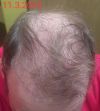
The conversation discusses a topical finasteride therapy with hydrocortisone butyrate, estrone base, and breviline. A user suggests oral finasteride as a superior option.
A long-term finasteride user experienced sideeffects like sexual dysfunction, dry eyes, muscle weakness, and brain fog, which improved when they stopped the medication. They decided to stop finasteride again, questioning if maintaining hair was worth the negative impact on their well-being.
After taking finasteride for 192 days, the user experienced sideeffects like depressed mood and decreased libido, along with worsening hair thinning and scalp issues. Despite consulting a dermatologist, the user's hair condition and scalp itchiness have not improved.
Some users report eye issues like blurry vision and dry eyes while using finasteride or dutasteride, though others experience no changes. Concerns about myopia progression are discussed, but no clear link to these medications is established.
Using topical finasteride alongside oral finasteride likely won't provide significant benefits and may increase the risk of sideeffects. The "4-in-1" spray offers a higher minoxidil concentration but may not be worth switching if oral finasteride is well-tolerated.
The user experienced notable hair regrowth after 2.5 months using oral finasteride, oral minoxidil, and microneedling. They switched from topical to oral minoxidil for convenience and reported no sideeffects.
Taking minoxidil both orally and topically may improve results, but consistency with topical application might not be as crucial if oral intake is regular. Microneedling is also considered for additional benefits.
The user seeks alternatives to Propylene Glycol (PG) for delivering topical finasteride due to scalp irritation. They consider using Propanediol 1,3 and ask for other suggestions.
The user experienced sideeffects with 1mg finasteride and is considering using a 0.5mg dose to prevent them. Another user suggested splitting the pills to achieve the lower dose.
A user from China is participating in a clinical trial for Pyrilutamid, a potential hair loss treatment originally developed for prostate cancer. They've experienced no sideeffects except initial scalp itchiness, and will share results after the year-long trial.
Sunburns on the scalp can cause permanent hair loss, especially for those using Tretinoin or Tacrolimus. Wearing UPF 50+ hats is recommended to protect against UV radiation.
Redensyl improved hair thickness slightly with no sideeffects, but no regrowth. Minoxidil provided significant regrowth but caused facial sideeffects like puffiness.
Clascoterone 5% topical solution shows promise for treating male-pattern hair loss by blocking DHT at the follicle without systemic absorption, potentially offering fewer sideeffects than oral treatments like finasteride. While results are promising, long-term safety and effectiveness need further study, and it may serve as a starting point for developing more effective treatments.
After 8 months of using topical finasteride, hair miniaturization continues, raising concerns about its effectiveness. Microneedling is suggested as a possible complementary treatment.
Oral treatments for hair loss, like Dutasteride and Minoxidil, may be more effective than topical ones, though topical formulations can be similarly effective except for Minoxidil. Topical treatments can be a chore to apply and are often used as supplements to oral treatments.
Switching from topical to oral minoxidil and dutasteride led to severe hair thinning and shedding, with no sideeffects. The user is unsure if this is a temporary shedding phase or if oral minoxidil is less effective.
Dutasteride is associated with increased blood glucose, HbA1c, LDL cholesterol, and liver enzyme activity, potentially leading to diabetes, NAFLD, and liver metabolism changes. The conversation highlights concerns about these adverse effects and calls for more studies, including on finasteride.
The user is taking 0.5mg finasteride and 0.5mg Loniten orally daily, using Eucapil twice weekly, and Minoxidil foam once daily for hair loss. They believe Eucapil effectively stops hair loss despite sideeffects like breast growth.
Tretinoin can cause non-telogen hair loss in some men by inducing catagen-like changes in hair follicles and through retinoid toxicity, especially when used with minoxidil. Some users report hair loss even when using retinoids on the face, while others experience benefits when combined with treatments like finasteride and minoxidil.
The user experienced sideeffects from a hair loss treatment and is considering using pyrilutamide, alfatradiol, and possibly minoxidil. They are unsure about starting minoxidil immediately or waiting to see the effects of the other treatments.
Minoxidil can be effectively delivered through nanoemulsions containing eucalyptol or oleic acid, enhancing its diffusivity and targeting hair follicles. This contradicts the advice against mixing minoxidil with oils in topical formulations.
A 28 year old using a hair loss prevention protocol to restore thinning hair, which includes finasteride, dutasteride, minoxidil, stemoxydine, alopecin, nizoral shampoo and microneedling; the user is now adding pyrilutamide solution to the regimen with the hope of improving their results. RU58841 was also ordered but not yet used.
The conversation discusses topical androgen receptor blockers for hair loss, mentioning Clascoterone, Pyrilutamide, GT20029, and RU58841. Ketoconazole's effectiveness and application methods are also debated.
A topical treatment called 1961, containing multiple products, is discussed for its compatibility with finasteride. It is suggested that 1961 does not negatively affect finasteride's effectiveness and may even enhance its absorption.
The conversation is about whether the phase 2 results for pyrilutamide, a potential hair loss treatment, were presented at a dermatology convention and inquiries about the completion of phase 3 trials. Specific treatments mentioned include pyrilutamide.
A user stopped oral finasteride after 7 years due to decreased libido and switched to topical finasteride and minoxidil. Others shared similar experiences and discussed alternatives like dutasteride and topical treatments.
The user is considering topical Saw Palmetto or Pumpkin Seed Oil due to sensitivity to finasteride and cost issues. They also use dermastamping for Minoxidil absorption and seek advice on timing to avoid systemic absorption.
A 34-year-old man with diffuse hair loss experienced regrowth and hair thickening using daily Dutasteride, oral and topical Minoxidil, a specialized shampoo, and microneedling. He switched from Finasteride to Dutasteride after seeing significant improvement in a peer, reporting no sideeffects.
Finasteride, a medication for hair loss that has both positive and negative effects. Users discussed their own personal experiences with the drug as well as potential side-effects of taking it, such as erectile dysfunction or gynecomastia. Suggestions were also made about starting at a lower dosage to minimize these risks.