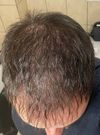
The user plans to use 1% Koshine826, 0.1% Alfatradiol, Minoxidil with Tretinoin, microneedling, and Stemoxydine for hair loss treatment. They expect significant recovery with this regimen.
The conversation discusses the potential benefits of sublingual minoxidil for hair loss treatment. It suggests that sublingual minoxidil, which bypasses the liver, may have fewer side effects, greater bioavailability, and could be more effective than oral minoxidil.
A user shares their positive experience using the Rootique Dou applicator with 0.005% finasteride, noting it effectively delivers the product without greasiness and helps with hair regrowth without side effects. Another user reports regrowth using low-dose finasteride from ULO, while avoiding tretinoin due to skin irritation.
Probiotics like L. reuteri ATCC PTA 6475 and B. longum BB536 may improve hair growth and density by reducing inflammation and reversing DHT damage. The user is trialing these probiotics personally, ordering them from the U.S. to Canada, and plans to continue if no adverse effects occur.
Hair loss treatments, with users discussing their experiences with both RU58841 and Pyrilutamide, noting that the latter has only recently become available but may yield better results in the long term.
MaximusDurkimus shares experience with 0.25mg Finasteride, Minoxidil-induced lupus, and less than 10mg RU58841 for hair loss. Plans to try 0.025% topical Finasteride with 5% Stemoxydine and possibly Tretinoin, Fluridil, or CB-03-01 in the future.
The conversation discusses whether stemoxydine needs to be used for life for hair loss treatment. One user suggests that stemoxydine does not require lifelong use and can make hair exit the resting phase faster, but the benefits may be temporary.
Koshine 826 (Pyrilutamide) is being used by several users to address hair loss, with mixed results on shedding and side effects. Some users report reduced shedding and no side effects, while others experience increased shedding and potential issues with libido and erectile dysfunction.
Minoxidil, dutasteride, and copper peptides are used in a tattooing method for hair regrowth, with some users noting better results compared to oral treatments. Copper peptides are considered to have minimal impact, but the method may reduce side effects.
The conversation is about compounding topical cyclosporine for hair loss, suggesting it needs an oil base like castor oil. The user seeks tips or tricks for the process.
Pyrilutamide is officially available for purchase, and users suggest Fluridil as an alternative topical anti-androgen. Some users report positive results with pyrilutamide from Koshine.
The user is considering switching to topical finasteride or pyrilutamide to stabilize hair loss before a hair transplant, currently using oral minoxidil and finasteride. Suggestions include sticking to the current regimen as it is already potent, and caution against using pyrilutamide from unreliable sources.
PP405 is a potential hair loss treatment, but its safety and effectiveness are uncertain. Users advise caution and suggest waiting for more data before purchasing unverified versions.
The user is considering PRP with exosomes for hair loss after oral minoxidil and dutasteride failed to provide desired results. Despite suggestions for a hair transplant, the user is hesitant due to cost and complexity, and is unsure about other options.
PP405 is suspected to be a scam, with users doubting its legitimacy and effectiveness. Many recommend using proven treatments like finasteride and minoxidil.
Kintor's phase III trial for pyri (KX-826) showed promising safety and efficacy results, with no drug-related sexual dysfunction reported. Users discussed their experiences with pyri, Minoxidil, Dutasteride, and concerns about the validity of the study results.
Users are concerned about inconsistencies in the packaging and form of a Minoxidil, finasteride, and Biotin blend from LockLab.co, with some receiving capsules and others tablets. Despite reassurances from customer service about changes due to maintenance, users remain skeptical about the product's authenticity and effectiveness.
The conversation discusses a new study on topical pumpkin seed oil for hair loss in mice. Treatments mentioned include Minoxidil, finasteride, and RU58841.
The user has been using a Phoenix 2-in-1 pill (1mg finasteride with 3mg minoxidil), nizoral ketoconazole shampoo, and derma rolling for 9 months but continues to experience hair shedding. They are considering adding Rogaine foam and are curious about low-level laser caps for better results.
KX-826 is being discussed for hair loss treatment, with users debating between 0.5% and 0.9% solutions and foam. Some report side effects like headaches, while others see no changes; it blocks androgen receptors without reducing DHT levels.
A 45-year-old male successfully slowed hair loss using Nizoral and low-level laser therapy (LLLT) but cannot use Minoxidil, finasteride, or dutasteride for medical reasons. He seeks suggestions for hair regrowth options.
Topical dutasteride is suggested as a low side-effect treatment for hair loss, with a proposed dose of 0.025% 1ml/day. It is considered better than finasteride due to its even inhibition of DHT isoforms and lower systemic absorption.
The conversation discusses alternatives to minoxidil and finasteride for hair loss, with users expressing skepticism about the effectiveness of Redensyl, Procapil, and Baicapil. One user recommends Finax by Dr. Reddy as a reliable option in India.
Minoxidil is commonly used for male pattern baldness, but Procapil is considered to have fewer side effects and be more effective. The user seeks information or experiences regarding Procapil.
Potential treatments for hair loss, specifically the combination of liquid minoxidil and pyrilutamide, with some suggesting that adding finasteride may be beneficial.
RU58841, an anti-androgenic compound, showed early promise for treating alopecia but faced challenges after its patent in 1997. Despite advancing to Phase II trials, safety concerns and financial struggles led Aventis to abandon its development. Proskelia, which later merged into ProStrakan, couldn't prioritize the drug, leading to its eventual stagnation and failure to reach the market.
The conversation is about making a 20mg/ml RU58841 solution for hair loss treatment using ethanol and propylene glycol. The user receives advice on calculating the correct amount of RU58841 powder needed.
The conversation discusses whether using pyrilutamide would interfere with minoxidil's ability to regrow hair, considering pyrilutamide is seen as a maintenance drug that stops shedding, while minoxidil promotes hair growth but causes initial shedding.