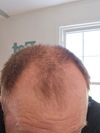
A user who was losing their hair and found an effective solution; they asked for opinions on it and discussed treatments such as Minoxidil, Finasteride, and RU58841, as well as SMP.
The conversation discusses skepticism about a new hair loss treatment called project K, which claims to replicate a chemical from UCLA research but is suspected to be a scam. The original poster plans to continue using oral minoxidil, finasteride, and dutasteride, along with microneedling, for hair regrowth.
A 24-year-old male is considering the "Big 4" treatments (Finasteride, Minoxidil, Ketoconazole shampoo, and Microneedling) or a hair transplant for hair loss. Most users recommend starting with Finasteride and Minoxidil to stabilize hair loss before considering a transplant.
The user is using Minoxidil, finasteride, Nizoral, and dermarolling for hair loss but is not seeing results. They are considering trying a product called "capilia longa" for beard growth and are questioning its effectiveness.
A user shared their experience with hair loss, initially using finasteride and minoxidil without satisfactory results, and later switching to hair systems, which they plan to use indefinitely. The user and others discussed the positive reactions, maintenance, and normalization of hair systems for men.
The conversation discusses a user's experiment of "burning the scalp" to treat hair loss, with mixed opinions on its effectiveness. Some suggest returning to proven treatments like finasteride and minoxidil, while others note slight improvements in hair density.
The user had a hair transplant and is asking when they can resume microneedling their forehead, which they did previously once a week with positive results on their crown. They are currently on a treatment regimen that includes oral finasteride, oral and topical minoxidil, ketoconazole shampoo, and black castor oil for moisturizing.
A user expressed satisfaction with a hair and beard transplant at HairofIstanbul using 3200 grafts and PRP, achieving natural-looking results without finasteride or minoxidil. The transformation was praised, though some noted the beard line appeared artificial.
A person started using Minoxidil at 34 and had a hair transplant at 38, avoiding a straight hairline for a natural look and had 2200 grafts. They began taking Finasteride as a precaution, but Minoxidil did most of the work.
The conversation is about experimenting with topical exosomes for hair loss treatment, alongside microneedling, Happy Head's gel-like topical, and Ordinary's hair serum. The user also mentions the availability of treatments like latanoprost and Redensyl.
PP405 is a topical gel being tested for hair regrowth in adults with androgenetic alopecia. Volunteers aged 18-55 are needed for a 16-week trial in several US locations.
A user decided to use a hair system after 10 years of hair loss, avoiding surgery and supplements due to potential side effects. They were nervous but hopeful for natural-looking results.
A 33-year-old male is experiencing hair loss on the crown and is considering treatments like Minoxidil 2% or 5%, Minoxidil foam, Finasteride, or a hair transplant. He previously used Minoxidil 2% for his hairline but found it annoying to apply.
The user has been taking oral finasteride for 2 months, experiencing more hair loss but noticing some fuzzy hair growth on the scalp. They are questioning if this new hair growth is significant.
A 31-year-old experiencing rapid hair loss is considering whether to shave their head or use treatments. They were prescribed B12, topical finasteride 0.1%, and minoxidil 10% but are unsure about the correct dosage and potential side effects.
Elon Musk likely had at least two hair transplants and uses finasteride or dutasteride to maintain his hair. He may also use a hair system or prosthetic hair.
The user is generally happy with their hair transplant results but has concerns about graft density and placement, particularly on the left temple and hairline. They are using finasteride and minoxidil inconsistently, plan to add Priorin, and are considering microneedling and PRP sessions for future care.
PP405 is a potential hair loss treatment undergoing trials, with discussions on its effectiveness and comparison to existing treatments like finasteride and minoxidil. There is skepticism about its status as a cure, with hopes for future advancements in genetic treatments like CRISPR.
A 35-year-old man with 10 years of hair loss at NRW7 started using topical Minoxidil and noticed some hair regrowth. He plans to continue with Minoxidil, add microneedling, and possibly try topical treatments like finasteride or dutasteride.
Hair loss treatments like Minoxidil, finasteride, and stem cell therapies exist, but a complete cure is hindered by genetic complexity and market dynamics. Cloning hair follicles is considered a potential solution, but it's currently not feasible.
A 20-year-old is experiencing hair thinning and is considering Clascoterone and Minoxidil as treatments, avoiding finasteride due to concerns about fertility and hormones. A suggestion was made to use Clascoterone for local DHT targeting and combine it with Minoxidil for maintenance and regrowth while avoiding systemic side effects.
A 23-year-old discusses their hair loss treatment using finasteride, dutasteride, oral and topical minoxidil, and topical tretinoin under medical supervision. They stress stabilizing hair loss before a hair transplant and plan to continue the regimen for at least 18 months.
The user is experiencing severe hair loss after surgery and stress, with thinning all over the head, including the sides and neck. They are unsure if it's due to DUPA or alopecia areata incognita, and doctors have not observed miniaturization.
28-year-old struggles with aggressive hair loss since 18, used minoxidil with limited success. Tried hair systems but found them expensive, shaved head for job interviews but plans to return to hair systems.
A user shared their positive experience with a hair transplant at Wimpole Clinic, performed by Dr. Malkani, and discussed using finasteride at a reduced dose due to side effects. They also mentioned avoiding minoxidil due to heart pain and taking supplements like biotin, marine collagen, viviscal, and krill oil.
A user successfully regrew hair after nearly going bald by using oral finasteride, topical minoxidil, plasma injections, and mesotherapy over 9 months. They plan to try derma rolling and have an alarm set for taking medication, noting increased sexual drive as a side effect.
A user shared their positive experience with a hair transplant performed by Dr. Timothy Carman, using 1100 grafts via FUT surgery, and reported satisfaction with the results and minimal scarring. The user continues to use minoxidil and finasteride for hair maintenance.
The user has been using finasteride, minoxidil, and Nizoral for hair loss but is not seeing much regrowth. Suggestions include trying oral minoxidil with dutasteride, and some users believe the hair looks better in recent pictures.
Hair cloning and new treatments like ET-02, Veradermics (vdphl01), and wound-induced hair neogenesis show promise but are not yet widely available. Current effective treatments include minoxidil, finasteride, and dutasteride, with early intervention being crucial for better outcomes.