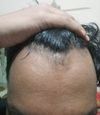
The user noticed increased hair thinning and scalp redness on one side of their temple. They are seeking advice on what this could be and how to address it.
Woman with AGA uses microneedling, minoxidil, spiro, and laser for hair loss. Experiences redness and tenderness for three days after microneedling with Dermapen M8, asks if it's normal and the correct speed setting.
A 22-year-old male experienced hair thinning and found minoxidil ineffective, with blood tests showing deficiencies in zinc, vitamin B12, vitamin D3, and possible hypothyroidism. Another user suggested adding topical finasteride to the regimen, which helped them regrow hair effectively without side effects.
The user is treating androgenetic alopecia with finasteride and discovered a folic acid deficiency. They are asking if curing the deficiency can worsen or improve their hair condition.
A user in their early 20s is concerned about minor hair thinning and is considering a hair loss regimen involving PRP sessions, mesotherapy with dutasteride injections, and low-dose finasteride. They dislike minoxidil due to its greasiness and prefer a routine that is easy to maintain.
A user is experiencing side effects like less hard erections and sensitive nipples while on finasteride, with bloodwork showing high prolactin levels. They are seeking suggestions to address the prolactin issue.
Vitamin deficiencies, particularly in vitamins A, B, C, D, and minerals like iron, zinc, and copper, can lead to hair loss. Dietary changes, such as eating more nutrient-rich foods, can improve hair health.
A user experienced hair thinning and increased shedding after starting a high-dose B-complex supplement while using Minoxidil and RU58841. They are seeking advice on whether others have had similar issues with high doses of Vitamin B3 and B5.
A 68-year-old woman with iron deficiency and hypertension is considering using 5% minoxidil for hair regrowth and plans to see a dermatologist. Some suggest using wigs and focusing on health, while others recommend checking for hormone imbalances and nutritional deficiencies.
A teenager experiencing hair loss is using minoxidil, a derma roller, and plans to add ketoconazole shampoo to their routine. They are advised to continue this regimen consistently for at least six months to see results, with the shedding being a normal part of the process.
The conversation discusses microneedling for hair regrowth, emphasizing the importance of disinfecting the scalp to avoid infections. It also mentions using minoxidil and castor oil in the treatment routine.
A user is seeking affordable hair vitamins without biotin, already taking zinc and D3+K2, and has been dealing with chronic telogen effluvium since 2013. They previously used Nutrafol Vegan but found it too expensive.
The user discusses their experience with diffuse unpatterned alopecia and acquired progressive hair kinkering, noting improvements with treatments including biotin, pantothenic acid, finasteride, ketoconazole, and zinc pyrithione shampoo. They report thicker, healthier hair and improved scalp condition, attributing success mainly to biotin, pantothenic acid, and finasteride.
The user has been microneedling at 0.25mm once a week for 4 weeks and noticed further hairline recession. They are concerned about the impact of vitamin deficiencies, like biotin, on hair growth.
The user reported minimal results for the first 7-8 months using finasteride every other day and minoxidil once a day, but recently noticed hairline improvement and increased density. They also started microneedling once a week.
A non-binary transfeminine person experienced significant hair regrowth after starting finasteride, minoxidil, microneedling, and hormone replacement therapy with estradiol. They encourage trans individuals concerned about hair loss to consider estrogen as it has greatly improved their hair condition.
Addressing hair loss by checking vitamin D and iron levels is crucial before adding more treatments. Supplementing these deficiencies can significantly reduce shedding.
The user is trying a new hair loss regimen including Spirolactone, Finasteride, oral Minoxidil, microneedling, and various supplements. They are experiencing increased shedding and seeking advice on microneedling and treatment effectiveness.
The user is experiencing hair regrowth in small clusters using oral minoxidil, oral finasteride, a red light cap, and Nizoral 2% shampoo. They are hopeful for continued improvement and thicker hair.
Low-dose oral minoxidil is used for hair loss and does not significantly affect blood pressure but may increase heart rate and cause hypotensive symptoms. Some users experience side effects like palpitations and shortness of breath, while others find it effective; topical minoxidil with tretinoin is also considered.
The user is concerned about hair loss and is using treatments like dutasteride, microneedling, and topical finasteride, while considering adding RU58841. They are also using Minoxidil on the temples and are worried about testosterone-related hair loss.
A user with low-normal testosterone levels is considering starting finasteride and minoxidil for hair loss but is concerned about hormone imbalance. They are advised that finasteride targets DHT, not testosterone, and could start with minoxidil while making lifestyle changes to naturally increase testosterone.
The user has been using topical finasteride and minoxidil for two years with decent regrowth and recently added microneedling to their routine. They are questioning if the small hairs observed are new regrowth from microneedling or just vellus or miniaturized hairs.
A user's progress with their hair loss treatment, which includes finasteride and nizoral, as well as the potential for using minoxidil; other users providing advice based on their own experiences; and others discussing how buzz cuts can make diffuse thinning look worse than it is.
A 17-year-old is experiencing diffuse thinning, dandruff, body hair shedding, and other symptoms, possibly linked to seborrheic dermatitis or telogen effluvium. They are using ketoconazole shampoo and considering blood tests to check for thyroid issues or deficiencies.
A 27-year-old male with diffuse hair loss, including the donor area, did not respond to finasteride, dutasteride, or minoxidil. He suspects his hair loss may be linked to a mild connective tissue disorder, possibly affecting the structural support of hair follicles, rather than being purely hormonal.
The conversation is about a user planning to start minoxidil treatment and considering increasing zinc intake to improve testosterone and libido. They are concerned about potential hair loss due to increased testosterone and are advised to consider magnesium supplementation and the effects of DHT if not on finasteride or dutasteride.
A female with male-pattern hair loss (AGA) is seeking help after unsuccessful treatments with spironolactone and supplements, and is considering oral minoxidil and finasteride despite concerns about medication side effects. She has ruled out hormonal birth control and PRP/PRFM, and is looking into further medical advice due to abnormal lab results.
A 43-year-old noticed significant hair thinning and is using topical minoxidil, dermarolling, Alpecin, biotin, zinc, copper, vitamin D, and rosemary oil. They plan to see an endocrinologist and have blood tests scheduled to investigate further.