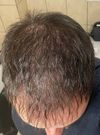
A user shared their hair progress after three steroid cycles, using 5% minoxidil and 100mg RU58841 daily. They are considering a hair transplant due to paranoia about shedding.
The user started using trenbolone and minoxidil simultaneously and experienced increased hair shedding, unsure which is causing it. Replies suggest both drugs could cause hair loss, with one advising to stop trenbolone to protect hair and another indicating minoxidil is unlikely the cause due to the timing.
The conversation is about the difference in hair loss between bodybuilders in the "Golden Era" and modern bodybuilders. Some users speculate that factors such as the types and doses of steroids used, genetics, diet, microplastics, and overall health may contribute to hair loss. Hair loss prevention medication and transplants are mentioned as potential treatments.
The user experienced significant hair regrowth using Trestolone, GHK-Cu, and Minoxidil. They avoided Finasteride due to concerns about side effects and noted that their approach reduced androgenic load, contributing to hair regrowth.
Experimenting with trestolone as a treatment for hair loss in an attempt to avoid DHT-related treatments such as finasteride and dutasteride, and discussing the potential effects of its receptor selectivity on the androgen receptors in the scalp.
The user has been using oral minoxidil and dutasteride for hair loss without success and is considering adding topical 17α-estradiol, Pyrilutamide, Clascoterone, or cetirizine. They have confirmed low serum DHT levels and are exploring additional treatments due to genetic sensitivity to DHT and prostaglandin D2.
FCE 28260 (PNU 156765), an under-explored 5α-reductase inhibitor, showcases promising results in research by Giudici et al., outperforming well-known treatments like Finasteride in reducing the conversion of testosterone to DHT. Its superior efficacy, demonstrated through lower IC50 values in both natural and human recombinant enzyme studies, suggests it could offer more effective management of DHT-related conditions. Additionally, its lower molecular weight hints at better potential for topical application, potentially offering advantages in treating conditions such as androgenic alopecia. Despite its potential, it has not advanced in development, possibly due to financial limitations, leaving its therapeutic prospects and side effect profile largely unexplored.
The conversation discusses topical androgen receptor blockers for hair loss, mentioning Clascoterone, Pyrilutamide, GT20029, and RU58841. Ketoconazole's effectiveness and application methods are also debated.
Finasteride can reduce neuroactive steroids, causing side effects like depression, anxiety, and sexual dysfunction. Some users experience persistent symptoms after stopping finasteride, while others use alternative treatments like topical solutions.
The conversation lists hair loss treatments including finasteride, dutasteride, RU58841, pyrilutamide, breezula, and fluridil, and suggests ketoconazole as another option. Some users warn against using certain treatments like cyproterone acetate, bicalutamide, and spironolactone due to their strong anti-androgen effects and potential impact on masculinity.
Clascoterone is suggested as an alternative for those who experience side effects from finasteride and dutasteride. It is not widely available yet, but some users are obtaining it from compounding pharmacies or suppliers like Echemi.
Finasteride may affect neurosteroids, impacting mood and sexual function, with varied user experiences. Some report side effects like depression and sexual dysfunction, while others find it effective for hair retention or prefer alternatives like Dutasteride or topical treatments.
The conversation discusses a topical finasteride therapy with hydrocortisone butyrate, estrone base, and breviline. A user suggests oral finasteride as a superior option.
The conversation discusses alternative and unorthodox hair loss treatments, including RU58841, nandrolone, and dianabol, as well as theoretical approaches involving high doses of estrogen and selective estrogen receptor modulators. These methods are considered extreme and potentially harmful but are explored for those unable to tolerate traditional 5-alpha reductase inhibitors.
The conversation discusses challenges in obtaining finasteride in the Netherlands and explores alternatives like natural DHT blockers and topical finasteride. Suggestions include consulting different doctors or dermatologists and considering cost-effective options like cutting higher-dose tablets.
Hair loss treatments that avoid significantly lowering systemic DHT levels, focusing on topical options like dutasteride mesotherapy, minoxidil, and ketoconazole. The user is exploring alternatives like KX-826 and RU58841 due to concerns about hormone levels.
Finasteride and dutasteride are discussed for hair loss, with concerns about their effects on neurosteroids and potential side effects like depression. Alternatives like topical estrogen and lifestyle changes are considered, with varying opinions on mental health and hair regrowth.
The conversation is about using topical finasteride or dutasteride with a testosterone and NPP cycle for hair loss. The planned treatment includes microneedling, minoxidil, pyrilutamide, and dutasteride applied topically.
The conversation discusses androgen receptor degraders for hair loss, highlighting their potential advantages over traditional AR blockers like RU58841 and pyrilutamide. Concerns about the safety and cost of these treatments are also mentioned.
The conversation discusses the molecular structures of compounds that reduce DHT levels, including finasteride and Ashwagandha. It explores the potential of using Ashwagandha topically as a 5a reductase inhibitor.
A user was prescribed a topical treatment for hair loss including Latanoprost, Minoxidil, Dutasteride, Hydrocortisone, and Progesterone, after using an oral Minoxidil and Finasteride combo without significant results. Concerns were raised about the long-term use of hydrocortisone, with suggestions to consult a doctor regularly.
The conversation is about managing allopregnanolone deficiency caused by 5-alpha-reductase inhibitors like finasteride or dutasteride. Specific treatments discussed for hair loss include Minoxidil, finasteride, and RU58841.
Dutasteride is preferred over finasteride for hair loss due to fewer side effects. Combining dutasteride with minoxidil and RU58841 is effective for hair regrowth, even during steroid use.
The user, on testosterone replacement therapy, found finasteride and minoxidil ineffective for hair loss. They are trying a new topical gel with dutasteride, tretinoin, and a higher concentration of minoxidil, and plan to document the results.
Dutasteride at 0.5 mg/day does not significantly alter allopregnanolone levels, but higher doses (2.5 mg/day) do. Dutasteride may also have anti-neuroinflammatory effects, but the impact on neurosteroids is still debated.
The conversation discusses using estradiol and its derivatives for hair loss without causing feminization. Users mention alternatives like alfatradiol, topical 17b-Estradiol, and DIM (Diindolylmethane).
Dutasteride and finasteride are used for hair loss, affecting hormone levels like DHT and testosterone. Hormone balance is crucial, as changes can lead to side effects such as increased estradiol and potential hair loss.
A 51-year-old on TRT plans to use steroids and is concerned about hair loss, considering topical treatments like Hair Rescue with RU58841 and finasteride, along with Nioxin shampoo. They are cautious about using oral DHT blockers due to potential interactions with steroids like Tren and Anavar.
Topical androgen receptor antagonists may not be necessary if 5-AR inhibitors like finasteride or dutasteride effectively reduce DHT levels. Combining a 5-AR inhibitor with a topical androgen antagonist could potentially enhance treatment, but oral use of androgen antagonists is too risky due to severe side effects.
The user is exploring alternatives to finasteride and dutasteride due to concerns about side effects, and is using rosemary and jojoba oil, ketoconazole, minoxidil, microneedling, multi-peptide serum, saw palmetto, and stinging nettle for hair loss. They are also considering CB 03 01 and spironolactone.