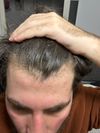
Hair loss discussion includes treatments like Minoxidil, Finasteride, and RU58841. Users share experiences and support, mentioning that many people face hair thinning.
Dutasteride mesotherapy is being considered for hair regrowth, with one user reporting significant success when combined with oral dutasteride, oral and topical minoxidil, and vitamins. Another user suggests using topical finasteride and oral dutasteride instead, as mesotherapy results are inconclusive.
The conversation is about a person struggling with inconsistent hair styling due to thinning hair, despite being on hair loss medications. They find that ketoconazole 2% shampoo helps, but conditioning makes their hair look worse; others suggest staying consistent with treatment and using hair fibers for events.
The conversation is about using pyrilutamide for hair loss, with the original poster also using minoxidil and nizoral for maintenance. The poster experienced side effects from finasteride and is seeking feedback from long-term pyrilutamide users.
PP405 may induce new hair growth but cannot revive completely dead follicles, and its effectiveness on hairlines is uncertain. It is expected to be available by mid-2028, but users are advised to manage expectations and consider using other treatments like minoxidil and finasteride.
Stopping finasteride and minoxidil can cause significant hair shedding, so they should be continued indefinitely. Concerns about finasteride affecting fertility or causing birth defects are mostly unfounded, but some stop for personal reasons.
A 23-year-old experiencing severe diffuse thinning after scalp inflammation is considering finasteride as a last resort after stopping minoxidil and using anti-inflammatory medication. Users suggest that inflammation causes temporary shedding and recommend consulting a dermatologist, with some advocating for finasteride as a reliable treatment option.
The user is questioning why they are not experiencing hair loss like their family members. They are considering whether genetics or preventive treatments like Minoxidil, finasteride, or RU58841 might be influencing their hair retention.
A 29-year-old is struggling with motivation while using finasteride and minoxidil for hair loss, experiencing side effects like low libido. They have seen some hair growth but are unsure whether to continue treatment or shave their head again.
The user has been using finasteride, minoxidil, and a derma stamp for hair loss for nearly three months and is considering adding tretinoin. They are advised to be patient, as results typically take 6-12 months, and are exploring other options like oral minoxidil and dutasteride.
A user with aggressive hair thinning is considering how to handle a coworker's interest in them. They are using Minoxidil, Finasteride, and Dutasteride, and are debating whether to keep using hair fibers, shave their head, or get a hair system.
The conversation discusses the use of RU58841 for hair loss, focusing on its side effects, standardization issues, and user experiences. The user also inquires about the use of other treatments like minoxidil, finasteride, and microneedling.
A user discusses using topical dutasteride 0.025% once a week for hair maintenance, alongside fortified minoxidil, RU58841, and Reviv Hair Serum. They seek feedback on the effectiveness of this regimen.
The conclusion of the conversation is that the user "lemmeseesomeass" has experienced significant hair regrowth using a combination of RU58841, dutasteride, and minoxidil. They mention that RU58841 is effective but not medically approved. They provide instructions on how they use RU58841.
A user shared their 6-month progress using finasteride, minoxidil, and dermarolling for hair loss. They reported positive results but noted ongoing shedding.
The user has been using oral minoxidil and finasteride but continues to experience hair thinning. They are considering adding RU58841 or dutasteride to their regimen for better results.
The conclusion of this conversation about hair loss is that genetics play a significant role in determining hair loss, and specific treatments like finasteride may not be effective against certain compounds like masteron and trenbolone.
A user who experienced significant hair regrowth over the course of one year by following a regimen including finasteride, minoxidil, Nizoral shampoo, dermarolling, biotin vitamins, vitamin D3 and collagen peptides. The post includes before/after photos and details on the brands used.
A 34-year-old man has used finasteride for 10 years and dutasteride for 1 year to manage hair loss, experiencing minimal side effects and slight hair thinning. He plans to continue using finasteride, ketoconazole shampoo, and oral liquid finasteride, noting that cost and convenience influenced his dosage choices.
The user is experiencing continued hair loss despite using dutasteride and oral minoxidil, and is considering adding finasteride or adjusting their current treatment. They are seeking advice on whether to change their approach due to lack of improvement, especially at the temples and crown.
Low-dose dutasteride (0.1 mg) is effective for hair growth, potentially more so than finasteride, with fewer side effects. East Asians may respond well to these treatments due to hair characteristics.
The user is considering starting topical minoxidil to address a receding hairline and mild dandruff. They are seeking advice on potential effects and side effects of the treatment.
A 38-year-old male experienced rapid hair loss progression and tried topical Minoxidil for 15 months without success, then switched to a combination spray with Minoxidil, Finasteride, and Tretinoin for two months, still seeing no improvement. Users suggest patience, as Finasteride can take six months to a year to show results, and recommend considering oral treatments if health permits, while also advising against washing off treatments too soon.
A 26-year-old male considering a hair transplant is using topical finasteride and minoxidil, planning to start feminizing hormone replacement therapy (HRT) with estrogen and spironolactone. Many suggest waiting to see the effects of HRT, which may significantly regrow hair, before deciding on a transplant, and recommend adding microneedling and possibly switching to oral treatments for better results.
The user has been experiencing increased hair loss despite using Dutasteride, Minoxidil, and microneedling, and is considering switching back to Finasteride. They are exploring other options like hair transplants, oral Minoxidil, and red light therapy but are concerned about side effects and effectiveness.
The conversation discusses hair regrowth possibilities using finasteride, minoxidil, microneedling, and dutasteride, with the user experiencing improvement from NW4 to NW2. Achieving NW0 is deemed unrealistic, but further regrowth may be possible with patience and potentially a hair transplant.
A 17-year-old is experiencing early hair thinning and is considering oral minoxidil while being cautious about finasteride due to side effects. They seek advice on hair maintenance and plan to consult a doctor before using DHT blockers.
A user shared their successful experience with hair regrowth and transitioning from male to female using minoxidil, finasteride, Nutrafol, microneedling, and hormone replacement therapy (HRT). They expressed gratitude for the results and encouraged others to explore treatments that align with their personal goals.
PP405 is progressing to Phase 2b trials, with results expected in late 2025 or early 2026, and potential Phase 3 trials in 2026. Some users experienced side effects from finasteride and are hopeful for PP405 as an alternative treatment.
The user shared progress pictures showing significant hair regrowth after 8 months using finasteride and Minoxidil foam. They have not used microneedling and are considering oral Minoxidil but currently use topical Minoxidil and oral finasteride.