Dutasteride doses matter for hair loss treatment and are more effective than finasteride. RU58841 is suggested for better gains, but side effect profiles should be considered.
Microneedling at 1.5 mm should be done every 4 to 6 weeks, not weekly, to prevent scalp trauma and improve hair growth. The user is also using 0.5 mg dutasteride daily, 5 mg minoxidil daily, and started RU58841 two months ago.
A 24-year-old considering a hair transplant is currently using dutasteride for hair loss. They are unsure about proceeding with the transplant due to concerns about future hair loss and the need to shave their head for the procedure.
A 26-year-old male started minoxidil treatment for male-pattern baldness and saw significant regrowth in three months. He is considering finasteride but is hesitant due to potential side effects.
Injectable GHK-CU and BPC157 were discussed for hair loss, but users did not notice significant hair changes. BPC157 was noted to help with shoulder issues.
The conversation discusses updates on hair loss treatments, specifically GT20029, PP405, and a rumored injectable peptide from UT. GT20029 is seen as a promising treatment expected within 5-7 years.
The conversation discusses microneedling for hair loss, with one user trying 0.3mm daily without feeling pain and questioning its effectiveness. Another user suggests that 0.3mm is too shallow and recommends 0.5mm twice a week or 0.75mm once a week for hair growth.
Pyrilutamide from RUdirect is discussed, with users sharing experiences and alternative sources like Koshinemall. Users mention using treatments like minoxidil, RU58841, and dutasteride for hair loss.
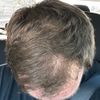
A 21-year-old male shares his 3-month progress using 0.5mg dutasteride daily, 5% topical minoxidil twice daily, and weekly microneedling, showing some temple recovery and seeking further improvement. Feedback suggests continued use and monitoring, with optimism for more regrowth over time.
FCE 28260 (PNU 156765), an under-explored 5α-reductase inhibitor, showcases promising results in research by Giudici et al., outperforming well-known treatments like Finasteride in reducing the conversion of testosterone to DHT. Its superior efficacy, demonstrated through lower IC50 values in both natural and human recombinant enzyme studies, suggests it could offer more effective management of DHT-related conditions. Additionally, its lower molecular weight hints at better potential for topical application, potentially offering advantages in treating conditions such as androgenic alopecia. Despite its potential, it has not advanced in development, possibly due to financial limitations, leaving its therapeutic prospects and side effect profile largely unexplored.
Fluridil may decrease the number of androgen receptors in hair follicles by up to 95%. This suggests a different action mechanism from other non-steroidal antiandrogens like RU58841, indicating they might be used together.
Pyrilutamide, a potential hair loss treatment that is currently in development and may be available soon; an androgen receptor degrader which is also being developed as a potential treatment for hair loss; and the comparison between Pyrilutamide, finasteride, minoxidil, and RU58841.
Actifolic RU-58841 powder and GhK-Cu peptide were tested and found to be accurate. The user is satisfied with the product's authenticity for hair loss treatment.
A 21-year-old experienced erectile dysfunction after using finasteride and consuming multiple drugs, including MDMA, LSD, and weed. He plans to quit finasteride and weed, improve his habits, and consider alternative treatments like mesotherapy with dutasteride.
OP experienced diffuse thinning for 11 years and used Minoxidil and Finasteride previously. They now use Pyrilutamide 0.5% and Alfatradiol 0.1%, resulting in significantly reduced hair loss.
Potential success with the hair loss treatment Pyrilutamide, and possible group buying opportunities for it along with other treatments such as Finasteride and Minoxidil.
Prolonged use of topical minoxidil and finasteride can lead to neuroendocrine and autonomic dysfunction, causing severe sensitivity and side effects. Recovery involves avoiding these treatments, supporting neurosteroid recovery, calming the sympathetic system, and rebuilding scalp health naturally.
The user has been using oral finasteride for over a year and recently added GHK-CU for two months, seeing progress but seeking further improvement, especially on the hairline. They discuss sourcing GHK-CU, its effects, and the importance of third-party testing, while considering additional treatments like dutasteride and hair transplants for better results.
The user experienced hair regrowth using a combination of Minoxidil, Finasteride, and RU58841, with Minoxidil used initially and the other treatments added later. The user believes the combination of Finasteride and RU58841 contributed to the regrowth, with RU sourced from MVsupplement.
The conversation discusses potential hair loss treatments focusing on stimulating IGF-1 at the follicle level using growth-factor cocktails and engineered peptides, such as Acetyl Tetrapeptide-3, Copper Tripeptide-1, Oligopeptide-20, Thymosin-β4, and Palmitoyl Tetrapeptide-7. It suggests that device-assisted delivery methods like microneedling may enhance effectiveness.
Using 2.5mg oral minoxidil and 1mg oral finasteride daily leads to significant hair regrowth without side effects, especially at the crown. Consistency is crucial, and some users consider additional methods like derma rolling.
Pyrilitamide (KX-826) did not show significant improvement in hair count compared to placebo after 6 months. It's unclear if it can maintain hair at baseline.
The conversation discusses experimenting with microneedling for hair loss, specifically addressing non-responsiveness and the use of topical treatments like dutasteride, minoxidil, and tretinoin. The user seeks advice on effective frequency and depth combinations for better results.
The conversation discusses switching from RU58841 to pyrilutamide for hair loss treatment, with users generally recommending staying on RU58841 if it is effective. RU58841 is sourced from GeneTherica, which ships worldwide.
The user is using a hair loss regimen involving 2ddr applied twice daily, tretinoin weekly, and occasionally micro-needling. They report feeling increased scalp thickness and seeing some hair growth progress.
The user experienced significant hair loss on the scalp, eyebrows, eyelashes, and pubic area, along with itchy, flaky skin and red patches. They have a history of eczema and dermatitis and suspect that stopping shampoo use and taking Ritalin may have contributed to the issue.
Winlevi (clascoterone 1%) is being discussed as a potential hair loss treatment. Users are considering its use despite concerns about its delivery method.
Dutasteride significantly reduces DHT levels, potentially more effectively than finasteride, and is used to treat hair loss. Some users report side effects like reduced libido and mood changes, while others experience hair regrowth and increased testosterone.
