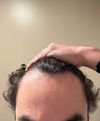
A new topical medication, Clascoterone, shows promise for hair loss, improving hair count significantly. Trials for Breezula are ending, but sign-ups for PP405 trials are available for 2026.
A user has been using Minoxidil for 5 months and is curious about the effectiveness of topical caffeine ointments for hair loss prevention. They seek recommendations and information on whether caffeine affects Minoxidil's efficacy.
A user is considering mixing Stemoxydine, RU-58841, Alfatradiol, and Tretinoin into a single topical solution for hair loss. They are concerned about potential interactions that could reduce the effectiveness of these ingredients.
The post and conversation are about a user's 6-month progress using topical dutasteride, 8% minoxidil, tretinoin, 2% ketoconazole shampoo, microneedling, oral finasteride, pumpkin seed oil, Vitamin D3, a men's multivitamin, rosemary oil, and 5% minoxidil foam for hair loss treatment.
Mixing topical solutions like Morr F 10% (Minoxidil) and L'Oreal Seryoxyl (Stemoxydine) before application may not reduce their effectiveness. The goal is to apply treatments all at once instead of multiple times a day.
The user experienced hair regrowth with dutasteride and oral minoxidil from October 2025 to January 2026, but mid-scalp density decreased afterward despite continued treatment. Ketoconazole improves scalp condition, but stopping it worsens hair appearance.
Latanoprost is discussed as a potential hair loss treatment, noted for its synergy with minoxidil and 5-AR inhibitors, but concerns include its effectiveness on scalp hair, cost, and potential skin darkening. Some users express interest in trying latanoprost or bimatoprost despite limited real-world evidence.
A user questions if a topical compound with finasteride, dutasteride, minoxidil, retinoic acid, caffeine, and triamcinolone is excessive for hair loss treatment. Another user shares their experience using topical finasteride without issues and notes that alternating finasteride and dutasteride is common.
The conversation discusses the effectiveness of topical tretinoin as a monotherapy for hair loss, with users suggesting it may not be as effective as minoxidil or finasteride. The original poster is considering other options like a phenol peel and is concerned about the risks of derma rolling.
The conversation is about creating a topical finasteride solution without minoxidil, using an alcohol-based base like ethanol. The discussion includes using finasteride in powder form and mentions adding ingredients like glycerol, salicylic acid, or castor oil.
The user applied 0.005% topical finasteride, minoxidil, tretinoin, caffeine, and ketoconazole shampoo for four months but saw no hair regrowth. Some users suggested increasing the finasteride dose or trying alternative treatments like clascoterone, pyrilutamide, or RU58841.
A user shares their 11-week progress using 1mg finasteride, 5% minoxidil twice daily, 0.8mm dermastamping every 10 days, occasional tretinoin, and ketoconazole shampoo for hair regrowth. They plan to continue the treatment for 9 months before considering a hair transplant.
The conclusion of the conversation is that using minoxidil, finasteride, and ketoconazole may not be enough to address hair loss caused by DHT. Some users recommend starting finasteride to prevent further hair loss, while others express concerns about potential side effects.
A user is seeking advice on the efficacy and side effects of homemade topical solutions for hair loss, specifically bicalutamide, estradiol, cyproterone acetate, and spironolactone, as they cannot access RU58841 or pyrilutamide.
Minoxidil is typically applied once daily, with some users opting for foam to minimize irritation. Users often combine it with finasteride or use oral minoxidil for improved results, while managing scalp irritation with ketoconazole or salicylic acid shampoos.
Clascoterone showed promising initial results for hair regrowth but failed to replicate them, leading to disappointment. Users discuss combining it with minoxidil and other treatments, noting its current availability only in lower concentrations.
The user has maintained hair with topical minoxidil (8%) and finasteride (0.01%) for 7.5 years, experiencing mild regrowth and no side effects. They also use rosemary oil, jojoba oil, and magnesium oil for hair care.
Oral ketoconazole is discussed as a potential hair loss treatment, but it poses significant health risks like liver damage and adrenal insufficiency. Users suggest safer alternatives like topical anti-androgens or spironolactone, emphasizing the importance of consulting a specialist.
The user has been using 1.25 mg of oral minoxidil and finasteride since September 2025 to address diffuse hair thinning, and is considering trying a new shampoo. Other users suggest increasing the minoxidil dose and trying dutasteride.
Using a microdose of finasteride on the scalp with minoxidil as a carrier may have positive effects with minimal side effects. The user is also considering the effects of sulforaphane or broccoli sprouts on hair loss.
The user is considering using tretinoin with minoxidil to enhance its effectiveness for hair loss, as oral minoxidil and finasteride aren't meeting expectations. They also mention ketoconazole topical as a potential scalp treatment.
Users discuss ketoconazole shampoos for hair loss, mentioning Nizoral, selsun blue, and alternatives like prescription strength options and compounded lotions to reduce dryness. Some users suggest using finasteride and minoxidil instead, questioning the cost-benefit of ketoconazole.
An 18-year-old woman experiencing hair loss due to stress, possible PCOS, and low vitamin D is concerned about starting 5% minoxidil foam, prescribed by her doctor, due to potential facial hair growth. She is also using a topical steroid for scalp sensitivity and pain.
The user is seeking an alternative to DualGen 15 that includes Minoxidil and Retinol but is less sticky and more convenient to use. They find the current product inconvenient due to its stickiness and long wait time before washing.
The post discusses the high cost of a topical hair loss treatment from Happy Head, which contains finasteride, minoxidil, retinoic acid, and hydrocortisone. The user is seeking cheaper alternatives, specifically asking if there are compounding pharmacies that can recreate the same or similar formulation.
A user is experiencing severe hair loss, diagnosed with seborrheic dermatitis, and is using Ketoconazole and beclomethasone. They are concerned about potential female pattern baldness and are seeking reassurance and advice.
The conversation is about choosing between Ketoconazole/Nizoral 1%/2% or selenium for dandruff. The user also mentions starting finasteride soon for androgenetic alopecia.
People are discussing ketoconazole shampoos that don't dry out hair, with suggestions including using it as a topical treatment, switching to T-Sal, and using moisturizing products like hyaluronic acid serum and biotin conditioner. Regenepure DR is confirmed to still contain ketoconazole, and some users recommend using moisturizing shampoos and conditioners to prevent dryness.
A 20-year-old is experiencing hair thinning and is considering Clascoterone and Minoxidil as treatments, avoiding finasteride due to concerns about fertility and hormones. A suggestion was made to use Clascoterone for local DHT targeting and combine it with Minoxidil for maintenance and regrowth while avoiding systemic side effects.