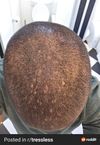
The user is pleased with their hair transplant results but is concerned about the vertex area. They use Minoxidil and finasteride daily and had the procedure at a clinic in Athens.
Lichen Planopilaris (LPP) is an autoimmune condition causing permanent hair loss and fibrosis, often misdiagnosed. Treatments include pioglitazone, topical corticosteroids, anti-inflammatory medication, and Jak inhibitors.
The user experienced eyebrow hair loss after COVID-19 and has not seen regrowth despite using Latisse. They are seeking new treatment options but are cautious about spending money on ineffective solutions.
The conversation discusses hair loss struggles and treatments, including oral minoxidil, oral finasteride, and RU58841. Users share experiences and advice, suggesting options like topical minoxidil, microneedling, hair transplants, and scalp micropigmentation.
A user is concerned about the long-term commitment and potential side effects of using oral finasteride and topical minoxidil for hair loss. They are debating whether to accept their hair loss or start the treatment despite mixed results from others.
The conversation discusses a botanically derived treatment for androgenetic alopecia using ingredients like saw palmetto, green tea, and evening primrose, showing impressive results over 270 days. Concerns include the study's uncontrolled nature and potential product motivation, with suggestions to enhance absorption through derma rolling.
Using tretinoin on eyebrows while on oral minoxidil may not enhance growth, as some users report no difference with additional treatments like microneedling. Tretinoin can stimulate hair growth on its own, but its effectiveness varies.
The conversation discusses using topical cetirizine as a treatment for androgenetic alopecia (hair loss). Specific treatments mentioned include Minoxidil, finasteride, and RU58841.
RU58841's potential side effects, particularly heart palpitations, are debated, with some attributing them to contamination with minoxidil. Users report mixed experiences, with some seeing no side effects and others cautioning about the lack of reliable data on RU58841's safety.
The conversation discusses hair loss treatments, specifically Setipiprant, finasteride, and bimatoprost. Setipiprant is suggested for maintenance, while bimatoprost is for regrowth, and combining them with dermarolling is recommended for better results.
The user has been using topical finasteride and minoxidil for 5 years, with recent use of a liposomal formulation, but sees no significant improvement. They are considering switching to oral treatments due to continued hair loss and thinning.
A user has been using topical minoxidil and finasteride for hair loss but is considering switching to oral minoxidil due to the inconvenience of topical application. Another user cautions that switching forms may cause shedding and that oral minoxidil may have different side effects and results.
Topical dutasteride is considered for hair loss, but concerns about systemic absorption and side effects like reduced libido are common. Users have mixed results, with some preferring oral finasteride or dutasteride despite side effects, while others find topical treatments beneficial but challenging.
Breezula's effectiveness is uncertain, with some users skeptical about its potential and others noting its recent availability on the grey market. A user reported success with a stack of Dutasteride (oral), Minoxidil (topical), and RU58841 (topical), achieving significant hair improvement after 18 months.
Eli Lilly's drug baricitinib showed effectiveness in treating alopecia areata, with higher doses resulting in significant hair regrowth compared to placebo. The treatment is not for male pattern baldness.
The post and conversation are about a user's progress in treating hair loss using oral finasteride and topical minoxidil. The user expresses regret for not starting treatment earlier.
Dihydrotestosterone (DHT) impacts various skin conditions, including Androgenetic alopecia and seborrheic dermatitis, by causing overactivity in sebaceous glands. Topical medications Tacrolimus and Clobetasol can reduce these inflammatory conditions, and treatments like RU58841, Minoxidil, and Finasteride may also be beneficial.
Reducing the dose of RU58841 from 25mg to 7.5mg topically helped minimize heart palpitations. Users discussed the cardiac effects of RU58841 and minoxidil, noting that no treatment is completely free of side effects.
Starting hair loss treatment early is crucial for better results. Dutasteride and finasteride are effective, with dutasteride often considered superior, while oral minoxidil shows better gains than topical.
The conversation discusses the positive effects of taking 5 mg oral minoxidil and 0.5 mg oral dutasteride every other day for hair loss, with one user reporting thicker beard and eyebrows and improved appearance. Another user expresses frustration about not being able to access the treatment in Germany, while a different user mentions experiencing no side effects.
A 21-year-old male is using a topical treatment for hair loss, including Dutasteride, Minoxidil, Tretinoin, Ketoconazole, and Hydrocortisone, along with derma rolling. He reports no side effects from the treatment and seeks feedback on its effectiveness for hair regrowth.
The conversation discusses the potential effectiveness and risks of using topical finasteride for hair loss, with considerations about using DMSO as a vehicle for application. Concerns are raised about DMSO's safety, absorption issues, and the systemic effects of topical finasteride.
A 29-year-old man had a successful hair transplant at Dr. Ulusan Clinic in Izmir, Turkey, receiving over 4600 grafts and exosome injections. He started using finasteride and minoxidil daily a month after shaving his head, which improved his confidence and outlook on life.
People are sharing their experiences of keeping a hidden folder on their phones with photos documenting their hair loss. Some users discuss the emotional impact, while one mentions using dutasteride and oral minoxidil without noticeable change.
The user is experiencing hair shedding after using minoxidil and is considering switching to dutasteride while planning to increase their oral minoxidil dose. They also use nicotine pouches, Vyvanse, and GHK-Cu, and have noticed thicker eyebrows and lashes from oral minoxidil.
The conversation is about a female experiencing hair loss and seeking advice on why it's difficult to regrow hair. Specific treatments like Minoxidil, finasteride, or RU58841 are not mentioned.
The user has been using finasteride and minoxidil for 7 months, seeing thicker hair but no temple regrowth, and is considering switching to dutasteride. Another person suggested trying microneedling on the temples before changing medications.
The user noticed small circular hairless spots after a buzz cut and has been using finasteride, dutasteride, and oral minoxidil for hair loss. They are experiencing continuous shedding and thinning, and it is suggested they consult a dermatologist for a scalp examination and possible biopsy to determine if it's alopecia areata or androgenetic alopecia.
RU58841's side effects may be exaggerated due to anxiety, with some users experiencing no issues and others reporting symptoms like chest pain. RU58841, minoxidil, and finasteride are used for hair loss treatment, with varying individual reactions.