Search
for
Sort by
Community Join
90-120 / 1000+ resultscommunity A preliminary study on topical cetirizine in the therapeutic management of androgenetic alopecia.
The conversation discusses using topical cetirizine as a treatment for androgenetic alopecia (hair loss). Specific treatments mentioned include Minoxidil, finasteride, and RU58841.
community Dry and itchy scalp after ru58841 and keto. Advice needed
The user experienced severe scalp itching after using RU58841 and ketoconazole shampoo, despite trying moisturizing treatments. They suspect the issue is related to the propylene glycol in the vehicle and are seeking alternatives.
community Quercetin got rid of my scalp soreness
Quercetin reduced scalp soreness and may help with histamine-related hair loss. The soreness felt like inflamed follicles beneath the scalp surface.
community Topical melatonin shows some promise.
community Any experience with Latanoprost?
Hair loss discussion includes Latanoprost as potential treatment. Mild improvement observed with its use.
community Anyone have experience with latanoprost topical?
The post discusses the use of latanoprost foam for hair growth, with the user expressing concerns about its efficiency and safety. The user is currently using topical dutasteride, which maintains their hair but doesn't promote regrowth, and is seeking a product that doesn't affect hormone levels.
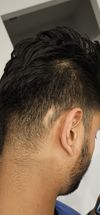
community Patch Behind Ear Possibly Due to Glasses, Is it Traction Alopecia?
The patch behind the ear is likely traction alopecia caused by glasses. No specific treatments like Minoxidil, finasteride, or RU58841 were mentioned.
community Anyone has experienced Collagen Synthesis with min ? (wrinkles, dark circles...)
Minoxidil may cause wrinkles and dark circles, which some users report can be mitigated by adjusting dosage. Reactions vary, and while some dismiss these side effects, others experience significant changes.
community started RU58841 today and am panicing
A user started using RU58841 for hair loss and experienced anxiety and physical discomfort. Other users suggested avoiding the treatment due to similar side effects and recommended alternative treatments like pyri.
community Starting Bimatoprost! Hair time
The conversation is about using Bimatoprost for hair growth, with concerns about potential side effects like eye color change and fat atrophy. Users discuss combining it with other treatments like Minoxidil and Finasteride, and sourcing Bimatoprost in bulk.
community Has anyone seen results with latanoprost? And at what dose?
Minoxidil isn't effective for OP, who is exploring latanoprost and bimatoprost for hair growth. Users suggest higher concentrations of latanoprost (0.1%) are needed for effectiveness, but they are costly and hard to find.
community topical cetirizine to control scalp inflammation
The user applies a topical solution containing minoxidil, finasteride, dutasteride, retinoic acid, and hydrocortisone to address scalp inflammation and is considering adding cetirizine to the mix. They are calculating the correct amount of cetirizine to add to their formula and have paused this approach to retry oral minoxidil.
community Correlation between topical retinoids and diffuse hair loss
Excess Vitamin A and topical retinoids can cause diffuse hair shedding. The user suspects their chronic telogen effluvium may be linked to using adapalene, a topical retinoid.
community Topical caffeine as an adjunct treatment. I think this should be considered.
community Latanoprost Availability – Canada
Latanoprost for hair loss is available in Canada at Ford's Family Pharmacy in New Brunswick, with up to 0.03% concentration, six times stronger than glaucoma medication Xalatan.
community Do antihistamines help with hair loss
A user experienced hair loss and texture changes, tried minoxidil and finasteride, and considered antihistamines like Cetirizine for potential histamine issues. They reported improved alertness but continued shedding.
community Using liquid cetirizine as a topical?
The conversation discusses using liquid cetirizine as a topical treatment for hair loss. It mentions Minoxidil, finasteride, and RU58841 as other treatments.
community [Discussion] Trichoscopy in sudden-onset AGA: Pathology and reversibility of "Yellow Dots" without 5AR-inhibitors?
Hair loss treatments discussed include microneedling, minoxidil, tretinoin, finasteride, dutasteride, pumpkin seeds, saw palmetto, and scalp massage. The consensus is that finasteride or dutasteride is necessary for significant regrowth, while other methods may only slow hair loss.

community It seems that topical Minoxidil can also cause pericardial effusion after all
Topical Minoxidil may cause pericardial effusion. Caution is advised when using Minoxidil, even topically.
community Hydrocortisone helps with itch
Hydrocortisone helps relieve scalp itchiness, possibly caused by minoxidil. Users discuss its effectiveness for managing this side effect.
community Any Help Sourcing Latanoprost?
The conversation is about sourcing Latanoprost for hair loss treatment. Users discuss potential sources and the difficulty of obtaining a prescription.
community lost all my gains switching from liquid to foam
Switching from liquid to foam minoxidil led to hair loss for OP, possibly due to a second shedding cycle. OP experienced allergic reactions to propylene glycol in the liquid form, causing dandruff and itchiness, which improved after switching to foam.
community We Need A Solution For The Inflammatory Response related To AGA
The conversation is about finding a solution for scalp inflammation related to AGA, with the user expressing frustration that Minoxidil and Finasteride do not address inflammation. The user has researched glucocorticoids and topical NSAIDs for reducing inflammation and seeks advice from specialists.
community Infection from micro needling even with medicated shampoos and sanitation
The conversation discusses scalp itching and tenderness after microneedling, despite using medicated shampoos and proper sanitation. The user plans to see a dermatologist and is concerned about possible infection or allergic reaction.
community scarring alopecia awareness in this community
Lichen Planopilaris (LPP), a form of permanent hair loss, which can be mistaken for seborrheic dermatitis and is characterized by scalp itching, burning, redness, and dandruff. Treatment options discussed include steroidal creams, finasteride, minoxidil, and RU58841.
community Ru58841 only treatment thoughts
community Persistent Genital Itching on Finasteride Despite Clotrimazole Treatment
The user experienced genital itching while using finasteride and noticed a yellow bump, which improved with clotrimazole, but the itching persists. The discussion focuses on side effects of finasteride.
community Does prednisolone ( oral corticoid) cause hair loss and acne?
A user is concerned about hair loss and acne from a one-week course of 70 mg/day oral prednisolone for severe tinnitus. They are asking if these side effects are common.
community Has anyone used latanoprost and seen results with it?
The conversation discusses using latanoprost for hair loss treatment. Participants also mention Minoxidil, finasteride, and RU58841 as other treatments.