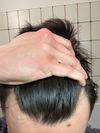
Considering a hair transplant, using Pyrilutamide, the potential availability of CosmeRNA, and the significance of taking Minoxidil and Finasteride for long-term results.
Topical liquid minoxidil may be safe to consume in small amounts, but it needs liver processing to become effective for hair growth. Therefore, oral pills might be more effective.
Analyzing data on pyrilutamide, a potential hair loss treatment, as well as the effectiveness of other treatments such as Minoxidil, Finasteride, and RU58841.
OP experienced side effects from finasteride and is considering trying RU58841 for hair loss, while currently using minoxidil, Stemoxydine, a dermapen, and Nizoral. Another user shared positive results with RU58841, noting no side effects and maintained hair thickness after stopping its use.
The user is experiencing increased hair shedding after using oral minoxidil and is considering topical dutasteride but is concerned about potential worsening. They are also exploring other topical treatments like latanoprost, caffeine, and melatonin, and seeking advice on application methods without pulling out existing hair.
User on fin, minox, and ketoconazole seeks to add another topical anti-androgen. Hierarchy of effectiveness: 1. RU55841, 2. Fluridil - Eucapil, 3. CB-03-01 - Breezula, 4. Ketoconazole; alfatradiol suggested as addition.
The conversation discusses hair loss treatments, focusing on the use of Minoxidil, finasteride, and triamcinolone. Concerns are raised about high concentrations of Minoxidil and the long-term use of corticosteroids.
A user discussed their doctor lowering their Minoxidil dose from 5mg to 2.5mg, expressing concerns about losing hair gains. Other users suggested that 2.5mg is safer long-term and speculated the doctor is being cautious about side effects.
A user experienced heart problems after taking 1mg finasteride and 2.5mg oral minoxidil and is considering quitting minoxidil. Others discussed their experiences with heart issues and minoxidil, with some suggesting topical minoxidil as a safer alternative.
A user experienced significant hair shedding and thinning 10 months post-hair transplant despite using minoxidil and topical finasteride. They are considering switching to oral finasteride or dutasteride and are also dealing with scalp conditions like seborrheic dermatitis.
Pyrilutamide, a nonsteroidal antiandrogen drug under development for the potential treatment of androgenic alopecia. The conversation discusses its binding affinity to the androgen receptor and the timeline for possible availability after trials are completed in the United States and China.
The conversation discusses experiences with topical dutasteride for hair loss, comparing formulations from FUEClinic, MinoxidilMax, and Strut. Users share their results and side effects, with some preferring topical over oral treatments to minimize systemic absorption.
A user started taking 0.625mg oral minoxidil daily for hair loss, increased the dose to 1.25mg, and experienced a significant shed, losing 70% of scalp density. They cannot tolerate finasteride due to side effects but are hopeful for hair regrowth despite the shedding.
The user is taking 2.5 mg dutasteride and 5% minoxidil but is not seeing hair regrowth, and is considering adding RU58841. They are experiencing fatigue and low MCV/MCH, possibly related to dutasteride, and are advised to be patient, consider microneedling, and check for iron deficiency.
The conversation discusses using minoxidil with retinol for hair loss treatment. Users share their experiences and opinions on the effectiveness of this combination.
User tried oral finasteride, topical finasteride, topical dutasteride, and RU58841 but experienced side effects. They discuss upcoming treatments like clascoterone, pyrilutamide, gt20029, and KY19382 as potential options.
Retinoids, like Retin-A and retinol, can be beneficial when used with minoxidil for hair loss. Retin-A is the strongest and requires a prescription, while retinol is over-the-counter.
Winlevi (clascoterone 1%) is being discussed as a potential hair loss treatment. Users are considering its use despite concerns about its delivery method.
Concerns about CosmeRNA safety mechanisms and potential side effects. Discussion includes comparisons to Fluridil and questions about nanoparticle specificity and siRNA stability.
The user has not seen results from various hair loss treatments including finasteride, dutasteride, minoxidil, and others over several years and is considering adding RU58841 and starting hormone replacement therapy. They are also experiencing anxiety and contemplating moving to a more accepting environment for their nonbinary identity.
The user is pleased with their hair growth results after using oral minoxidil (2.5mg) for 3 months and finasteride (1mg) for 4 months, despite experiencing significant shedding initially. They prefer oral treatments over topical due to convenience and concerns about toxicity to pets.
The conclusion of the conversation is that the user has experienced significant hair regrowth using a combination of medications, including dutasteride, RU58841, and minoxidil. They have not experienced any noticeable side effects and are considering a hair transplant in the future.
The conversation discusses the use of topical minoxidil and finasteride for hair loss, with some users combining them with oral treatments. Users share their experiences and opinions on effectiveness, cost, and convenience, with mixed views on whether topical or oral applications are superior.
The user is concerned about the toxicity of a homemade topical solution of minoxidil and finasteride to their new kitten and is considering replacing minoxidil with stemoxydine. Other users suggest using oral treatments, keeping the solution away from the cat, and ensuring proper hygiene.
The conversation is about hair loss treatments, specifically discussing RU58841, with concerns about its safety and lack of research. Alternatives like finasteride, dutasteride, and minoxidil are mentioned, with some users sharing personal experiences and side effects.
Different minoxidil formulations affect hair growth and side effects. Higher propylene glycol and pH levels improve effectiveness but can cause scalp irritation.