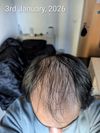
The conversation discusses reducing scalp DHT to prevent hair loss, with a focus on using dutasteride, finasteride, and other treatments like RU58841 and minoxidil. It highlights the challenges of managing hair loss while on high testosterone levels, suggesting that dutasteride may be more effective than finasteride in such cases.
The conversation discusses skepticism about the effectiveness of scalp tension theory and scalp massagers for hair regrowth, contrasting it with treatments like finasteride and minoxidil, which have more user-reported results. Participants question the belief in scalp tension theory, suggesting it may be a marketing tactic, while others argue for a multifactorial approach to hair loss.
Dutasteride may not effectively stop scalp hair loss and can cause thinning of facial and body hair, including eyebrows. Users suggest considering other causes like autoimmune conditions or vitamin deficiencies and exploring treatments like finasteride or minoxidil.
Diet and specific shampoo improved scalp health and hair regrowth for someone with seborrheic dermatitis, while medications like Minoxidil and finasteride had no effect. A low-sugar, keto diet was key to their success.
The user is using topical dutasteride, finasteride, minoxidil, and tretinoin but seeing no results or side effects. They also microneedle every two weeks but experience little bleeding, questioning if a thick scalp is preventing treatment effectiveness.
A user lost 60% hair density in 4 months, started finasteride and microneedling, and has greasy, flaky, yellowish scalp. They are awaiting biopsy results, and another user suggested trying ketoconazole shampoo.
Shampoos are generally ineffective for stopping hair loss or blocking DHT, with treatments like minoxidil and finasteride being more effective. Finasteride can stop hair loss in some cases, but often only slows it down for most users.
A 28 year old male experiencing diffuse thinning, chronic dandruff and scalp crust (seborrheic dermatitis), with replies discussing the use of topical fin for hormone imbalances and Nizoral for seb derm.
Oral minoxidil is causing body hair growth but not improving scalp hair, despite using dutasteride and finasteride. Users suggest waiting longer for results, checking vitamin levels, and considering additional treatments like topical minoxidil, dermarolling, and supplements.
Dutasteride at 2.5 mg/day reduces scalp DHT by 80%, while 0.5 mg/day reduces it by 50%, with minimal difference in side effects. Users often combine it with finasteride, RU58841, and minoxidil for better hair loss management, though side effects like dry skin and pimples are noted.
Topical finasteride is believed to reduce scalp DHT more than oral forms, but its effectiveness is questioned due to inconsistent application and absorption. Oral finasteride is considered more effective because it consistently reduces systemic DHT, ensuring more reliable results.
A 31-year-old male with low normal-range testosterone and DHT is experiencing significant hair loss from the front scalp. He has tried Minoxidil, vitamin D3 and B12 supplements, and exercises regularly but is still seeking the root cause and effective treatment.
A person with hair loss since COVID-19 is considering treatments like finasteride and minoxidil but is hesitant due to potential side effects. Suggestions include visiting a dermatologist, using a ketoconazole shampoo, and considering that post-COVID hair loss might be an autoimmune response.
Using a blunt tip syringe for applying hair loss treatments like Minoxidil provides better scalp coverage than droppers. Users discuss the benefits of liquid over foam and share tips for effective application.
A 37-year-old male stopped using finasteride and minoxidil due to side effects and switched to derma rolling, scalp massaging, and Revita shampoo, resulting in thicker, healthier hair with new growth. Users discuss the effectiveness of mechanical scalp stimulation, with some sharing similar positive experiences and others expressing skepticism.
The conversation discusses hair loss and treatments like finasteride, minoxidil, and ketoconazole shampoo. Users suggest scalp massages, warm showers, and other methods to address scalp tension and tight spots, with some mentioning the potential effects of medications like escitalopram and probiotics.
The user has been on finasteride for over two years, experiencing early hair regrowth, acne, and scalp sensitivity, but now faces thinning hair and questions about dosage and long-term effectiveness. They also used retinal to help with acne and are seeking advice on whether to adjust their finasteride dose.
A 47-year-old user shared their 6-month hair loss treatment results using a Fin/Min spray and weekly dermarolling. They experienced scalp irritation with other products but found success with the Hims Fin/Min spray, noting improvements around the 5th month.
The user experienced excessive scalp oiliness and high testosterone levels after switching from finasteride to dutasteride. They plan to manage their condition with finasteride and are considering spironolactone to reduce testosterone and restore dry skin.
Ketoconazole shampoo may help with scalp health and inflammation but is not a substitute for DHT blockers like finasteride. It is generally considered a minor addition to hair loss treatment, with varying opinions on its effectiveness.
A user is experiencing scalp flaking from a finasteride/minoxidil topical solution and considers using salicylic acid shampoo to remove propylene glycol residue. Another user suggests trying a leave-in conditioner to address dryness and flaking.
RU58841 helped reduce scalp itching for some users within a week, while others experienced immediate relief. Some users reported initial irritation from the solution, possibly due to the carrier used.
Finasteride reduced dandruff and scalp oiliness by lowering DHT, which decreases sebum production. Users also noted improvements with Nizoral and dutasteride.
A user is taking 1mg oral finasteride daily and using a Korean caffeine scalp shampoo for hair loss, reporting positive growth after one month without side effects. Another user suggests waiting six months for more noticeable results.
Dutasteride significantly reduces scalp DHT levels and can save hair, though shedding is part of the process. Some users report success with dutasteride, while others struggle despite using it along with finasteride and oral minoxidil.
People discussing their experiences with natural treatments for hair loss, such as essential oils, deep scalp massages, anti-inflammatory measures, and supplements. Most of the replies suggest that these treatments are not effective and recommend medication such as minoxidil or finasteride instead.
Shampoos can help with thinning hair by improving scalp health and reducing breakage, but they can't address genetic or hormonal causes. Effective treatments often include using topical minoxidil and finasteride, while the right shampoo varies per individual needs.
Pyrilutamide's effect on sebum production and scalp inflammation is unclear, with users noting no significant changes. Isotretinoin is mentioned as effective for reducing sebum, while Dutasteride and various shampoos have limited impact on oiliness and seborrheic dermatitis.